| ➡️ Click here to Join Whatsapp News Group - Get instant updates of all Banking News |
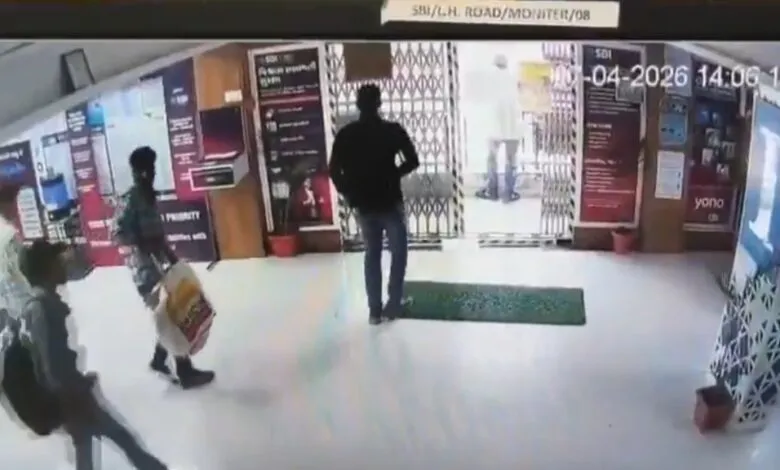
A gang of armed robbers looted Rs. 50 Lakh cash from a branch of State Bank of India (SBI) in Gujarat’s Surat city. They entered branch, threatened staff in gun point and looted Rs.50 lakh cash.
Now the Police has revealed some shocking facts about the robbery. As per the police investigation, the robbery was planned by gangsters operating from inside Patna’s Beur Jail. Investigators believe the gang deliberately chose the day following civic elections, as police forces were busy on that day.
The robbery took place at the SBI’s branch in the Varachha area of the city. Watch CCTV footage below.
CCTV Footage of robbery in SBI in Surat Gujarat pic.twitter.com/ogd8Jt5MsB
Advertisement— Hellobanker (@Hellobanker_in) April 28, 2026
The robbery masterminded was Kundan Bhagat, who has a history of executing high-value robberies. He was also allegedly involved in Rs 14 crore jewellery heist in Dehradun in 2023. This robbery was also executed when local police were engaged in security arrangements during President Droupadi Murmu’s visit.
This shows that the robbers plan bank robberies when the police is busy in other events.
The gang had been planning the robbery for two months. Bhagat sent seven operatives to Surat. They initially rented a house in Jahangirpura with the help of a local contact.
When neighbours grew suspicious, they shifted to another residence on Ved Road. All eight members conducted multiple visits to the bank over this period.
The gang has a pattern of targeting locations when police is occupied with major events.
So far, Shubham Thakur (24) and Vikas Singh (30), natives of Ayodhya and Gonda respectively, have been arrested. Shubham was directly involved in the robbery, while Singh assisted in providing shelter and facilitating money transfers post-crime. Shubham also faces two murder cases and charges under the Arms Act in Bihar.
The gang used stolen motorcycles to execute the robbery and later abandoned them in Olpad. From there, they travelled to the Himmatnagar bus depot and dispersed to various locations across Uttar Pradesh, Madhya Pradesh, Haryana, Delhi, and other states.
Police teams, comprising seven inspectors and around 100 personnel, have been deployed across these regions, though seven suspects, including Bhagat, remain at large.
Bhagat gave nicknames to gang members. Investigators uncovered unusual tactics used by Bhagat to conceal the identities of his operatives. He assigned aliases and nicknames to all members and arranged fake documents. Instead of sharing full photographs, he sent only partial images—typically showing the lower half of the body—to the Surat operative, who identified them at bus or railway stations based on colour of their trousers.
Bhagat recruited those gang members in the robbery whom he met during his incarceration in different jails and assigned them roles in the operation.
The Varachha SBI branch was chosen because Metro Rail work had reduced public movement in the area. The road outside the bank was dug up and in poor condition, making it difficult for anyone to pursue the robbers during their escape.
A native of Muzaffarpur, Kundan Bhagat has been linked to AK-47 smuggling, armed dacoity, murder, extortion, and robbery. After remaining absconding for two years, he was arrested by the Bihar Special Task Force from the Digha police station area in Patna in Nov 2025 for the Dehradun heist.
This shows that the robbery in India’s largest Bank was planned meticulously. The bank robberies are increasing rapidly in India and banks should increase security in branches.
If a bank robbery can be executed from inside a jail in Bihar, then imagine how weak the security system in India is.
A jail is supposed to be the most secure place, where criminals are kept under strict surveillance. But if an accused person can continue running a robbery network, communicate with gang members, and plan crimes from behind bars, it raises serious questions about the functioning of the prison system.
Such incidents expose major loopholes in jail administration, monitoring systems, and law enforcement coordination. It also creates fear among common citizens because people expect criminals to be controlled once they are inside prison. Instead, some criminals are allegedly using mobile phones and outside connections to continue illegal activities without fear.
If strong action is not taken, organized crime networks may continue to operate even from inside prisons, posing a serious threat to public safety and the banking system.
Also Check This


Please login to comment