| ➡️ Click here to Join Whatsapp News Group - Get instant updates of all Banking News |
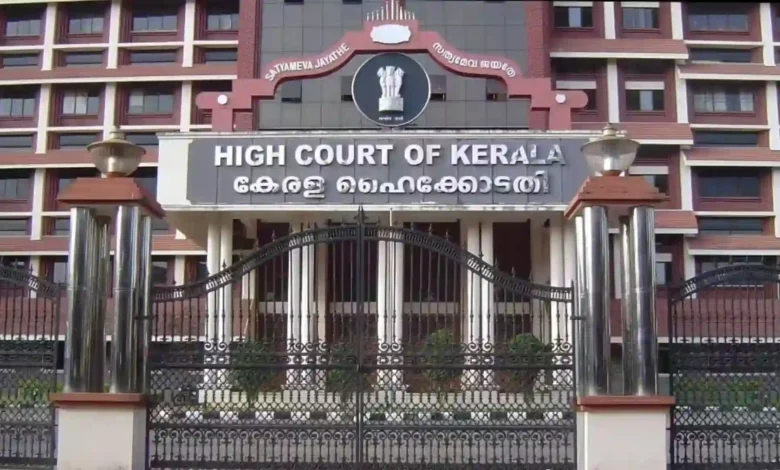
The Kerala High Court has delivered an important judgment regarding the powers of the Reserve Bank of India (RBI) to supersede the Board of Directors of a bank.
The Court ruled that RBI is not required to give a prior hearing to the Board of Directors before superseding it under Section 36AAA of the Banking Regulation Act, 1949. However, RBI must consult the State Government before passing such an order.
What is the Case About?
The case was filed by M.P. Jackson, former President of the Irinjalakuda Town Co-operative Bank. He challenged an RBI order through which the bank’s elected Board of Directors was superseded.
RBI also appointed an Administrator for a period of one year to manage the affairs of the bank. Justice M.A. Abdul Hakhim heard the petition and examined whether RBI had followed the legal process while taking action against the bank’s Board.
RBI Found Irregularities During Bank Inspection
The matter started after RBI conducted an inspection of the co-operative bank and found several irregularities in its functioning. Following the inspection, RBI imposed All-Inclusive Directions on the bank. These directions placed restrictions on the bank’s operations.
The bank claimed that it had taken several steps to improve its financial condition. It had also proposed selling some of its non-banking assets. However, RBI later decided to supersede the Board of Directors.
Former Bank President Challenges RBI Order
M.P. Jackson challenged RBI’s action before the Kerala High Court. He argued that the Board was removed without being given an opportunity to present its side.
He also claimed that RBI had not properly consulted the State Government before passing the supersession order. Jackson further argued that RBI did not have the authority to remove a democratically elected Board of Directors of a co-operative bank.
Prior Hearing is Not Required Under Section 36AAA
The High Court agreed with RBI that Section 36AAA does not provide for a prior hearing before the Board of Directors is superseded.
The Court compared Section 36AAA with Section 36AA of the Banking Regulation Act. Section 36AA specifically provides an opportunity of hearing before certain managerial and other persons are removed.
However, no such requirement has been included in Section 36AAA. The Court said that when the legislature has not included a requirement for a prior hearing in a particular section, courts cannot add such a requirement while interpreting the law.
Board Has No Right to Prior Personal Hearing
The High Court noted that RBI had already inspected the bank and imposed regulatory restrictions before superseding the Board. The RBI order also clearly mentioned the reasons for taking action against the bank’s management.
Therefore, the Court held that the managing committee had no legal right to demand a prior personal hearing before the supersession order was passed.
Consultation With State Government is Mandatory
On the issue of consultation, the High Court found a problem with the process followed by RBI. The Court ruled that consultation with the State Government is mandatory under the law.
RBI had consulted the Registrar of Co-operative Societies. However, the Court said that this was not sufficient. Consultation with the Registrar cannot be treated as consultation with the State Government.
The Court explained that when the law specifically requires consultation with the State Government, the prescribed process must be followed.
No Objection From State Government Does Not Change Legal Requirement
The High Court also said that the absence of any objection from the State Government was not relevant. Even if the State Government did not raise an objection, RBI was still required to complete the mandatory consultation process prescribed under the law.
RBI Has Power to Supersede Elected Board
The Court rejected the argument that RBI cannot supersede a democratically elected Board of a co-operative bank. The High Court made it clear that RBI has powers under the Banking Regulation Act to intervene in the management of co-operative banks when required. Therefore, the fact that the Board was elected did not prevent RBI from taking regulatory action.
Why Did the Court Refuse to Cancel RBI’s Order?
Although the High Court found an error in the consultation process, it refused to cancel the RBI supersession order. The Court noted that the Administrator had already been managing the bank for nearly nine months.
At this stage, restoring the previous managing committee could create problems for the bank. The Court observed that such a step would not be in the public interest or in the interest of the bank’s depositors.
As a result, the Kerala High Court dismissed the writ petition. However, the Court clarified that if RBI wants to continue the supersession beyond the existing period, it must properly consult the State Government before taking further action.
Conclusion
The Kerala High Court’s ruling explains the powers of RBI and the legal process that must be followed while superseding the Board of a co-operative bank. RBI can supersede a bank’s Board under Section 36AAA without giving it a prior personal hearing. However, consultation with the State Government is a mandatory requirement.
The judgment also highlights the importance of protecting depositors and maintaining the stability of banks. The Court did not cancel RBI’s order despite an error in the consultation process because the Administrator had already managed the bank for nearly nine months. The ruling shows that courts may consider public interest and the interests of depositors while reviewing regulatory action against banks.
Download Court Order PDF (This PDF is available for Premium Users Only. Click here to join premium)