Supreme Court Upholds RBI’s PMC Bank Merger with Unity Small Finance Bank, Keeps Depositor Interest Issue Open

| ➡️ Click here to Join Whatsapp News Group - Get instant updates of all Banking News |
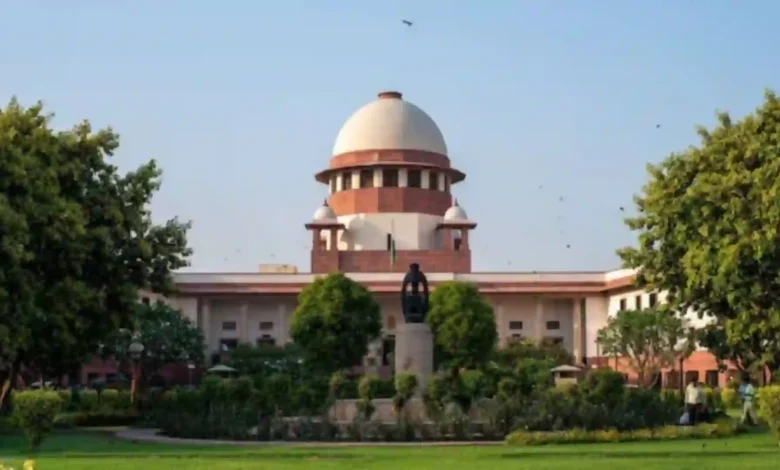
The Supreme Court has refused to interfere with the Bombay High Court’s decision that upheld the Reserve Bank of India’s (RBI) merger scheme for the crisis-hit Punjab and Maharashtra Co-operative (PMC) Bank with Unity Small Finance Bank. However, the Court kept open an important legal question about how the RBI should assess the “interest of depositors” while preparing merger schemes for financially troubled banks.
What is PMC Bank Crisis?
The Punjab and Maharashtra Cooperative (PMC) Bank crisis came to light in 2019 when the RBI found that the bank had given huge loans of over ₹6,500 crore to HDIL, a real estate company. The bank hid these bad loans by creating thousands of fake accounts. When HDIL failed to repay the loans, PMC Bank faced a serious financial crisis.
The RBI took control of the bank, removed its board, and limited customer withdrawals. Around 17 lakh depositors were affected and could not access their money for several months. In 2022, PMC Bank was merged with Unity Small Finance Bank to protect depositors and restore banking services. The crisis showed the importance of proper loan monitoring, good governance, and strict banking regulations.
Legal Question Left Open
A Bench of Justices P.S. Narasimha and Alok Aradhe said there was no reason to interfere with the High Court’s judgment at this stage. However, the Court clarified that it would leave open the legal question of whether the RBI should consider the interests of depositors based on the number of depositors or the total value of their deposits while preparing merger schemes under Section 45 of the Banking Regulation Act.
The Court said this legal issue may be decided in a future case.
Depositors Raised Concerns
After the merger, some depositors raised concerns and the matter reached Bombay High Court but Court also ruled in favour of merger. After that, depositors filed petition in Supreme Court.
Some depositors argued that the High Court had wrongly supported the merger by saying that 98% of depositors were protected.
According to the petitioners, depositors with balances above ₹5 lakh made up only about 4.5% of all depositors but held nearly 75% of the bank’s total deposits. They argued that these depositors would have to wait up to ten years to recover their money.
The petitioners also said that the RBI should protect depositors based on the value of their deposits and not just by the number of people receiving payments.
RBI Defends the Merger Scheme
Representing the RBI, Solicitor General Tushar Mehta told the Court that PMC Bank’s financial condition had become extremely weak, with a negative net worth of nearly ₹6,000 crore. Because of this, the RBI had to use its powers under Section 45 of the Banking Regulation Act.
He said the RBI followed the legal process by inviting proposals, publishing the draft merger scheme, considering objections and suggestions, making necessary changes, and then sending the scheme to the Central Government for approval.
The RBI also argued that giving priority to small depositors was reasonable because many of them depended on their savings for their daily needs and livelihood.
Supreme Court Finds No Legal Violation
During the hearing, the Supreme Court repeatedly asked the petitioners to point out any specific violation of the law in the RBI’s decision-making process.
The Bench said that the Court’s role was to examine whether the RBI had followed the law, not whether the policy itself was the best possible option. The judges observed that merger schemes under Section 45 are special statutory measures designed to deal with banks that are close to insolvency or liquidation.
The Court also noted that if the merger had not taken place, the alternative could have been the liquidation of PMC Bank, which might have caused even greater losses to depositors.
Background of the Case
The case relates to the Punjab and Maharashtra Co-operative Bank (Amalgamation with Unity Small Finance Bank Ltd.) Scheme, 2022, which was approved by the Central Government on January 25, 2022.
Several depositors, co-operative societies, and other stakeholders challenged the scheme, claiming it violated their constitutional rights. They objected to the phased repayment schedule and the different treatment given to retail and institutional depositors.
PMC Bank Fraud Led to the Crisis
The PMC Bank crisis began in September 2019 after the RBI discovered that the bank had hidden its large exposure to the HDIL Group by manipulating loan accounts and financial records.
The RBI’s inspection found serious financial irregularities, hidden bad loans, a negative net worth, and heavy losses. To protect depositors, the RBI imposed restrictions on the bank, removed its board of directors, and later prepared a merger plan with Unity Small Finance Bank.
On March 9, 2026, the Bombay High Court upheld the merger scheme, stating that the RBI had acted within its legal powers to protect depositors and the public interest. The Supreme Court has now refused to interfere with that decision, allowing the merger scheme to continue.