Kerala High Court Rules Acquittal in Cheque Bounce Case Does Not Bar Civil Recovery Suit

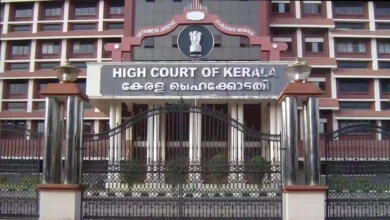
The Kerala High Court has ruled that an acquittal in a cheque bounce case under Section 138 of the Negotiable Instruments Act, 1881 does not stop a civil court from deciding a money recovery suit based on the same cheque. The Court said that findings made by a criminal court are not binding on a civil court because both proceedings are independent. Justice Mohammed Nias C.P. delivered the judgment while allowing the appeal filed by Prameela Varghese.
Background of the Case
Abraham Samuel filed a civil suit claiming that Prameela Varghese and her husband had borrowed ₹2.15 lakh from him for business purposes. He alleged that Prameela later issued a cheque towards repayment. However, when he presented the cheque, it was dishonoured due to insufficient funds. Abraham then filed both a criminal cheque bounce case and a civil recovery suit seeking ₹3.31 lakh, including interest.
Criminal Court Had Acquitted Prameela
In the criminal case under Section 138 of the Negotiable Instruments Act, the Magistrate acquitted Prameela. However, Abraham continued with the civil recovery suit. Prameela denied taking any loan or issuing the cheque. She argued that her husband, whose whereabouts were unknown, might have handed over a cheque leaf from their joint bank account. She also disputed the signature on the cheque.
The Trial Court ruled in favour of Abraham and directed Prameela to pay the cheque amount along with interest. She challenged this decision before the Kerala High Court.
Criminal and Civil Cases Are Independent
Before the High Court, Prameela argued that since she had already been acquitted in the criminal case, the civil court could not decide the same issues again. The High Court rejected this argument.
The Court explained that a criminal case and a civil case follow different legal standards. In a criminal case, the prosecution must prove guilt beyond reasonable doubt. In a civil case, the court decides the matter based on the balance of probabilities. Therefore, an acquittal in a criminal case does not prevent a civil court from examining the same facts independently.
Criminal Judgment Is Not Binding on Civil Court
The High Court further held that an acquittal in a criminal case does not create res judicata or issue estoppel in civil proceedings. It also referred to Section 43 of the Indian Evidence Act, 1872, and stated that criminal court findings are generally not binding on civil courts.
The Court said that even if the same documents and witnesses are presented in both proceedings, the civil court must independently examine the evidence. An acquittal only means that the criminal offence was not proved beyond reasonable doubt. It does not automatically prove that there was no debt or financial liability.
Court Examined the Evidence Independently
While examining the disputed cheque, the High Court noted that Prameela had admitted using different signatures. It also observed that the bank returned the cheque because of insufficient funds and not because of any signature mismatch.
However, the Court found that Abraham failed to prove that Prameela had voluntarily executed and delivered the cheque. Although the evidence showed that the signature on the cheque belonged to her, there were several inconsistencies in Abraham’s evidence. The Court held that proving the signature alone was not enough to prove that the cheque had been voluntarily issued.
High Court’s Final Decision
The Kerala High Court concluded that Abraham failed to establish the basic facts required to succeed in the civil recovery suit. As a result, it set aside the Trial Court’s judgment directing Prameela to pay the cheque amount with interest, dismissed Abraham’s civil suit, and allowed Prameela Varghese’s appeal.
- Download Court Order PDF (This PDF is available for Premium Users Only. Click here to join premium)