Union Bank of India is embroiled in a major controversy. As per report by Z Business, a senior official of Union Bank of India has written a letter to the Reserve Bank of India (RBI).
The official has alleged irregularities in the bank’s CASA (Current Account Savings Account) data near the end of FY26. The complaint mentions sudden changes in deposits, unusual account activity, and possible “window dressing” of financial numbers.
According to the complaint, the bank’s CASA balances increased by about ₹31,000 crore in the last days of FY26. This rise in CASA happened between March 28 and March 31. March 31 is the closing date for banks and banks try to increase their business as much as possible in the month of March.
The letter alleges that soon after 31 March, the balances reportedly fell. By April 2, CASA deposits dropped by around ₹12,000 crore. This sharp fall has raised concerns.
The complaint suggests that this pattern indicates window dressing. This means short-term funds may have been added temporarily to show higher deposits at year-end.
Another concern is unusual activity in CASA accounts during this period. The complaint says many accounts were opened and closed within a very short time between March 30 and March 31. In some cases, thousands of accounts were opened and closed on the same day. This has raised questions about whether the transactions were genuine.
The complaint also says that the changes in CASA balances do not match normal customer-driven growth. The sharp rise and quick fall are seen as unusual. It suggests that temporary funds may have been used to increase the bank’s balance sheet figures.
The complaint reportedly names MD and CEO Asheesh Pandey and raises concerns about oversight at the top level.
Apart from CASA, the complaint raises concerns about treasury operations. It mentions possible structured adjustments at year-end. It also flags issues in One-Time Settlement (OTS) proposals, vendor selection, and consultant appointments. These points suggest possible external influence in decision-making.
Union Bank of India has denied the allegations. The bank said that recent reports are based on an unverified letter and contain factual errors. It said its financial results are properly audited and present a true and fair view.
The bank stated that changes in deposit figures after the financial year-end are normal.
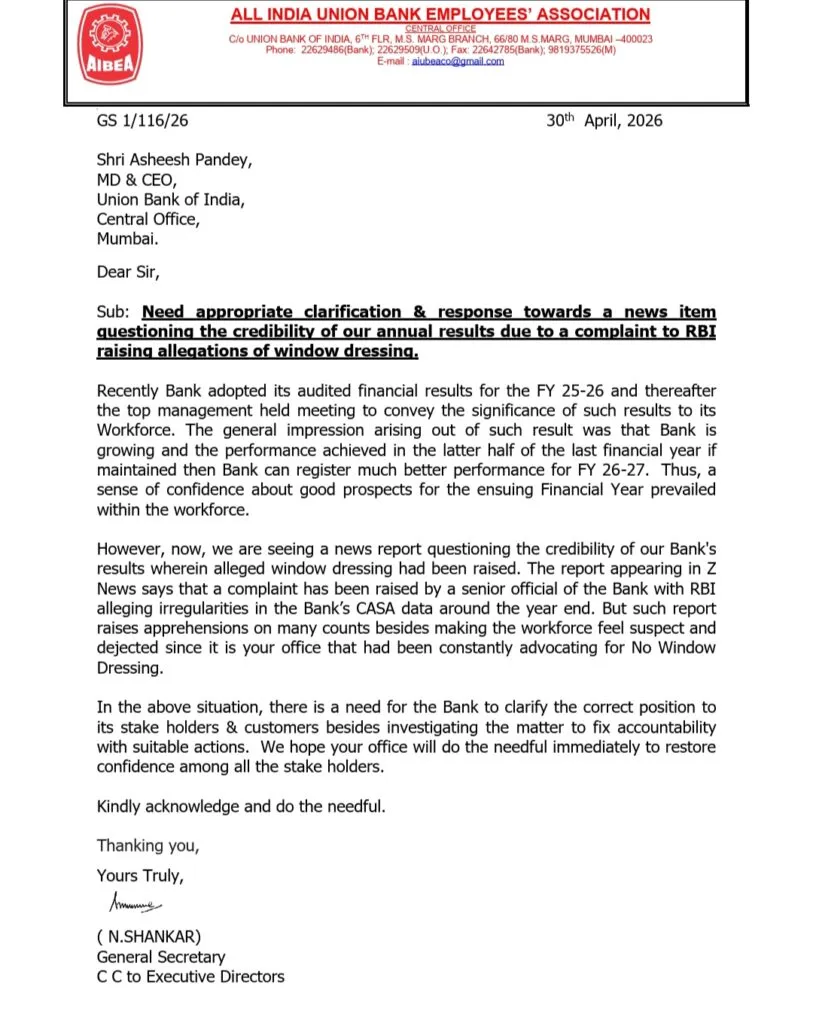
All India Union Bank Employees’ Association has also asked MD&CEO to explain the allegations made by senior official.
Why Window Dressing is not Good?
Window dressing in banks, where business figures like deposits or advances are artificially increased in March and then fall in April, is not considered good practice because it gives a misleading picture of the bank’s true financial position.
It creates an illusion of strong year-end performance, while the actual business remains weak or unchanged. This lack of transparency goes against proper governance standards and can attract scrutiny from regulators such as the Reserve Bank of India.
Moreover, such temporary spikes do not reflect sustainable growth and can mislead investors, stakeholders, and even internal management decisions. Over time, if such practices are exposed, they can damage the bank’s credibility and reduce public trust.
Therefore, banks are expected to maintain consistent and genuine growth rather than relying on short-term adjustments to improve their financial appearance.