| ➡️ Click here to Join Whatsapp News Group - Get instant updates of all Banking News |
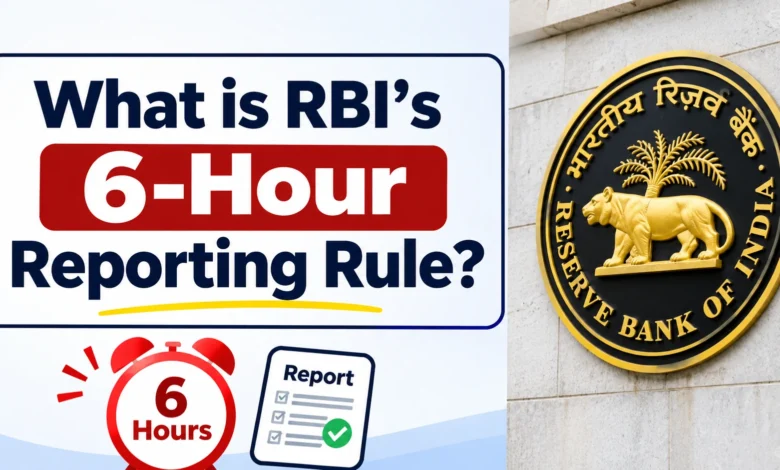
The Reserve Bank of India (RBI) has prescribed a strict six-hour reporting requirement for banks in case of cyber security incidents. Under the RBI’s latest cybersecurity framework, banks are required to report cyber incidents to the RBI within six hours of their detection through the DAKSH supervisory portal.
The six-hour reporting requirement is aimed at ensuring that the RBI receives timely information about cyberattacks and other security incidents affecting the banking system. It will help the regulator monitor cyber threats, assess their impact and ensure that banks take appropriate corrective measures.
What Is RBI’s Six-Hour Reporting Rule?
As per Paragraph 182 of the RBI’s 2026 Cybersecurity Directions, banks must report cyber incidents within six hours of detection on the DAKSH platform, which is the RBI’s Advanced Supervisory Monitoring System.
The directions also require banks to proactively notify the Indian Computer Emergency Response Team (CERT-In) about cyber incidents.
This means banks cannot wait until a complete investigation is finished before reporting an incident to the RBI. They must ensure timely reporting within the prescribed six-hour period.
Which Cyber Incidents Must Be Reported?
The requirement covers cyber security incidents that may affect the confidentiality, integrity or availability of banking systems and information.
Some examples include:
- Ransomware Attacks: When hackers encrypt a bank’s data or systems and demand money to restore access.
- Data Breaches: Unauthorised access to confidential customer information, banking records or other sensitive data.
- DDoS Attacks: Distributed Denial of Service attacks that disrupt banking websites, applications or other online services.
- Cyberattacks on Banking Systems: Attacks targeting Core Banking Solutions (CBS), internet banking, mobile banking and other critical banking infrastructure.
- Data Destruction: Incidents involving unauthorised deletion, modification or destruction of important banking data.
- Other Major Cyber Security Incidents: Any other cyber incident that may seriously affect banking operations or information security.
How Must Banks Report Cyber Incidents?
Banks are required to report cyber incidents through the DAKSH portal of the RBI.
DAKSH is the RBI’s Advanced Supervisory Monitoring System, which enables regulated entities to submit information and interact with the regulator.
The reporting process also involves notifying CERT-In about cyber incidents. Banks must maintain appropriate procedures for identifying, assessing, escalating and reporting such incidents.
Banks are also required to establish clear communication arrangements for escalating cyber incidents to senior management and the Board. Customers must also be informed wherever required.
What Is the Responsibility of Bank Employees?
The six-hour reporting requirement makes it important for banks to have an effective internal mechanism for identifying and escalating cyber incidents.
Bank employees, particularly those working in IT, information security, digital banking and operations, must follow their bank’s prescribed incident reporting procedures.
Employees should immediately report any suspected cyber incident to the designated IT or information security team instead of waiting for the issue to become serious.
For example, if a bank branch notices suspicious activity affecting its systems, unauthorised access, a possible data breach or an unusual disruption in banking services, the matter should be escalated through the bank’s prescribed internal reporting channel without delay.
The six-hour reporting obligation is imposed on the bank. It does not mean that every branch employee is personally required to submit a report on the DAKSH portal.
Is the Six-Hour Reporting Rule New?
The six-hour reporting requirement is not entirely new. RBI had prescribed reporting of unusual cyber incidents within six hours under its earlier cybersecurity reporting framework as well.
The RBI issued consolidated supervisory directions on July 31, 2026, bringing existing regulatory instructions together into structured, entity-specific Master Directions.
Also Read: Punjab National Bank Announces Bonus for Employees for FY 2025-26
Also Read: Indian Bank Recruitment 2026 Notification Out for AI Cybersecurity Specialist Officers
Also Check This


Please login to comment