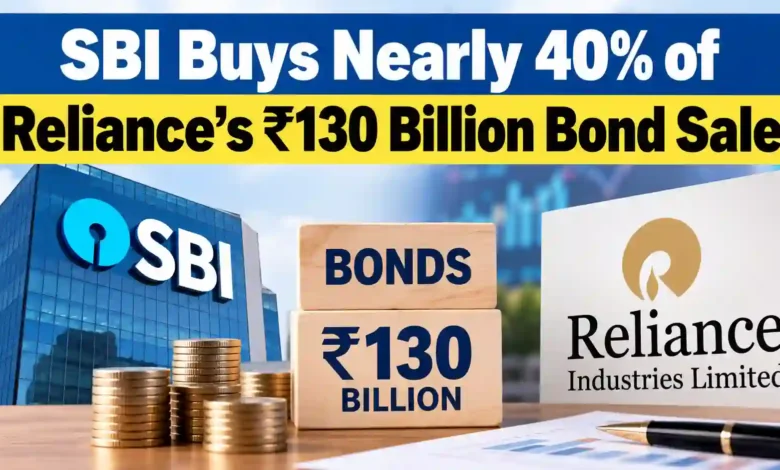
State Bank of India (SBI), India’s largest lender, was the biggest buyer in Reliance Industries’ ₹130 billion ($1.35 billion) 10-year bond sale completed on Wednesday.
SBI is estimated to have purchased bonds worth nearly ₹50 billion, which is around 40% of the total issue. The bonds offer an annual interest rate, or coupon, of 7.90%.
What this means?
Reliance Industries needed to borrow a huge amount of money—₹13,000 crore—to grow its business and pay back older loans. Instead of taking a regular bank loan, it issued “bonds,” which are like formal promises to pay back borrowed money with interest.
State Bank of India (SBI) stepped in as the main buyer, lending Reliance about 40% of the total amount, or roughly ₹5,000 crore. In exchange, Reliance will pay SBI and other buyers a fixed interest rate of 7.90% every year for the next 10 years, and then return all the borrowed money. It is a win-win deal: Reliance gets long-term funding at a locked-in rate, and SBI gets a safe, guaranteed income stream from one of India’s strongest companies.
It is fundamentally a loan—just structured as a corporate bond rather than a traditional bank loan.When a company like Reliance needs a massive amount of money (like ₹13,000 crore), asking a single bank for a standard loan can be difficult and rigid. Instead, they issue bonds (which act like standardized borrowing certificates) and sell them to big institutions like State Bank of India (SBI).
Other Major Investors
ICICI Prudential Mutual Fund, SBI Pension Fund and ICICI Prudential Life Insurance were also among the major investors in the bond issue, according to one source.
Banks and insurance companies showed strong interest in the bonds because long-term, high-quality bonds are not easily available in the market. One investor said buyers were willing to invest even at a slightly higher price.
Companies Increase Borrowing
Indian companies have been increasing their borrowing from the domestic bond market. They are looking to secure funds before monetary policy conditions potentially become tighter, especially as higher energy prices could increase inflation. The sources quoted in the report did not want to be identified because they were not authorised to speak to the media.


