| ➡️ Click here to Join Whatsapp News Group - Get instant updates of all Banking News |
AIPNBOA has raised serious concerns over the action taken against several Punjab National Bank officers following the Saharanpur Currency Chest incident. The association said that many officers have faced suspension and have been named in the FIR without, according to the association, proper investigation into their actual role.
AIPNBOA said that it does not support anyone involved in fraud, financial irregularities, embezzlement or deliberate misconduct. However, it stressed that innocent officers should not be punished on the basis of assumptions, unverified allegations or incomplete investigations.
1. Suspension of Ms. Nisha Singh, Chief Manager, CO Saharanpur
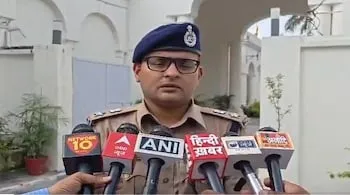
Ms. Nisha Singh, Chief Manager at the Circle Office, Saharanpur, was suspended on 2 September 2026, allegedly in connection with addressing the media about the Currency Chest incident.
According to her representation dated 9 September 2026, which was submitted to the Zonal Manager, Meerut, with a copy to CGM-HRD at Head Office, she explained the circumstances in which the media interaction took place.
She stated that the media interaction was not conducted by her alone. Four officials from the Circle Office were present, including the Deputy Circle Head, Law Officer, CAC Head and Ms. Nisha Singh herself.
According to her representation, the interaction was held on the specific instructions of the Circle Head. At that time, the Circle Head was busy interacting with RBI officials and the CGM, GBD.
The association further said that the interaction took place in the conference hall on the upper floor of the Circle Office. The hall could be accessed through the Circle Office itself. Therefore, according to AIPNBOA, the interaction was not a secret or isolated activity and took place in the presence or knowledge of officials working at the Circle Office.
Despite these circumstances, AIPNBOA said that Ms. Nisha Singh was singled out for disciplinary action.
The association also pointed out that after her representation was received, the Deputy Circle Head, who was reportedly present during the media interaction, was also suspended.
AIPNBOA questioned why subordinate officers were being subjected to punitive action if the media interaction had taken place on the instructions of the Circle Head.
The association said that the matter should be examined through an impartial fact-finding exercise instead of selective punitive action.
2. Officers Named in FIR Without Proper Preliminary Investigation
AIPNBOA also raised concerns over the way the names of several officers were reportedly given to the police while lodging the FIR.
According to the association, identifying the people actually responsible for any criminal misconduct requires a proper investigation. Such an investigation should consider evidence, the sequence of events, access to the Currency Chest, custody, dates and the actual involvement of each officer.
AIPNBOA said that the police investigation should be allowed to identify the persons responsible on the basis of evidence.
The association highlighted the following cases:
(a) Shri Sushil Kumar Sharma, Scale-II Manager, Currency Chest
Shri Sushil Kumar Sharma joined the Currency Chest in April 2026.
According to the information cited by AIPNBOA, he noticed that something was wrong at the Currency Chest and acted as a whistleblower. He informed the Circle Secretary of AIPNBOA, Shri Ashok Kumar, about the matter on 27 August 2026.
The Circle Secretary then informed the Circle Head over the telephone on the evening of 27 August 2026. At that time, the Circle Head was travelling to Chandigarh to visit his family.
The following day, 28 August 2026, was a public holiday in Uttar Pradesh on account of Raksha Bandhan.
When the Circle Head returned to duty on 29 August 2026, he called the Currency Chest officers and other Scale-IV officers and started an examination of the Currency Chest to find out whether there was any irregularity.
AIPNBOA therefore questioned why Shri Sushil Kumar Sharma was suspended and named in the FIR when, according to the information available to the association, he was among the first persons to notice the irregularity and report it to the concerned authorities.
The association said that his case required proper examination before fixing responsibility.
(b) RBI Inspection and Shri Ashutosh, Chief Manager
AIPNBOA also referred to the RBI inspection of the Saharanpur Currency Chest conducted on 3 and 4 August 2026.
According to the association, no irregularity was reported during this RBI inspection. Based on this, AIPNBOA argued that the available information indicated that there was no reported irregularity up to 4 August 2026.
The association also referred to the half-yearly cash inspection conducted by Shri Ashutosh, Chief Manager, on 22 May 2026.
According to AIPNBOA, Shri Ashutosh had been assigned this inspection before the RBI inspection. He conducted the inspection and submitted his report, which was subsequently confirmed by the Circle Head.
The association questioned how Shri Ashutosh could be presumed to have been involved when his inspection was conducted on 22 May 2026 and the subsequent RBI inspection on 3–4 August 2026 did not report any irregularity.
Despite this, Shri Ashutosh was also suspended.
AIPNBOA said that such action should be reviewed because the relevant period of the alleged irregularity and the actual role of the officer must first be established.
(c) Shri Amit Kumar, Scale-II Manager
AIPNBOA also highlighted the case of Shri Amit Kumar, Scale-II Manager.
According to the association, Shri Amit Kumar was transferred from the Saharanpur Currency Chest to Karnal Circle on 16 April 2026.
This was several months before the RBI inspection conducted on 3–4 August 2026.
Despite having been transferred out before the RBI inspection, Shri Amit Kumar was reportedly identified, suspended and named in the FIR.
AIPNBOA said that his case shows the risk of fixing responsibility simply because an officer had previously worked at the Currency Chest.
The association pointed out that the half-yearly inspection on 22 May 2026 and the RBI inspection completed on 4 August 2026 did not report any irregularity.
According to AIPNBOA, responsibility should therefore be established through evidence rather than assumptions based only on an officer’s previous posting.
3. Action Against Officers Based on Assumptions About Currency Chest Inspections
AIPNBOA also said that it was receiving information about officers at other centres being subjected to suspension or disciplinary proceedings based merely on assumptions regarding the time they spent conducting bi-monthly inspections of Currency Chests.
The association said that the nature and scope of such inspections must be understood properly.
For example, if an officer is required to physically verify or count only a prescribed percentage of the cash balance, such as 2% of each denomination, merely conducting such an inspection does not automatically establish that the officer was involved in a later shortage or manipulation.
AIPNBOA said that responsibility should instead be determined using actual evidence.
This could include:
- Actual custody of cash
- Access to the Currency Chest
- Relevant dates
- Records
- Electronic evidence
- Transaction trails
- Other available material evidence
The association said that responsibility should not be fixed merely on the basis of assumptions.
4. Increasing Instances of Disproportionate Disciplinary Action
AIPNBOA said that the Saharanpur incident appears to be part of a wider concern regarding disciplinary action in the Bank.
According to the association, disciplinary proceedings are increasingly being initiated in cases where the punishment appears disproportionate to the nature of the alleged lapse or its financial impact.
The association also raised concern that sufficient distinction is not always being made between a genuine mistake and an act done with mala fide intention.
AIPNBOA gave two examples.
First case: A junior officer was reportedly served with a major penalty along with a vigilance charge-sheet for an alleged failure to apply CGTMSE cover in connection with a loan of only ₹5 lakh in a single account.
Second case: A Chief Manager (Scale-IV) was reportedly issued a major penalty-vigilance charge-sheet for allegedly failing to visit a site related to a loan of ₹10 lakh.
AIPNBOA said that there are several similar cases where minor procedural lapses are allegedly being treated as serious misconduct.
According to the association, disciplinary authorities should consider several factors before deciding the seriousness of an alleged lapse and the appropriate punishment. These include:
- The nature of the lapse
- The intention of the officer
- The financial impact
- Mitigating circumstances
- Whether the lapse was a genuine mistake
- The proportionality of the proposed punishment
5. Concerns Regarding Departmental Inquiries
AIPNBOA also expressed serious concerns about the manner in which departmental inquiries are being conducted in several cases.
The association highlighted a number of issues.
Virtual inquiries: According to AIPNBOA, charged officers are being required to attend virtual inquiries even in situations where physical participation may be necessary for an effective defence.
Inquiry Officers: The association said that retired officers appointed as Inquiry Officers are, in some cases, allegedly not following the prescribed inquiry procedure in its true spirit.
Role of Presenting Officers: AIPNBOA said that Presenting Officers are perceived in some cases to be influencing or dictating the course of proceedings instead of maintaining neutrality and following proper procedural discipline.
Documents for defence: The association also alleged that documents requested by charged officers and needed to prepare their defence are sometimes being denied by the Inquiry Officer or Presenting Officer.
Difference between Inquiry Officer and Disciplinary Authority: Another concern raised by AIPNBOA relates to cases where the Inquiry Officer concludes that charges are not proved, but the Disciplinary Authority later disagrees with that finding and holds the charges proved.
The association acknowledged that the Disciplinary Authority has statutory and regulatory powers.
However, AIPNBOA said that if the findings of an independent Inquiry Officer are repeatedly overturned without compelling and properly explained reasons, it can affect the credibility and fairness of the departmental inquiry system.
The association also stressed that every charged officer should receive a genuine opportunity to defend himself. This includes providing relevant documents and following the principles of natural justice.
6. Action on Anonymous and Repetitive Complaints
AIPNBOA also raised concerns about the handling of anonymous complaints.
The association said that anonymous complaints, including repeated complaints against particular officers, are being actively processed despite established principles and CVC guidelines concerning complaints where the identity of the complainant is not disclosed.
According to AIPNBOA, if an earlier anonymous complaint has already been examined and found to be false or unsubstantiated, repeatedly taking action on new anonymous complaints of the same nature against the same officer can become a form of harassment and victimisation.
The association therefore called for greater care in dealing with such complaints.
7. Need to Avoid a Repeat of the Past Situation
AIPNBOA also referred to the Bank’s past experience between 2009 and 2012/13.
The association said that during that period, the Bank witnessed an environment of excessive disciplinary action. According to AIPNBOA, the consequences were later reflected in the Bank’s business environment and growth in 2014.
The association expressed concern that the current trend of excessive, disproportionate and assumption-based disciplinary action could again affect the confidence and morale of officers working in the field.
AIPNBOA said that officers in a public sector bank need to take commercial and operational decisions with confidence.
If every genuine business decision or minor procedural mistake is treated as a vigilance issue or misconduct, officers may become increasingly risk-averse.
According to the association, this can lead to delays in decision-making and ultimately have an adverse impact on business growth.