| ➡️ Click here to Join Whatsapp News Group - Get instant updates of all Banking News |
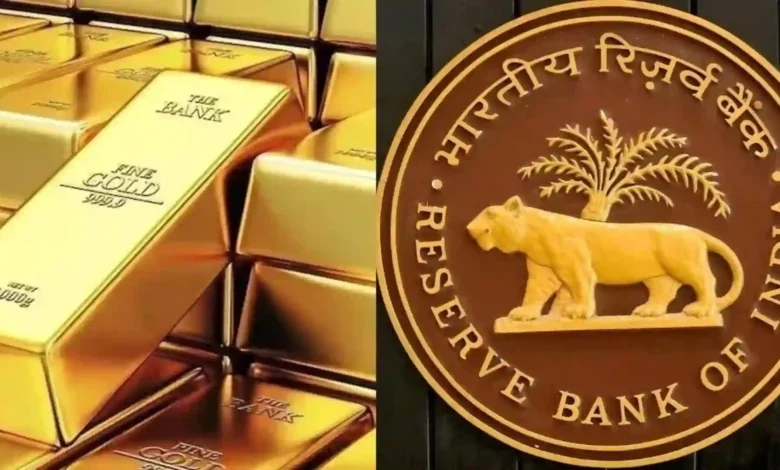
India is among the top 10 countries with the largest gold reserves, and its gold holdings are increasing continuously. The Reserve Bank of India (RBI) is also choosing to store most of the country’s gold inside India and is bringing back gold kept abroad.
Between October 2025 and March 2026, the RBI brought back 104.2 metric tons of gold to India. Earlier, between 2023 and 2025, the RBI had already repatriated around 280 tons of gold. This included 64 tons brought back in mid-2025 and nearly 100 tons returned from the United Kingdom.
In recent years, the world has faced several economic shocks, including the Covid-19 pandemic, the Russia-Ukraine war, and tariff-related tensions linked to Donald Trump. Because of these events, countries have become more careful about protecting their economies and strengthening their financial safety reserves.
As of early 2026, the United States holds the world’s largest official gold reserves with over 8,133 tonnes, followed by Germany, Italy, and France.
Top 10 Countries with Highest Gold Reserves are as follows:
- United States: ~8,133 tonnes
- Germany: ~3,350 tonnes
- Italy: ~2,452 tonnes
- France: ~2,437 tonnes
- Russia: ~2,333 tonnes
- China: ~2,280–2,300 tonnes
- Switzerland: ~1,040 tonnes
- India: ~876–880 tonnes
- Japan: ~846 tonnes
- Poland: ~765 tonnes (or Turkey)
The top four nations (USA, Germany, Italy, France) have held the top spots for several years, with large percentages of their foreign exchange reserves held in gold.
Foreign exchange reserves are considered an important safety shield for any economy because they help countries meet their debt obligations and handle financial crises.
Gold has always been an important part of foreign exchange reserves, but its importance is growing even more now. According to reports, central banks hold gold as part of their official reserves, making them some of the world’s biggest buyers and holders of gold.
The decisions taken by central banks also affect gold prices, market sentiment, and the long-term global financial system.
One major reason central banks keep gold is to diversify their reserves and protect value over the long term. Unlike paper currency, gold’s value does not depend on the economy of any one country.
The RBI has not only increased its gold reserves but has also started storing more physical gold inside the country. In March 2023, around 38% of India’s gold reserves were stored domestically. By March 2026, this figure had increased to nearly 77%.
Keeping gold within the country has many benefits, including lower storage costs and better security. Experts say that bringing gold back home also reduces the risk of external actions by foreign countries. India will also save money that was earlier spent on storing gold abroad.
➡️ Gold Loan EMI Calculator: Calculate EMI of Rs.1 Lac Gold Loan