| ➡️ Click here to Join Whatsapp News Group - Get instant updates of all Banking News |
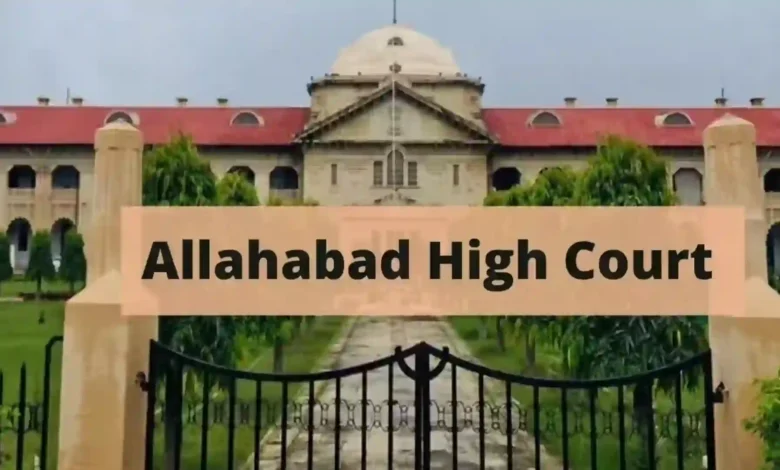
The Allahabad High Court has given an important order related to cheque bounce case.
In a cheque dishonour case, the Allahabad High Court recently said that a joint account holder who has not signed the disputed cheque cannot be prosecuted under Section 138 of the Negotiable Instruments (NI) Act, 1881.
A bench of Justice Sandeep Jain also clarified that Section 141 of the NI Act, which deals with vicarious liability, applies only to companies and partnership firms, and not to individuals.
The single judge quashed the criminal proceedings against the applicant, Madhu Singh, who had been summoned by the Special CBI Court in Ghaziabad in a complaint related to two bounced cheques.
The complainant, Hari Om Pathak, filed a criminal complaint against Madhu Singh and co-accused Rahul Thind under Section 138 of the NI Act and Section 420 of the IPC.
According to the complaint, Pathak had given a loan of Rs. 8 lakh to Rahul Thind for business purposes. To repay the loan, Thind issued two cheques from a joint bank account held with Madhu Singh.
However, when the cheques were presented to the bank, they were dishonoured because the account had been closed.
The complainant alleged that both account holders had intentionally issued cheques that would bounce and had closed the account to avoid repayment. It was argued that both were jointly responsible for repaying the loan.
The counsel for the applicant argued that Madhu Singh was not a signatory to the cheques, and therefore no offence under Section 138 of the NI Act was made out against her.
It was also argued that Section 141 of the NI Act was not applicable in this case because it applies only to companies and partnership firms, not to individuals.
The High Court relied on several Supreme Court judgments, including Alka Khandu Avhad vs. Amar Syamprasad Mishra (2021) and Aparna A. Shah vs. Sheth Developers Pvt. Ltd. & Another (2013). The Court held that in the case of a joint bank account, only the person who signed the cheque can be prosecuted for cheque dishonour.
In India, a cheque is valid for 3 months from the date written on the cheque. After 3 months, the cheque becomes “stale” and banks normally do not accept it for payment. For example, if a cheque is dated 10 May 2026, it will generally remain valid till 9 August 2026.
The Court also relied on the Supreme Court judgment in Bijoy Kumar Moni vs. Paresh Manna and Another (2024) to hold that Section 141 of the NI Act applies only to companies and partnership firms, and not to individuals.
The bench further observed that the allegations were mainly against the co-accused and that no specific role had been assigned to the applicant. Therefore, the Court found that no prima facie case was made out against her.
Since the applicant had not signed the cheques, the Court held that she could not be held liable under Section 138 of the NI Act and allowed her plea.
- Download Court Order PDF (This PDF is available for Premium Users Only. Click here to join premium)