| ➡️ Click here to Join Whatsapp News Group - Get instant updates of all Banking News |
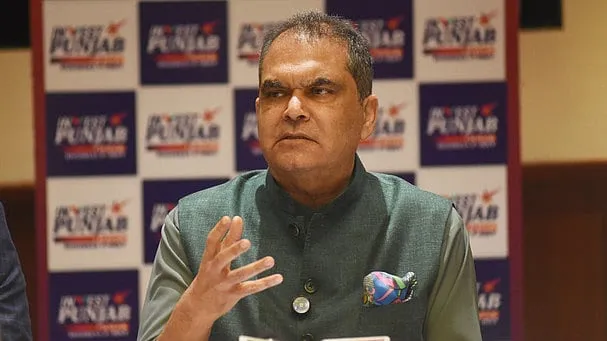
Sanjeev Arora, Punjab’s Power, Industries, Investment Promotion and Local Government Minister, has been arrested by the Enforcement Directorate after searches were conducted at his official residence in Sector 2 in connection with an alleged money laundering case.
Sanjeev Arora is considered one of the most influential ministers in the Bhagwant Mann Cabinet and played a key role in building relations between the AAP government and industrialists in Punjab.
Why was he arrested?
According to allegations, a large-scale money laundering operation was carried out through Arora’s company involving fake GST purchases of mobile phones worth more than Rs 100 crore.
Investigators also alleged that export transactions were used to route illegal funds from Dubai back to India.
The investigation further claimed that fake GST purchase bills were obtained from non-existent firms in Delhi to fraudulently claim Input Tax Credit (ITC).
It is also alleged that GST refunds on exports and duty drawbacks were wrongly claimed, causing losses to the government exchequer and resulting in personal gains.
Arora had also faced ED action in April, just days after similar raids were conducted against then-AAP Rajya Sabha MP Ashok Kumar Mittal. Shortly afterwards, Mittal joined the BJP along with six other Rajya Sabha MPs from the party, including Raghav Chadha.
Let’s understand how GST scam is done?
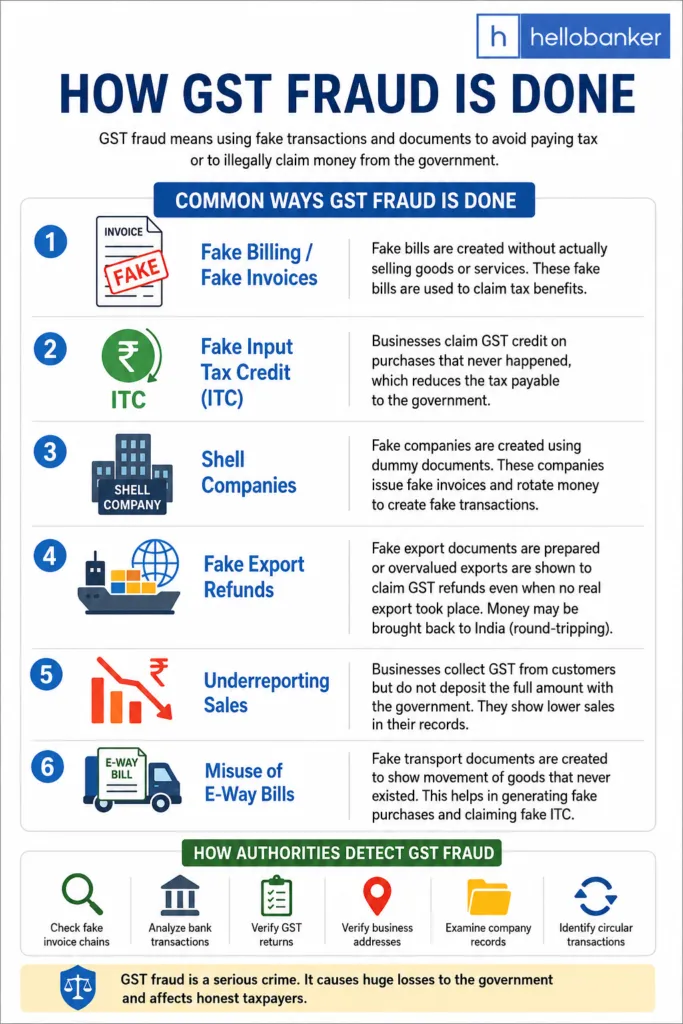
GST fraud is usually done by creating fake business transactions to avoid paying tax or to illegally claim money from the government. In many cases, fraudsters create fake companies and generate fake bills without actually selling any goods or services.
These fake bills are then used to claim Input Tax Credit (ITC), which helps reduce the amount of tax that needs to be paid. Some people also show fake exports to claim GST refunds from the government.
In such cases, goods may never actually be exported, but fake documents are prepared to show that exports took place. Fraudsters may also use fake purchase bills from non-existent firms to claim tax benefits and refunds.
Through these methods, they illegally earn money while causing huge losses to the government. Agencies like the GST Department and Enforcement Directorate investigate such cases by checking bank transactions, GST returns, invoices, and company records.
Also Check This


Please login to comment