| ➡️ Click here to Join Whatsapp News Group - Get instant updates of all Banking News |
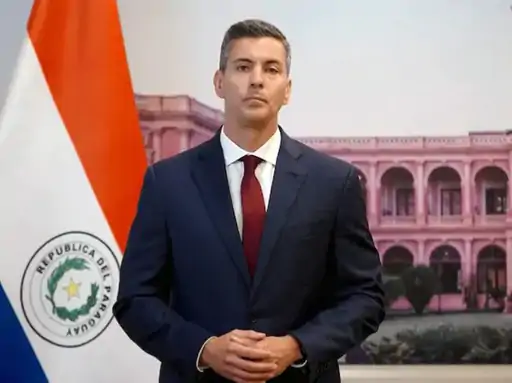
Paraguay’s President Santiago Peña was impeached, removed from office, and placed under house arrest following the sudden collapse of Ueno Bank. Vice President Pedro Alliana was immediately sworn in as the new president of Paraguay to serve out the remainder of the term through August 2028.
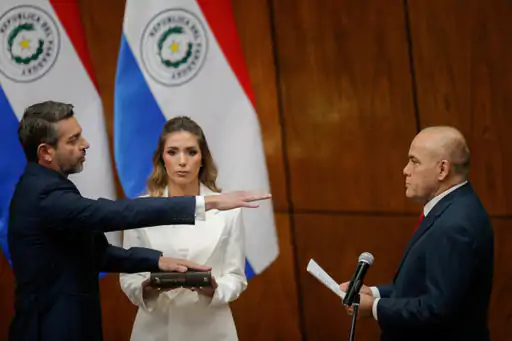
On November 6, 2026, Paraguay’s Senate voted 44 to 1 to find Peña guilty of “dereliction of duty” and “misconduct in office,” following a unanimous 78–0 vote in the lower chamber. Prosecutors ordered Peña placed under house arrest on suspicion of breach of trust, influence peddling, and misappropriation of funds. By impeaching rather than accepting his resignation, lawmakers stripped him of the lifetime Senate seat and immunity granted to former presidents.
The crisis erupted after regulators from the Central Bank of Paraguay seized Ueno Bank due to a severe solvency crisis. The failure froze the accounts and savings of nearly 3 million depositors—about half the nation’s population—sparking widespread street protests in Asunción.
Pena to remain at home until investigation is completed
Pena has been ordered to remain in custody at his home. He will not be allowed to leave until he is presented before the Economic Crimes and Anti-Corruption Unit.
The order also directs the arrest of former central bank chief Carlos Carvalho. Carvalho was appointed by Pena. Members of Parliament alleged that Peña used his political influence to have hundreds of millions of dollars in government funds deposited in Ueno Bank. Regulatory agencies are accused of overlooking the bank’s risky insider loans during this period.
Bank grew rapidly with government money
Ueno Bank was a private commercial bank, not a government-owned bank. It belonged to Grupo Vázquez
, one of the largest private business and industrial conglomerates in Paraguay, and its controlling shareholder is a private individual, Miguel Vázquez (who is currently jailed).
Ueno had become Paraguay’s fifth-largest bank within a few years. More than $800 million in government funds had been deposited with it. MPs allege that Peña deposited $355 million from the government pension fund in the bank, exceeding the legal limit.
Peña is also accused of holding a stake in Ueno’s holding company and appointing a former bank official as head of the central bank. Analysts say the bank received lenient treatment in regulatory scrutiny because of its political connections.
The bank had aggressively targeted low-income and unbanked populations with promotional rebates, acquiring nearly 3 million customers. When the central bank seized it due to critical capital shortfalls, roughly 60% of Paraguay’s adult population lost immediate access to cash, credit cards, salaries, and pensions. Even members of Paraguay’s national soccer team (which Ueno sponsored) had their accounts frozen.
Investigators revealed deep regulatory capture. In 2023, Peña appointed Carlos Carvallo—the former CEO of Ueno’s parent company, Grupo Vázquez—to be the head of the Central Bank of Paraguay. Lawmakers allege this relationship allowed Ueno to bypass oversight, mask systemic insider lending, and illegally absorb massive injections of public money from state agencies like the social security institute and the state-run oil company, Petropar.
A financial disclosure investigation by the newspaper Última Hora revealed that Peña personally owned roughly $800,000 worth of shares in Ueno Holding until a quiet divestment in 2025. Furthermore, his brother, Francisco Peña Palacios, remains a major stakeholder in the bank’s Luxembourg-based holding company.
While it was a private institution, Ueno aggressively pursued state funds. After Santiago Peña took office in 2023, the government transferred roughly $850 million in public funds (including state health and pension funds) into this private bank. It became the second-largest holder of state money in the country, sitting right behind Paraguay’s actual state-owned development bank (Banco Nacional de Fomento).
How Ueno Bank in Paraguay Failed?
Ueno Bank collapsed due to massive insider fraud and reckless accounting manipulation. The bank lent out hundreds of millions of dollars to its own owners and masked these mounting losses by illegally doctoring its financial books. When the Central Bank of Paraguay audited the institution, it discovered that Ueno’s actual capital reserves had plummeted to less than half of the legal minimum requirement, rendering the bank completely insolvent.
Illegal “Insider” Lending: A Central Bank probe revealed a rampant pattern of high-risk lending to companies tied directly to the bank’s parent conglomerate, Grupo Vázquez. Ueno lent over $146 million to entities associated with its own owners.
Zero Collateral: The insider loans completely bypassed standard security protocols. They were granted without adequate collateral or backing, meaning that when the related companies defaulted, Ueno had no way to recover the cash. On a single day in September 2025 alone, $39 million was funneled into just three of these shell operations.
Doctored Accounting Books: To hide the fact that they were running out of money, Ueno’s executives manipulated their financial statements. Regulators caught the bank intentionally counting corporate expenses as assets to falsely inflate its financial health on paper.
The Solvency Crash: Once regulatory auditors forced Ueno to correct its fraudulent bookkeeping, the bank’s capital cushion vanished overnight. The bank shattered its legal solvency ratio, giving the Central Bank no choice but to step in, freeze all operations, and seize the lender to save whatever funds remained.
The Failed Strategy to Avoid Impeachment
On Thursday, November 5, 2026, Peña recorded a video address to the nation expressing regret and offering his formal resignation. He stated he was stepping down to preserve “social peace”. Recognizing that accepting a resignation would allow Peña to claim a lifetime Senate seat and full parliamentary immunity typically afforded to former presidents, Congress flatly refused to accept his request. Instead, the Chamber of Deputies voted 78–0 to reject his resignation and force impeachment.
Peña’s defense lawyers, Adolfo Ferreiro and Ricardo Preda, petitioned the Senate for a 72-hour extension to review the 300-page accusatory writ. The Senate voted 42–3 to reject the delay and proceeded immediately with the trial.
Prosecutors have filed a case against the bank’s controlling shareholder, Miguel Vasquez, and 27 others on charges of breach of trust and attempted fraud. Six of the bank’s directors are in custody. Officials have seized nine luxury cars, a yacht and a small aircraft from Vasquez’s home.
Also Check This
Discover what other readers are reading
No trending news available yet.


Please login to comment