US Federal Reserve Ends Enforcement Action Against Allegiant United Holdings, Nano Financial Holdings and Nano Banc

| ➡️ Click here to Join Whatsapp News Group - Get instant updates of all Banking News |
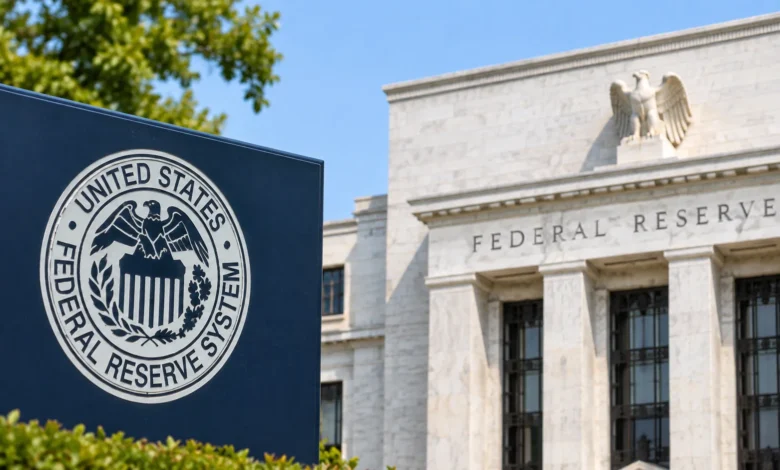
The US Federal Reserve Board has announced the termination of its enforcement action against Allegiant United Holdings, LLC, Nano Financial Holdings, Inc., and Nano Banc. The decision was announced on November 5, 2026, and the written agreement dated February 24, 2021, was terminated on October 21, 2026. Federal Reserve
Background of the enforcement action
The case dates back to February 24, 2021, when the companies and the bank entered into a written agreement with the Federal Reserve Bank of San Francisco to improve the bank’s financial condition, governance and management. Federal Reserve+1
In January 2022, the Federal Reserve issued a cease-and-desist order after identifying additional safety and soundness concerns. These included unsecured loans to shareholders of Nano Financial Holdings, vacancies in key management positions and an insufficient number of board members. Federal Reserve
The order required the organisations to strengthen corporate governance, appoint qualified executives and directors, improve lending and credit administration policies, and strengthen controls over transactions involving insiders and affiliated entities. Federal Reserve
What does the termination mean?
The termination means that the Federal Reserve has formally closed the specific written agreement that had remained in place since February 2021. The latest announcement does not explain the detailed reasons for the termination or provide a fresh assessment of the bank’s overall financial condition. Federal Reserve.
The agreement requires the bank and its holding companies to take several corrective measures.
1. Strengthening Board Oversight
The bank was required to prepare a plan to improve the supervision of its management and operations. The board had to monitor the bank’s capital, earnings, liquidity, commercial real estate (CRE) loan exposure, internal controls and audit activities.
2. Review of Corporate Governance and Management
The bank was required to appoint an independent third party to review its corporate governance, board structure, management and staffing requirements. Based on the review, the bank had to prepare a plan to strengthen its management and appoint additional or replacement directors and officers wherever necessary.
3. Strengthening Internal Controls
The bank was directed to improve its internal control systems. This included segregation of duties, dual controls, accurate preparation of financial reports, tracking of audit findings and better due diligence before purchasing investments.
4. Improving Credit Risk Management
The bank was required to strengthen its credit risk management policies and procedures. It had to establish appropriate risk limits, identify and manage large credit exposures and improve the information available to senior management and the board.
5. Controlling Commercial Real Estate Loan Exposure
The bank was directed to strengthen its monitoring of commercial real estate lending. It had to prepare a plan to reduce the risks arising from excessive exposure to commercial real estate loans and establish a timeline for reducing such exposure.
6. Maintaining Adequate Loan Loss Provisions
The bank was required to review and revise its Allowance for Loan and Lease Losses (ALLL) methodology to ensure that sufficient provisions were maintained against potential loan losses. The board was also required to review the adequacy of these provisions at least quarterly.
7. Maintaining Sufficient Capital
The bank had to submit a capital plan to maintain adequate capital levels. If its capital ratios fell below the minimum levels approved under the plan, it was required to inform the Federal Reserve and submit corrective measures.
8. Improving Liquidity and Fund Management
The bank was required to strengthen its funding and liquidity management arrangements. It had to monitor liquidity against approved limits and regularly report its financial position to the board.
9. Improving Earnings and Financial Performance
The bank had to submit a strategic business plan and budget for 2021 to improve its earnings and overall financial condition. The plan also had to include strategies to increase core earnings and reduce operating expenses.
10. Strengthening Internal Audit
The bank has been directed to improve its internal audit programme, ensure timely resolution of audit observations and regularly report the status of corrective actions to the audit committee.
Restrictions imposed on the bank and holding companies
The agreement also imposed certain financial restrictions:
- Dividend restrictions: The bank and holding companies could not declare or pay dividends without prior written approval from the Federal Reserve.
- Restrictions on debt: The holding companies could not incur, increase or guarantee debt without prior approval.
- Stock redemption: The holding companies could not purchase or redeem their own shares without prior written approval.
- Asset transactions: The bank could not enter into agreements to purchase or sell loans or other assets exceeding 5% of its total assets, in aggregate, without prior written approval from the Federal Reserve.
Click here to download order PDF
Also Check This
 RBI Draft Directions on Priority Sector Lending
›
2
 RBI New Circular on Cyber Resilience and Digital Payment Security Controls for non-bank Payment System Operators
›
3
 Uttar Pradesh Minister JPS Rathore inspected the District Cooperative Bank Ltd Gorakhpur
›
4
 Canada’s Bank of Nova Scotia acquires MapleMark Bank in US
›
5
 Federal Reserve Keeps Interest Rates Unchanged at 3.75% – 4%
›


Please login to comment