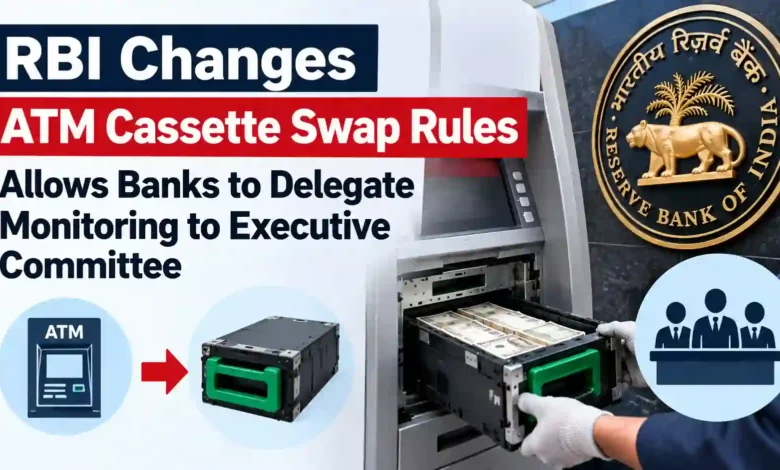
RBI Changes ATM Cassette Swap Rules, Allows Banks to Delegate Monitoring to Executive Committee

| ➡️ Click here to Join Whatsapp News Group - Get instant updates of all Banking News |
RBI has advised that monitoring the progress of implementation of cassette swap may be delegated by the Board to a Committee of Executives of the bank.
It is not a new rule requiring banks to introduce cassette swapping. Instead, it changes who within a bank can monitor the implementation of the cassette-swap system.
What is cassette swapping?
In simple terms, an ATM has cash cassettes that contain currency notes. Instead of opening and replenishing the ATM cassette at the ATM location every time, a pre-filled cassette can be swapped with an empty/used cassette.
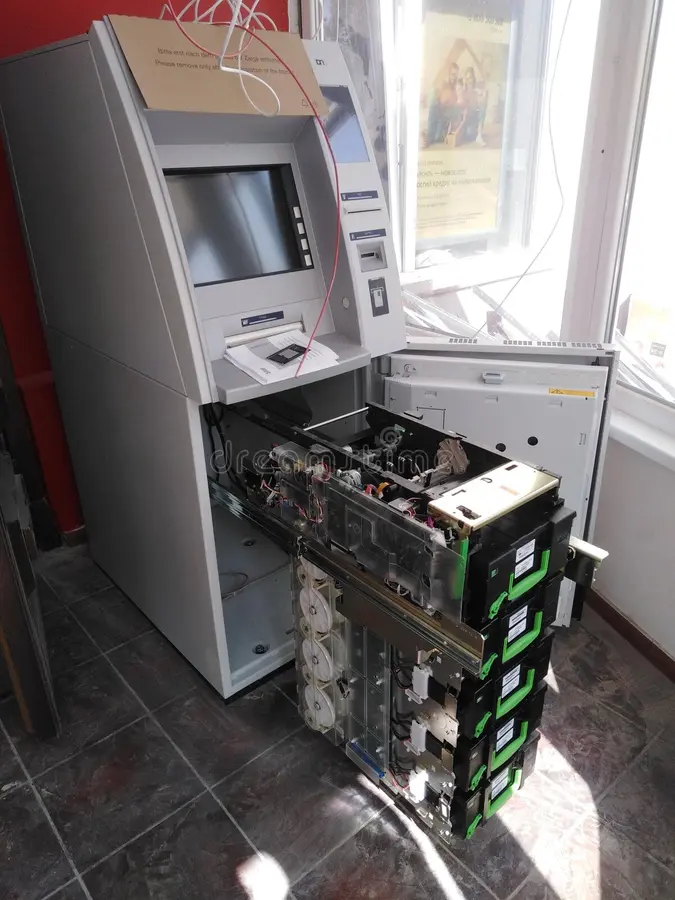
This can make ATM cash replenishment and cash management more efficient and can reduce the time an ATM needs to be opened for cash handling.
What has RBI changed?
RBI had issued an earlier circular on 31 March 2022 regarding cassette swapping in ATMs. The 2026 circular says that Paragraph 3 of the earlier circular is being partially modified.
The key change is: Monitoring the progress of implementation of cassette swap may now be delegated by the Board to a Committee of Executives of the bank.
So previously, the monitoring responsibility was specified at the Board level. Now, the Board can delegate this monitoring responsibility to a Committee of Executives.
In simple example
Suppose SBI’s Board is responsible for monitoring the implementation of cassette swapping across its ATMs. Under the amended provision, the Board can decide:
Board → Committee of Executives → Monitor implementation
This means the Board does not necessarily have to directly monitor the implementation itself; it can delegate the monitoring work to an appropriate committee of bank executives.
Click here to download RBI Circular