Karnataka Bank Governance Row Deepens as Shareholder Votes Split Over Independent Director Reappointment

According to a BusinessWorld article, a governance dispute has emerged at Karnataka Bank Ltd., an old-generation private-sector bank. What began as a routine shareholder vote to confirm board appointments has now turned into a major governance issue. The voting took place through a postal ballot on March 6 to decide on the reappointment of independent directors. However, the results have raised concerns about the growing influence of large non-promoter shareholders and how decisions are made in a bank that does not have a dominant promoter.
Shareholder Decision on Director Appointments
In an unusual development, shareholders approved the reappointment of Balakrishna Alse S but rejected the reappointment of Dr. D. S. Ravindran. Mr. Balakrishna Alse S is a Non-Executive Independent Director on the Board of the Bank since May 26, 2021.
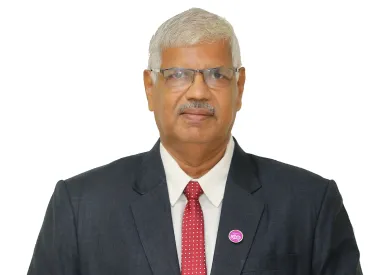
Dr. D.S. Ravindran tendered his resignation as a Non-Executive Independent Director of Karnataka Bank with effect from 09.00 PM of March 06, 2026.
The bank’s board had recommended both candidates. However, under company law and SEBI regulations, such resolutions require a special majority. Only one of the two resolutions received the required approval.
For a bank where shareholders usually accept board recommendations together, this split decision surprised many market observers. It suggested that large institutional investors may now be playing a more active role in deciding who should be on the board.
Similar Governance Controversy in 2025
This is not the first time such a situation has occurred at Karnataka Bank. In mid-2025, independent director Justice A. V. Chandrashekar, a former High Court judge, failed to secure reappointment even though proxy advisory firms had supported him strongly.
He received 74.08 percent shareholder support, which was just below the required 75 percent approval under corporate governance rules. Meanwhile, Chairman P. Pradeep Kumar Panja was reappointed with more than 97 percent support.
Proxy advisory firms such as InGovern, Stakeholders Empowerment Services, and IiAS had recommended shareholders vote in favour of Chandrashekar. His rejection came as a surprise to many governance experts.
Role of Institutional Investors
Market analysts later noticed that a large number of votes against Chandrashekar appeared in the final days of the voting process. Reports suggested that a major institutional investor, which supported the chairman, did not support the outspoken independent director.
This highlighted an important issue at Karnataka Bank. Since the bank does not have a dominant promoter, large institutional shareholders can have significant influence over board decisions.
Changing Ownership Structure
Another factor affecting governance is the changing shareholding pattern of the bank. Market observers say that several institutional investors increased their holdings during the tenure of former Managing Director Srikrishnan Hari Hara Sarma. During that period, the bank actively engaged with capital markets and expanded its investor base.
As a result, the bank’s ownership structure has gradually changed, with institutional investors holding a larger share.
Questions Raised About Leadership Support
Sources within the bank say the recent voting results have also raised questions about the current leadership and the chairman. Normally, when the board recommends directors, shareholders approve them together. But when one candidate is approved and another is rejected despite both being recommended by the board, it raises concerns about the management’s ability to secure shareholder support.
Key Shareholders in Karnataka Bank
The shareholding pattern of Karnataka Bank includes both institutional and retail investors. According to the latest shareholding data, Quant Money Managers Ltd. holds about 3.9 percent of the bank’s free-float shares. Sumanth Reddy is also among the top individual shareholders with around a 2 percent stake.
Market insiders say that these large shareholders sometimes vote differently from proxy advisory recommendations and board expectations.
Influence of Strategic Investors
Quant’s involvement in the bank has also been visible earlier. In late 2025, a bulk purchase of Karnataka Bank shares backed by Quant Mutual Fund coincided with a sharp rise in the bank’s share price. This indicated strong interest from certain strategic investors.
Although these investors usually do not publicly explain their voting decisions, the timing and direction of votes in recent shareholder ballots have led to speculation that some large investors may be coordinating their influence in board decisions.
CEO Appointment Received Strong Support
In contrast to the divided voting on independent directors, shareholders strongly supported the appointment of Raghavendra Srinivas Bhat as Managing Director and CEO in a vote held in January 2026. His appointment received nearly 90 percent shareholder approval.
This shows an interesting trend. Executive appointments that require only a simple majority are approved easily, while independent director appointments, which affect governance oversight, are facing more divided voting.
Vacancy on the Board
The rejection of Dr. D. S. Ravindran has created an immediate issue for the bank. One position for an independent director on the board is now vacant. Since no replacement has been announced yet, there are concerns about continuity in the bank’s governance structure.
Many observers believe that institutional investors are now playing a decisive role in determining the final outcome of board appointments.
Concerns Among Governance Experts
The situation has also sparked discussions among governance experts, regulators, and investors. In banks without a promoter, no single shareholder controls decision-making. As a result, institutional investors and large retail shareholders can exercise greater influence.
Some experts are concerned that block voting by large shareholders could override the recommendations of proxy advisory firms. This may result in board appointments reflecting investor strategies rather than purely governance considerations.
Operational Challenges Continue
At the same time, Karnataka Bank is also dealing with operational challenges. The bank has shown growth in loans and deposits and improvements in asset quality. However, it has also experienced leadership changes and fluctuations in its market valuation.
Despite the growing governance debate, regulatory authorities have not yet made any public comments on the pattern of contested shareholder votes.
A Period of Governance Uncertainty
Karnataka Bank has long been respected for its balanced governance and strong regional reputation. However, recent developments suggest that the bank may be entering a period of governance uncertainty.
How the bank manages the balance of power between its board and influential shareholders could play a crucial role in maintaining investor confidence in the future.