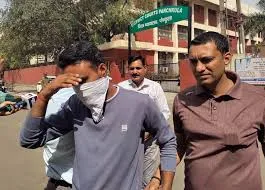
A big news has been reported from Jabalpur, Madhya Pradesh. Action has been taken by EOW in a case involving housing and commercial loans obtained using fake registries. The EOW has filed an FIR against nine people, including six Canara Bank officials.
It was reported that the loans were obtained using forged documents. In Jabalpur, the EOW has filed a case against nine people, including six Canara Bank officials. According to information received, Arif, Ghalib, and Sumit, residents of Adhartal, took a loan from Canara Bank.
The loan of ₹57 lakh was obtained on the basis of forged documents. The involvement of officials from Canara Bank’s RAH (Retail Asset Hub) branch has also been exposed in this case.
Director General, EOW, Upendra Jain said the complaint was filed by the bank’s assistant general manager, Ambika Sharan Singh. According to the complaint, Sumit Singh and Galib Hussain obtained four loans amounting to Rs 57 lakh by submitting fake and fabricated documents.
The accused had applied for loans to open shops and also availed housing loans, however, the proposed projects were never undertaken. The duo allegedly failed to pay any installment and did not return the loan amount.
The police have registered FIR against Sumit Singh, Galib Hussai, Arif Ansari, the then branch manager Deepak Goswami, division manager Gyan Ranjan Tirki, senior manager Sandeep Tiwari, marketing manager Amit Sharma, bank officer Pratidhawani Mishra and bank officer Augustin Khanguveer.
The Retail Asset Hub is a special branch of Canara Bank that handles loan processing. For home loans, the bank also takes a legal report from an advocate approved by the bank.
It is worrying that the advocate could not identify the fake property registration. The bank officers who approved the loan also failed to detect that the property documents were forged.
This incident raises serious questions about the loan approval process in banks. Even though banks have many checks in place, such frauds still happen. This creates doubt about how effective these policies really are.
Whether this happened due to poor checking, heavy workload, or intentional involvement will be known only after the investigation is completed.