
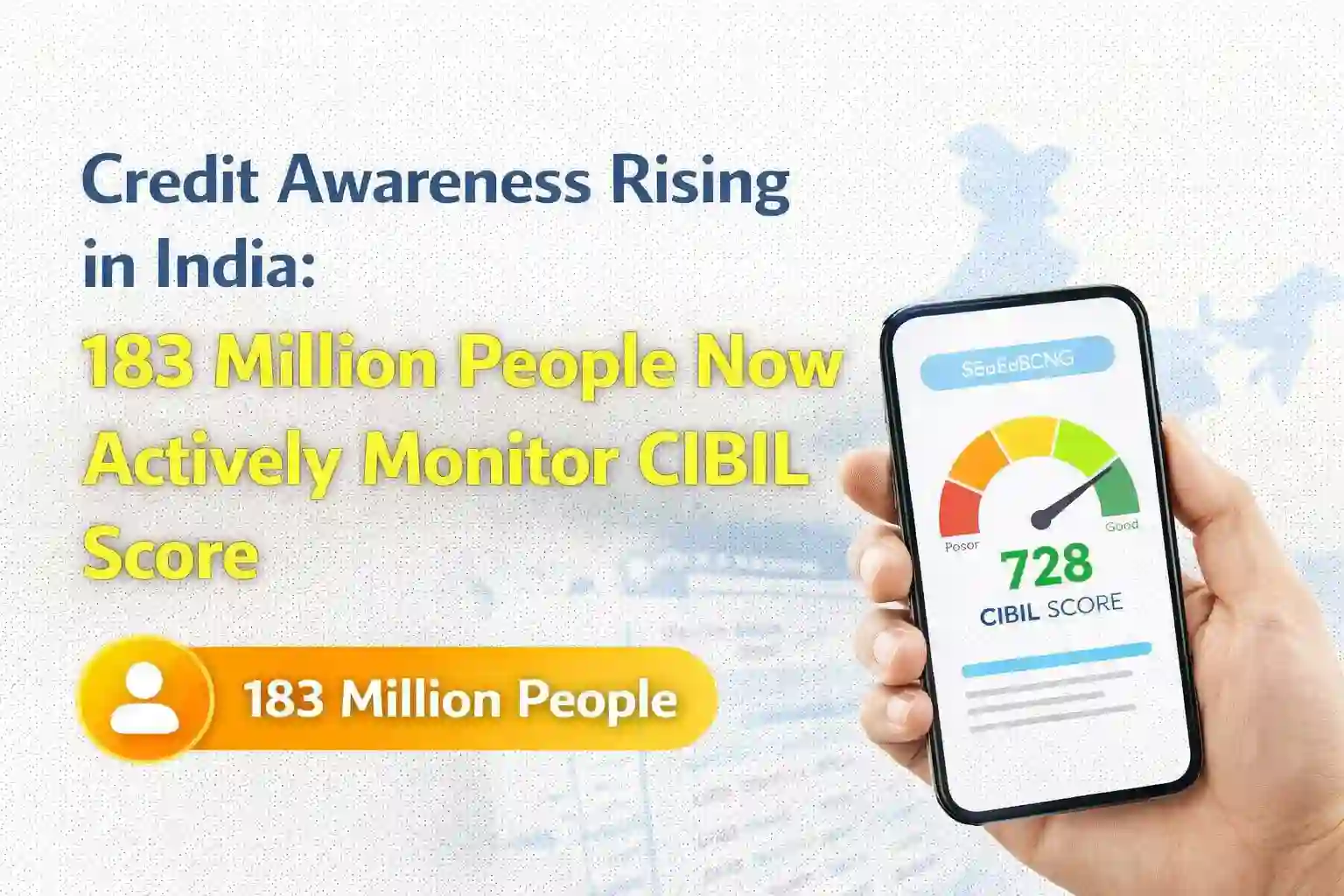
India is witnessing a major shift in how people manage their credit and finances. According to a report by TransUnion CIBIL, credit monitoring is no longer limited to taking loans. It has now become a regular financial habit for many Indians. Earlier, people checked their credit score only when applying for a loan or credit card. Today, it is being used as a tool for awareness, discipline, and better financial planning.
📊 Key Highlights: India’s Credit Behaviour Report 2025
- 👤 183 million Indians monitored their CIBIL Score
- 📈 27% growth in first-time users
- ✅ 45% users improved their score within 6 months
- ⭐ Average CIBIL Score reached 728
- 🏙️ 75% users are from non-metro areas
- 🆕 78% new borrowers from non-metros
- 👩💻 Gen Z & Millennials form 77% users
- 🚀 Gen Z growth is 1.41x faster
- 👩 Women users grew by 38%
- 💳 63% women have strong credit score (731+)
- 💰 Gold loans increased by 25%
- 📊 17% users took loans within 3 months
183 Million Indians Actively Tracking Credit
As of December 2025, around 183 million Indians have checked their CIBIL Score on their own. This reflects a strong 27% year-on-year growth in first-time users. The increase shows that more people are becoming aware of their credit profile and are taking responsibility for managing it. This shift clearly indicates that credit awareness is now becoming a common financial practice across the country.
Monitoring Improves Financial Health
The report highlights that regular monitoring of credit scores is leading to better financial outcomes. Nearly 45% of people who monitored their credit saw an improvement in their score within six months. The average CIBIL Score among such users reached 728, which is considered a healthy level. This shows that when people actively track their credit, they tend to manage their finances more responsibly and maintain better repayment behaviour.
Shift from Borrowing to Financial Discipline
Mr. Bhavesh Jain, Managing Director and CEO of TransUnion CIBIL, explained that earlier consumers interacted with their credit profile only when they needed a loan. However, this approach has now changed. People are treating their credit score as an important financial asset and monitoring it regularly. He said that India is moving from simply taking credit to actively managing and improving it, with the CIBIL Score becoming a real-time indicator of financial health.
Non-Metro Areas Leading the Trend
A significant finding of the report is the strong growth of credit awareness in non-metro regions. About 75% of all people monitoring their credit scores come from smaller cities and towns, showing a 28% annual growth. Even among new borrowers, 78% are from non-metro areas. Interestingly, these regions are not only growing in numbers but also showing better credit quality, with 73% of high-score individuals (above 731) belonging to non-metros. This indicates that financial awareness is spreading evenly across the country and not just limited to big cities.
Young Generation Becoming Credit-Smart Early
Young borrowers, especially Millennials and Gen Z, are playing a major role in this change. Together, they account for 77% of all credit monitoring users. Gen Z alone makes up 29% of the total and has shown faster growth compared to other age groups. Unlike older generations, they are engaging with credit tools early in life and understanding how to manage their financial profile from the beginning. This early awareness is helping them make smarter borrowing decisions, such as increased use of gold loans and two-wheeler loans, especially in smaller towns.
Women Emerging as Key Drivers of Credit Growth
Women are also contributing significantly to this transformation. The report shows that the number of women monitoring their credit scores grew by 38%, which is higher than the growth among men. Women now make up 21% of all monitoring users, and most of this growth is coming from non-metro areas. A large number of women also maintain strong credit scores, reflecting responsible financial behaviour. Their borrowing patterns show a preference for safer options like gold loans, indicating a thoughtful approach towards credit usage.
Credit Monitoring Becoming a Daily Financial Habit
Credit monitoring is now creating a cycle where awareness leads to better financial decisions and improved outcomes. People who monitor their scores are more likely to take informed credit decisions. The report notes an increase in gold loans and two-wheeler loans shortly after people begin monitoring their credit. Many users also take new loans within a few months of checking their credit, showing increased confidence and better planning.
India Moving Towards a Stronger Credit Culture
The report concludes that credit monitoring has now become a widespread behaviour in India. It is no longer limited to urban or high-income groups. Non-metro regions, young borrowers, and women are leading this change. This shift is helping build a more disciplined, transparent, and inclusive credit system in the country.
Mr. Jain added that this growing awareness is a positive sign for India’s financial future, as more people are taking control of their credit health. With continued efforts, this trend will further strengthen the country’s financial system and promote responsible borrowing.
-

-

-
![RBI released Bulletin December 2025 [Download PDF]](https://hellobanker.in/wp-content/uploads/2025/12/Orange-and-White-Geometric-Food-Vlogger-YouTube-Channel-Art-1-390x220.webp)
-

-
![Bank of England Finacial Stability Report [PDF]](https://hellobanker.in/wp-content/uploads/2025/12/Bank-of-England-Finacial-Stability-Report-PDF-390x220.webp)
-

-
-
![HDFC Bank Becomes India’s Most Valued Brand in 2025 [Check Top 10 and Rankings]](https://hellobanker.in/wp-content/uploads/2025/11/HDFC-Bank-Becomes-Indias-Most-Valued-Brand-in-2025-Check-Top-10-and-Rankings-390x220.webp)
-
-

-

-
![RBI released 45th Half-Yearly Report on Management of Foreign Exchange Reserves [PDF]](https://hellobanker.in/wp-content/uploads/2025/10/PSB-Manthan-2025_20251028_191103_0000.webp)
