| ➡️ Click here to Join Whatsapp News Group - Get instant updates of all Banking News |
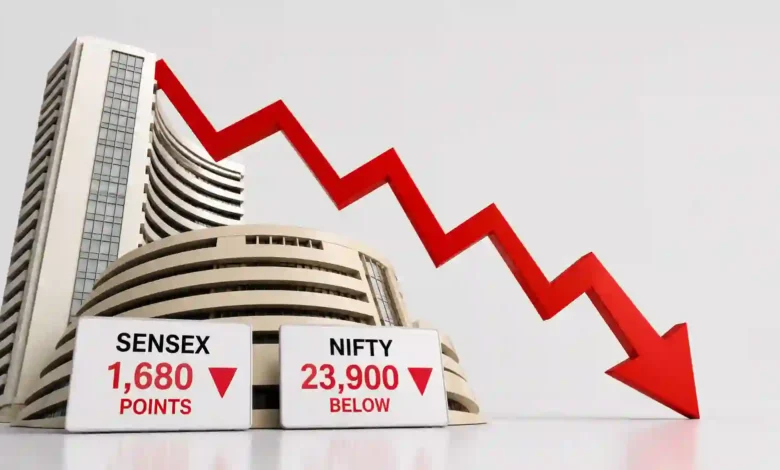
India’s stock market is facing a period of volatility and financial stress as of October 12, 2026. However, calling it a complete financial crisis would be incorrect. The main concerns include foreign investor selling, high crude oil prices, a weakening rupee, rising interest rates and uncertainty over corporate earnings.
What Is Happening in the Indian Stock Market?
| Indicator | Latest Situation |
|---|---|
| Nifty 50 | Down approximately 14% in 2026, according to recent market reports. |
| Foreign Investors | Significant selling by foreign investors has put pressure on Indian equities. |
| Crude Oil Prices | Prices above $100 per barrel can increase India’s import bill and inflationary pressure. |
| Indian Rupee | The rupee is facing pressure amid global uncertainty and foreign capital outflows. |
| Market Trend | High volatility and the possibility of further declines are worrying investors. |
Why Is the Indian Stock Market Falling?
1. Foreign Investors Are Selling Shares
Foreign institutional investors play an important role in the Indian stock market. When they sell large quantities of shares, stock prices can fall. Continued foreign investment outflows can also put pressure on the rupee.
2. High Crude Oil Prices
India imports a significant portion of its crude oil requirements. Higher oil prices increase the country’s import bill and can put pressure on inflation, the rupee and corporate profitability.
3. Interest Rates and Inflation
Higher interest rates increase borrowing costs for businesses and consumers. This can affect consumption, investment and corporate earnings, making stocks less attractive to investors.
4. Global Economic Uncertainty
Geopolitical tensions, movements in US bond yields and uncertainty in global financial markets can encourage investors to reduce their exposure to emerging markets such as India.
5. Weak Investor Sentiment
When markets experience repeated losses, investors may become nervous and sell their holdings to reduce risk. This can increase volatility and intensify short-term market declines.
Is a Bigger Stock Market Crash Coming?
It is difficult to predict whether the Indian stock market will experience a bigger crash. A recovery is possible if crude oil prices decline, foreign investors return and corporate earnings improve. However, further declines cannot be ruled out if global uncertainty, inflation and foreign selling continue.
Investors should avoid assuming that the market has already reached its bottom. Market movements depend on several factors, and no one can predict the exact timing of a recovery.
What Should Investors Do?
- Avoid panic-selling long-term investments solely because of short-term market movements.
- Avoid investing all available cash in the market at once.
- Maintain an emergency fund and avoid borrowing money to invest in shares.
- Review your portfolio’s diversification and risk exposure.
- Invest according to your financial goals and risk tolerance rather than trying to predict the market bottom.
Conclusion
The Indian stock market is facing significant challenges, but a market correction does not automatically mean that the country is heading towards a financial crisis. Investors should monitor foreign investment flows, crude oil prices, inflation, the rupee and corporate earnings before making major investment decisions.
Disclaimer: Stock market investments are subject to market risks. The information provided above is for general informational purposes and should not be considered investment advice.


