Explained: RBI to introduce interoperability among Non-Banking Financial Company Account Aggregators

| ➡️ Click here to Join Whatsapp News Group - Get instant updates of all Banking News |
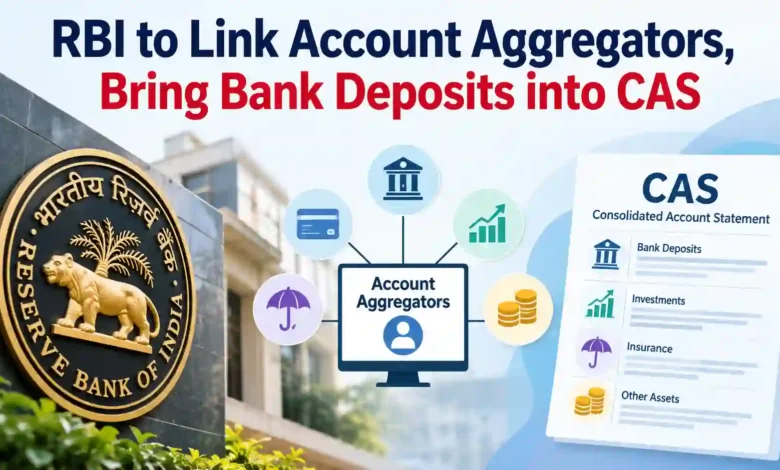
The Reserve Bank of India (RBI) will introduce interoperability among Non-Banking Financial Company Account Aggregators (NBFC-AAs), allowing individuals to access information about their financial assets through a single platform. The interoperability framework is expected to be implemented by December 31, 2026.
First understand what is Account Aggregator
An Account Aggregator (AA) is a regulated digital service that helps you collect and share your financial information from different financial institutions in one place, with your permission.
Suppose you have SBI savings account, HDFC Bank FD, Mutual funds, Insurance policy and a Personal loan. The information about these products is held by different financial institutions.
For example, if you apply for a loan, the bank will demand bank account statements. Now, instead of manually uploading several months of bank statements, you could give consent through an Account Aggregator to share your bank transaction data with the lender. An Account Aggregator acts like a secure bridge between these institutions and a company that needs your financial information.
The data flows like this: Your bank/financial institution → Account Aggregator → Lender/service provider
The Account Aggregator does not own your money and does not operate your bank account. Its main role is to facilitate the secure transfer of your financial information after you give consent.
It’s just like a third party app like Paytm and PhonePe. Through Paytm, PhonePe and Google Pay, you can pay money from your bank account. Or think it like whatsapp. Now, through whatsapp also, you can generate account statements and perform various banking operations.
Why is RBI talking about interoperability?
At present, there are multiple Account Aggregators. RBI’s proposed interoperability would allow these different AA systems to work with each other more seamlessly. India currently has 17 operational Account Aggregators, according to the latest information.
Imagine 17 railway stations connected by a common railway network. You don’t need to visit all 17 stations. Interoperability allows you to travel between them more easily. Similarly, the 17 AAs can become connected through an interoperable network, making it easier for a customer to use one AA while accessing financial information held across participating institutions and AA ecosystems.
So, in very simple terms: Account Aggregator = a secure digital bridge that helps you share your financial information from different institutions with another financial service provider, after your consent.
And the proposed interoperability means these different bridges will be able to connect with each other, making the system more convenient for customers.

