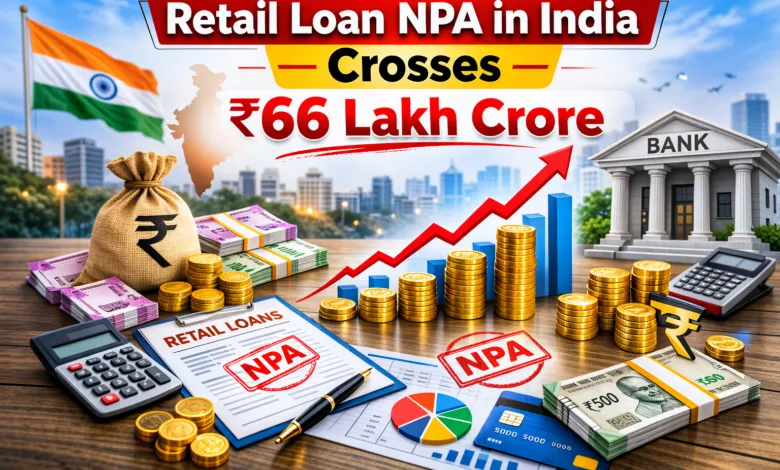
The Reserve Bank of India (RBI) has released data showing the trend in gross non-performing assets (NPAs) of retail loans in Scheduled Commercial Banks (SCBs) over the last three financial years and the current financial year.
According to the RBI, the gross NPAs in retail loans stood at ₹42,22,521 crore as of March 31, 2023. During this period, the ratio of gross NPAs to gross advances was 1.45%. The amount of retail loan NPAs increased in the next year. As of March 31, 2024, gross NPAs rose to ₹53,78,126 crore, but the NPA ratio declined to 1.20%, indicating improvement in asset quality.
The trend continued in the following year. As of March 31, 2025, gross NPAs increased further to ₹60,04,228 crore, while the NPA ratio fell slightly to 1.18%. As per the provisional data for the current financial year, the gross NPAs in retail loans stood at ₹66,43,078 crore as of December 31, 2025. The NPA ratio further declined to 1.04%, showing continued improvement in the health of retail loan portfolios.
| As on | Gross NPAs (₹ Crore) | Gross NPAs to Gross Advances (%) |
|---|---|---|
| 31.03.2023 | 42,22,521 | 1.45 |
| 31.03.2024 | 53,78,126 | 1.20 |
| 31.03.2025 | 60,04,228 | 1.18 |
| 31.12.2025 | 66,43,078 | 1.04 |
💳 Easy Retail Loans: Are They Increasing NPAs?
Retail loans such as personal loans, credit card loans, and instant mobile app loans have become very easy to obtain in India. Many banks and fintech apps now offer quick loans with minimal documentation and fast approval.
- Digital loan apps provide instant approval
- Minimal paperwork and online KYC
- Loans approved within minutes
- Growing demand for quick personal credit
- Borrowers may take loans without proper repayment capacity
- Some people take loans from multiple apps and banks
- High interest rates make repayment difficult
- Short loan tenures increase default risk
- Using credit scores and AI risk models
- Monitoring borrower repayment behavior
- Setting limits on instant personal loans
- Strengthening digital lending regulations
The data indicates that while the absolute amount of NPAs has increased due to growth in lending, the percentage of NPAs compared to total advances has been steadily declining, suggesting stronger recovery and better credit quality in retail loans.
As per latest reports, Large Defaulters Owe Rs.29 Lakh Crore to PSU Banks. Large defaulters are borrowers who owe ₹1 crore or more and are facing civil cases filed by banks for non-repayment of loans. According to publicly available data, 11 PSU banks are currently fighting civil cases in courts across the country to recover about ₹28.93 lakh crore from corporate borrowers. One of the biggest defaulters on the list is Anil Ambani and his companies, with outstanding dues of about ₹48,282 crore. The default by large borrowers bank wise is as follows:
| Rank | Bank Name | Large Default Amount |
|---|---|---|
| 1 | Union Bank of India | ₹9.96 lakh crore |
| 2 | State Bank of India (SBI) | ₹5.79 lakh crore |
| 3 | Punjab National Bank | ₹2.59 lakh crore |
| 4 | Canara Bank | ₹2.49 lakh crore |
| 5 | Bank of Baroda | ₹2.21 lakh crore |
| 6 | Bank of Maharashtra | ₹1.78 lakh crore |
| 7 | Central Bank of India | ₹1.44 lakh crore |
| 8 | UCO Bank | ₹1.11 lakh crore |
| 9 | Bank of India | ₹96,512 crore |
| 10 | Indian Overseas Bank | ₹30,861 crore |
| 11 | Punjab & Sind Bank | ₹27,954 crore |
Also Read: Large Defaulters Owe Rs.29 Lakh Crore to PSU Banks, Recovery Cases Ongoing in Courts