PNB Staff receive phishing Email, Fake PNB Email Nearly Traps Staff in Cyber Fraud

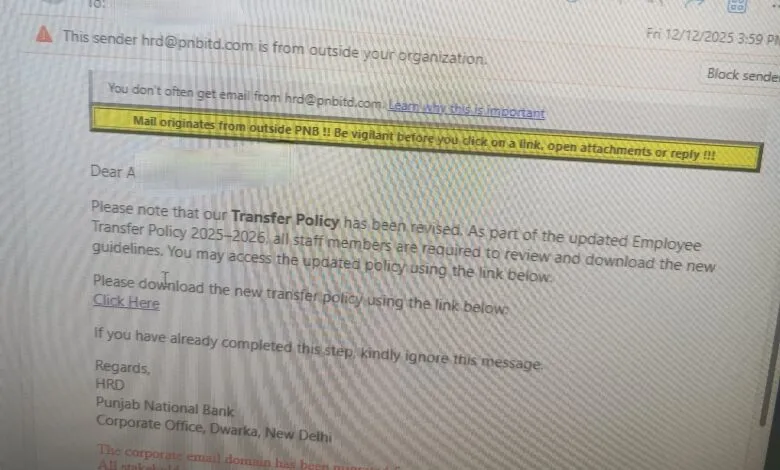
Punjab National Bank (PNB) staff have received a phishing email on their personal email IDs. A phishing email is a fake or deceptive message sent by cybercriminals to trick people into sharing personal information such as passwords, bank details, OTPs, or credit card numbers. These emails are designed to look like genuine messages from trusted sources. They often contain fake links or attachments that steal information or install malware. If you click the link and enter your details, criminals can capture your data.
This might be a part of big cyber crime targeted at Banks. Banks and Staff are advised to stay alert and vigilant.
In this case, PNB staff received an email claiming that the bank had released a new transfer policy and asking them to read and download it through the link provided. The email appeared to be from the PNB HRD department and looked like an official communication. When users clicked the link, they were redirected to a website – pnbitd.com.
On this fake website, users were asked to enter details such as their name, work email ID, and staff ID. Screenshots of the email and the website are attached below.
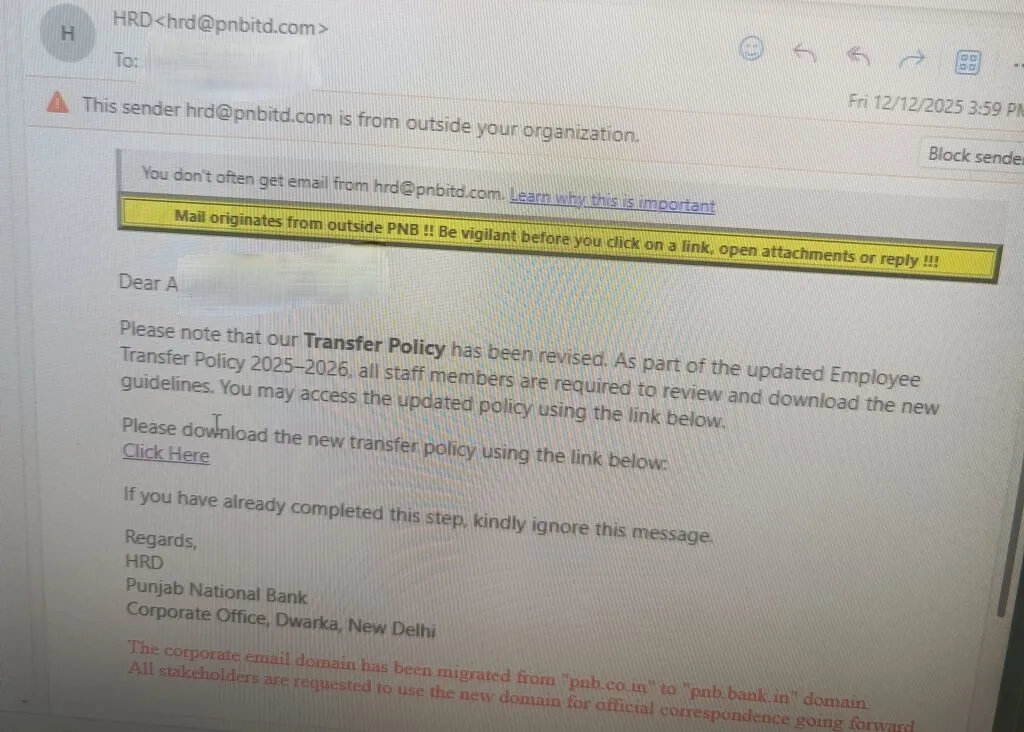
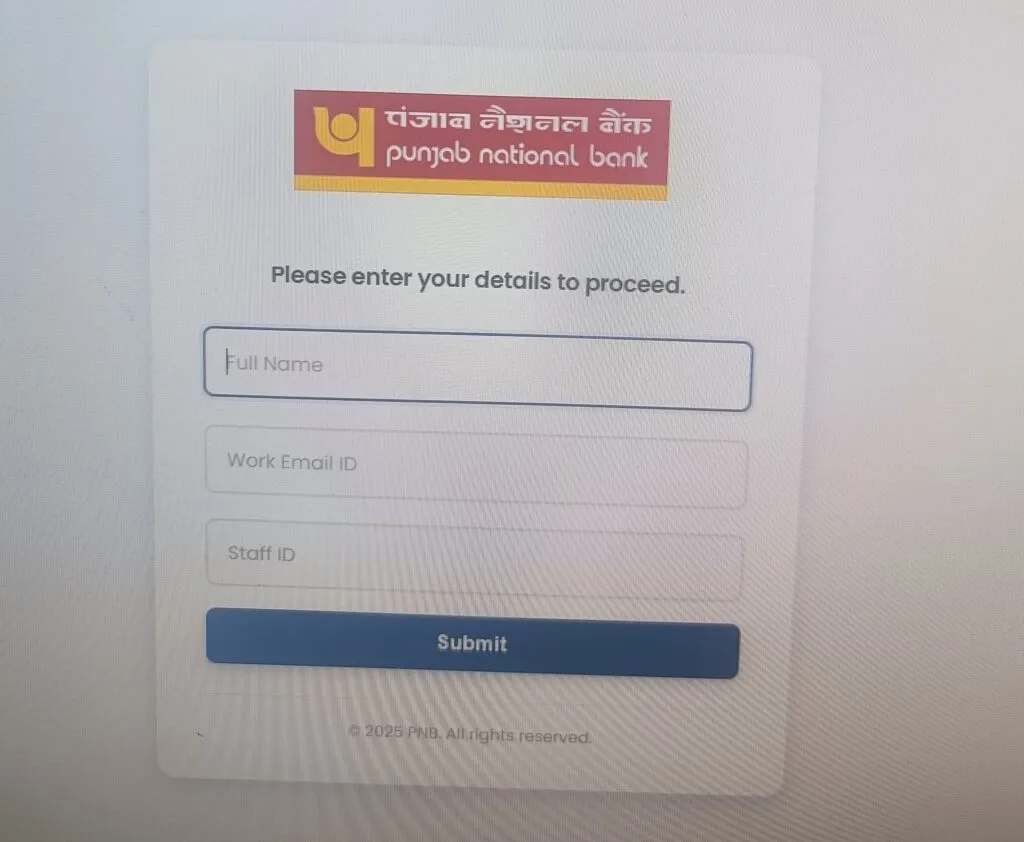
This email was a phishing attempt. If users had entered their details on the website, they could have become victims of cyber fraud. By clicking the link and submitting their information, their personal data could have been stolen.
The biggest clue that raised suspicion was the sender’s email address: hrd@pnbitd.com. This address is incorrect because Punjab National Bank has recently migrated to the new domain – bank.in. The official website of PNB is pnb.bank.in, and all official email addresses now end with pnb.bank.in. For example, the official HRD email address is hrd@pnb.bank.in. This helped staff identify that the email was fake and protected them from fraud.
Recently, the RBI has mandated all banks to switch to the bank.in domain. This means every bank in India will use websites and email IDs ending with bank.in, such as pnb.bank.in or sbi.bank.in. This move will help people easily recognise genuine bank websites and email addresses and stay protected from cyber fraud.