| ➡️ Click here to Join Whatsapp News Group - Get instant updates of all Banking News |
One week has passed since the bank strike, which was proposed to be held from 28 to 30 September 2026, was deferred.
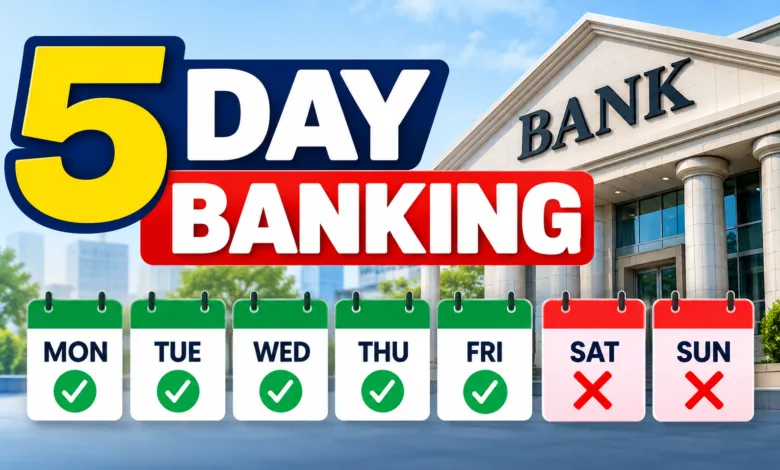
The proposed strike was called for the implementation of five-day banking and the cancellation of the new PLI scheme. Both demands of bank employees remain unfulfilled, but UFBU deferred the bank strike on the night of 27 September 2026.
Bankers are saying that one week has passed, but there is still no significant movement regarding five-day banking.
UFBU had announced that a high-level committee would be formed for the implementation of five-day banking. The committee comprises MDs and CEOs of some banks and UFBU leaders. So far, only one online meeting has been held by the committee. During the meeting, it was decided that a physical meeting should be held as an online meeting would not be fruitful. Apart from this, no other significant discussion took place during the online meeting.
Bankers are not happy with this development. They are criticizing UFBU leaders over what they see as an unprecedented delay in the implementation of five-day banking.
Bankers are asking: Why has there been no concrete discussion in one week? Why is time being wasted?
In March 2024, the 12th BPS was signed, and it was decided that five-day banking would be implemented. IBA, which represents the government and bank management, said that it had sent a proposal to the government for approval. But it has been almost two and a half years, and five-day banking has still not been implemented. That proposal was final. It did not mention the formation of any high-level committee. It simply sought approval from the government.
Now, after two and a half years, why has a new committee been constituted? This remains a big question. And why has no significant action been taken in the past one week?
Even after the deferment of the strike, UFBU leaders did not hold a press conference to inform their members about the actual reasons behind the deferment. Bankers are asking questions to the leaders, but there has been no response. This is increasing anger among bank employees.
Meanwhile, the entire banking industry is going through a period of uncertainty. Unions are becoming divided, new unions are being formed, and unity among bank employees appears to be weakening. However, UFBU leaders have remained largely silent.
Bankers Are Asking UFBU to Answer the Following 6 Questions
1. What exactly transpired that led to the sudden deferment of the strike at the last moment? When the entire workforce was united and fully prepared, what compelling circumstances necessitated such a drastic change in strategy?
2. What concrete commitments were obtained from the Government/IBA? Were any specific, time-bound and actionable assurances given regarding five-day banking and the unilateral or discriminatory PLI issue? If so, the same should be placed before the members in clear terms.
3. What is the actual outcome of the meeting? If the outcome is merely the formation of another committee under a different name, members have a legitimate right to know how this constitutes sufficient progress to defer a major industrial action.
4. Why were the constituent unions and affiliates not taken into confidence before such a crucial decision? A decision affecting the entire banking workforce cannot be perceived as a matter to be communicated only after it has already been taken.
5. Why was the meeting convened at such short notice and without adequate transparency? The manner in which such a critical development was handled has raised serious questions among members and grassroots-level leaders.
6. Most importantly, what has actually been achieved by deferring the strike? Have we secured anything concrete on five-day banking? Has the issue of unilateral and discriminatory PLI been resolved or withdrawn? If not, the members deserve to know the precise rationale behind the deferment.
Bankers are saying that the issue concerns transparency, accountability, collective decision-making and the confidence of thousands of members who stood united behind the call of their leadership.


