| ➡️ Click here to Join Whatsapp News Group - Get instant updates of all Banking News |
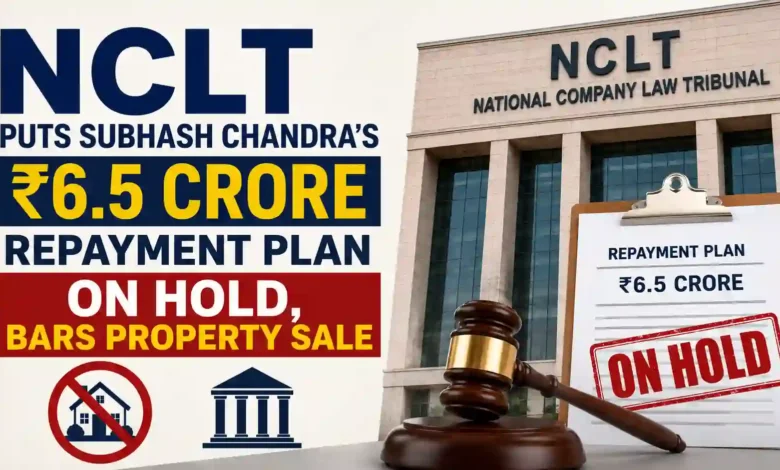
A five-member bench of the National Company Law Tribunal (NCLT) has put on hold its earlier order approving Essel Group chairman Subhash Chandra’s ₹6.5-crore repayment plan. The tribunal said there was no clear majority opinion among its members on the matter. The stay means the repayment plan cannot be implemented until further orders.
This has been done after severe outrage on social media. People on social media lashed out at the government for such an act.
Subhash Chandra Cannot Sell His Properties
The NCLT has also directed Subhash Chandra not to sell, transfer or create any third-party interest in his properties, either directly or indirectly. This restriction will remain in place until the tribunal issues further directions. The tribunal has issued notices to all parties involved and said the case needs further examination because the earlier decision did not have a clear majority view.
Case Involves Claims of Over ₹22,000 Crore
The case relates to Subhash Chandra’s personal insolvency proceedings. The repayment plan involves a payment of around ₹6.5 crore, while the total claims against him are worth more than ₹22,000 crore.
The NCLT had earlier formed a five-member bench to hear the matter. This is the first time in the tribunal’s history that a five-member bench has been formed for such a case.
Five-Member NCLT Bench
The bench is headed by NCLT President Justice Anoopinder Singh Grewal. The other members are Bachu Venkata Balaram Das, Mahendra Khandelwal, Atul Chaturvedi and Ravindra Chaturvedi.
The larger bench was formed after two members of the earlier NCLT bench gave different opinions on Subhash Chandra’s repayment plan.
Earlier Members Had Different Views
Because the two NCLT members disagreed, the matter was referred to a third member. On August 26, the third member, Ashok Kumar Bhardwaj, approved the repayment plan of ₹6.5 crore.
According to his order, the plan would apply to creditors who had voted in its favour. These creditors represented around 80.8% of the total.
However, banks and financial institutions that opposed the plan, representing around 19.2%, were allowed to recover their loans separately from Subhash Chandra.
Dispute Over Rights of Creditors
The tribunal noted a difference between the earlier opinions. One member had not cancelled the principal debt owed to banks, financial institutions and other dissenting creditors. However, the third member, while approving the repayment plan, had extinguished the rights of all creditors under Section 115(1).
The matter was then sent back to a two-member bench to issue the final order based on the majority opinion, as required under Section 419(5) of the Companies Act, 2013.
Creditors Approach NCLAT
Subhash Chandra’s dissenting creditors also approached the National Company Law Appellate Tribunal (NCLAT) as a precautionary step. They challenged the third member’s decision approving the ₹6.5-crore repayment plan against debt claims of around ₹22,006.57 crore.
Solicitor General Tushar Mehta appeared before the NCLAT on behalf of LIC Housing Finance and also represented Canara Bank and Union Bank. He requested an immediate hearing of the matter.