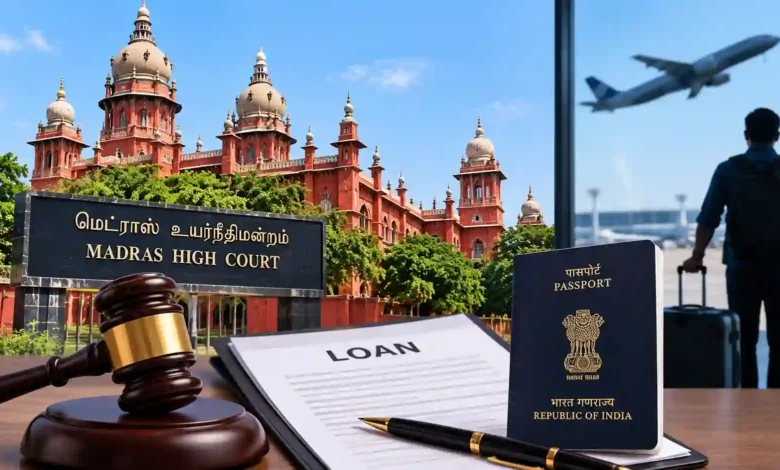
Madras High Court orders Indian Bank to provide Pension to Retired Employee Despite Resignation in 1995

| ➡️ Click here to Join Whatsapp News Group - Get instant updates of all Banking News |
The Madras High Court has allowed an appeal filed by a former Indian Bank employee who resigned from the bank in 1995 after completing more than 17 years of service. The Court directed Indian Bank to allow him to join the 1995 pension scheme and provide the pension benefits admissible under the rules, subject to fulfilment of the prescribed conditions. The judgment was delivered on September 23, 2026, in Writ Appeal No. 2325 of 2026.
Former Employee Resigned Before Introduction of Pension Scheme
The appellant, K. Kasinathan, joined Indian Bank on December 26, 1977, and was later promoted to the officer cadre. He resigned from the bank on February 19, 1995, after completing 17 years, one month and 24 days of service. At the time of his resignation, the bank’s pension scheme was not in force. The Indian Bank Employees’ Pension Regulations, 1995, were notified on September 29, 1995. The bank rejected his pension claim on the grounds that he had not completed 20 years of qualifying service and was no longer in service when the pension scheme was introduced. He challenged the decision before the Madras High Court after his earlier writ petition was dismissed on November 7, 2025.
Court Says 20 Years of Service Is Not Required in Every Pension Case
The High Court examined the Indian Bank Employees’ Pension Regulations, 1995, and clarified the difference between resignation and voluntary retirement. The bank had argued that the employee was not eligible because he had not completed 20 years of qualifying service. However, the Court observed that the 20-year requirement under Regulation 29 relates to voluntary retirement and pension on voluntary retirement. Since Kasinathan had resigned from service and had not retired under a voluntary retirement scheme, this requirement could not be applied to reject his claim on that basis.
The Court referred to Regulation 14, which provides that an employee who has completed at least 10 years of qualifying service may qualify for pension, subject to the other conditions of the regulations. As the former employee had completed more than 17 years of service, the Court held that he had met the minimum qualifying-service requirement.
12th Bipartite Settlement Provides an Option for Eligible Resigned Employees
The Court also considered Clause 37 of the 12th Bipartite Settlement dated March 8, 2024. This provision introduced a one-time option for certain former bank employees who had resigned from service. It covers eligible employees who were in bank service on or after January 1, 1986, joined before April 1, 2010, resigned on or before April 26, 2010, and were otherwise eligible to join the pension scheme while in service. The Court also referred to the amendment to the pension regulations notified on October 14, 2025, which introduced the definition of a “resigned former employee” and made related changes to pension eligibility.
Conditions to Be Fulfilled for Pension Benefits
The High Court made it clear that the former employee must fulfil the conditions prescribed under Clause 37 of the Bipartite Settlement. He must refund the entire employer’s contribution to the Provident Fund, along with accumulated interest, that he received at the time of resignation or later. He must also execute an undertaking in the format provided by Indian Bank. Under the settlement, pension will be payable prospectively from the month following the month in which the bank receives the required Provident Fund refund with accrued interest. The one-time option also does not permit commutation of pension.
Indian Bank Directed to Grant Pension Benefits Within Three Months
The Madras High Court set aside the earlier judgment dated November 7, 2025, and allowed the writ appeal. It directed Indian Bank to permit K. Kasinathan to join the Indian Bank Employees’ Pension Regulations, 1995, after he fulfils the required conditions. The bank must then grant him the pension benefits admissible under the regulations, along with consequential monetary benefits. The Court directed the bank to complete the process within three months from the date it receives a copy of the judgment. No costs were imposed, and the connected miscellaneous petition was closed.
Judgment is important for Other Former Bank Employees
The judgment highlights that the 20-year qualifying-service requirement for voluntary retirement cannot automatically be applied to every pension claim involving a former employee who resigned.
Download Court Case PDF. In order to access this content, you need to join hellobanker premium. Click here to join premium.