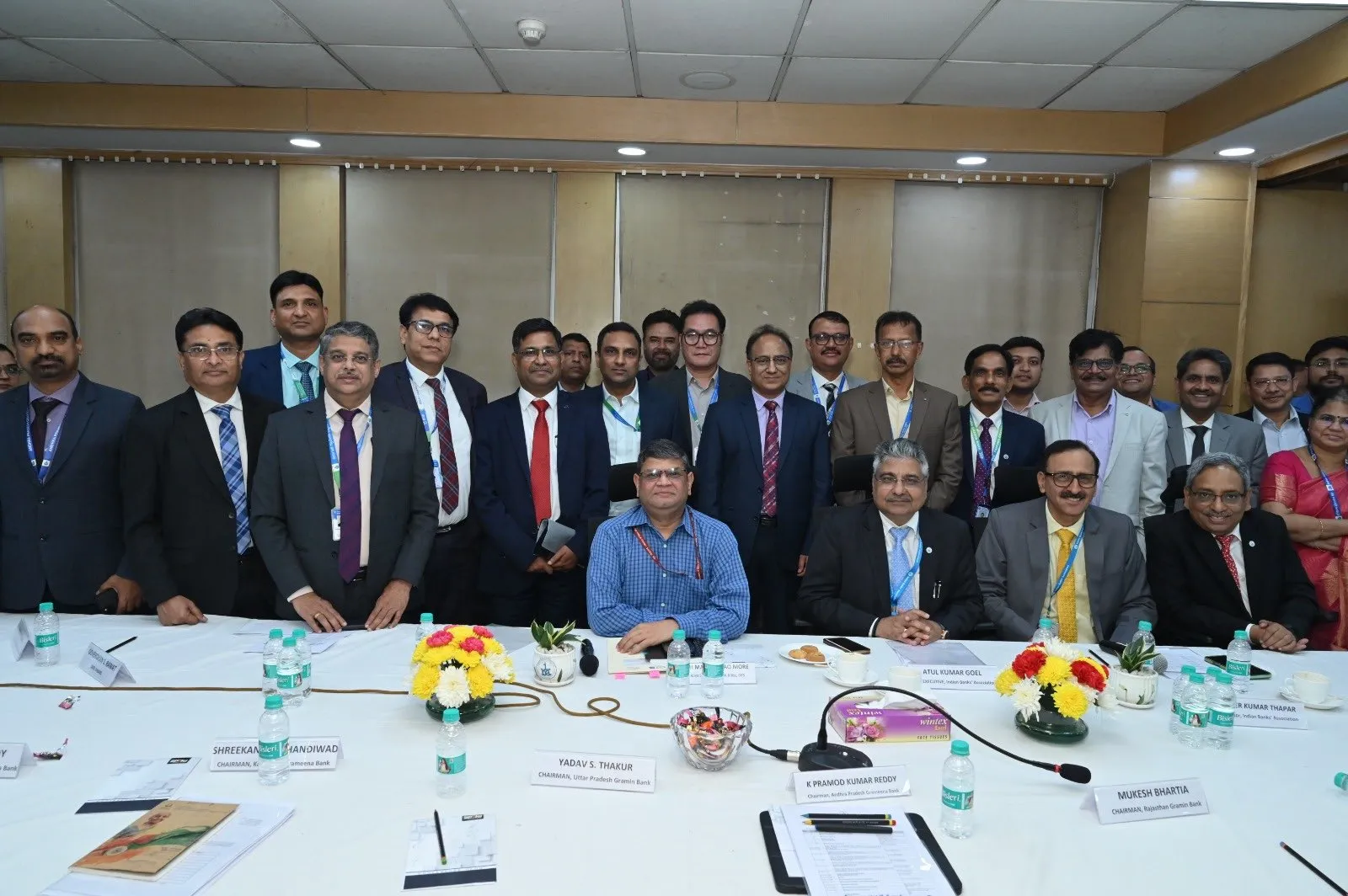
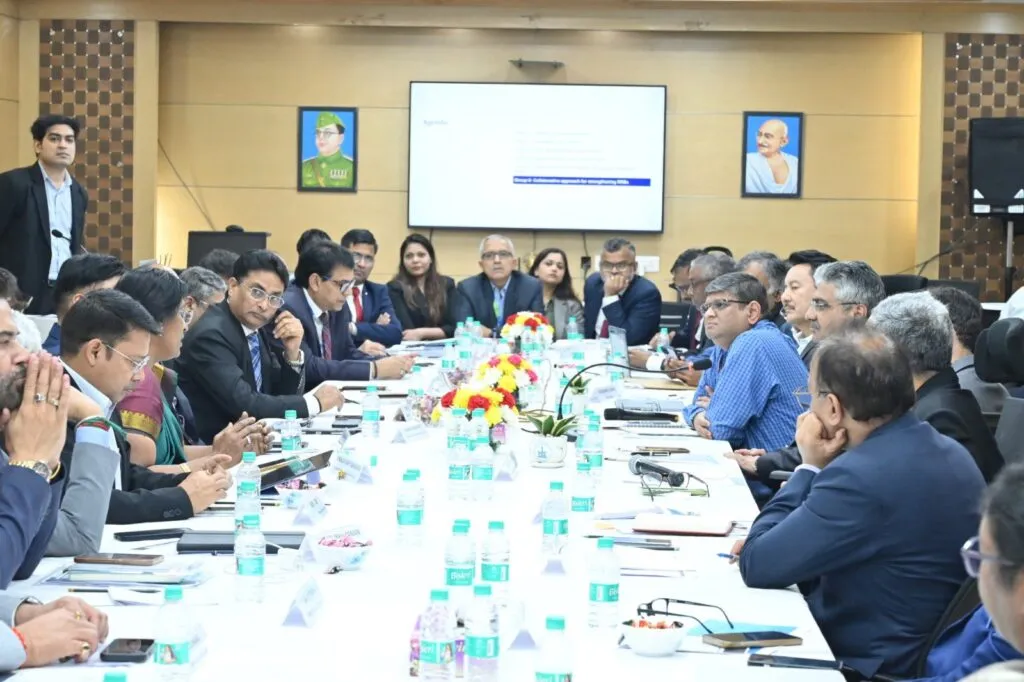
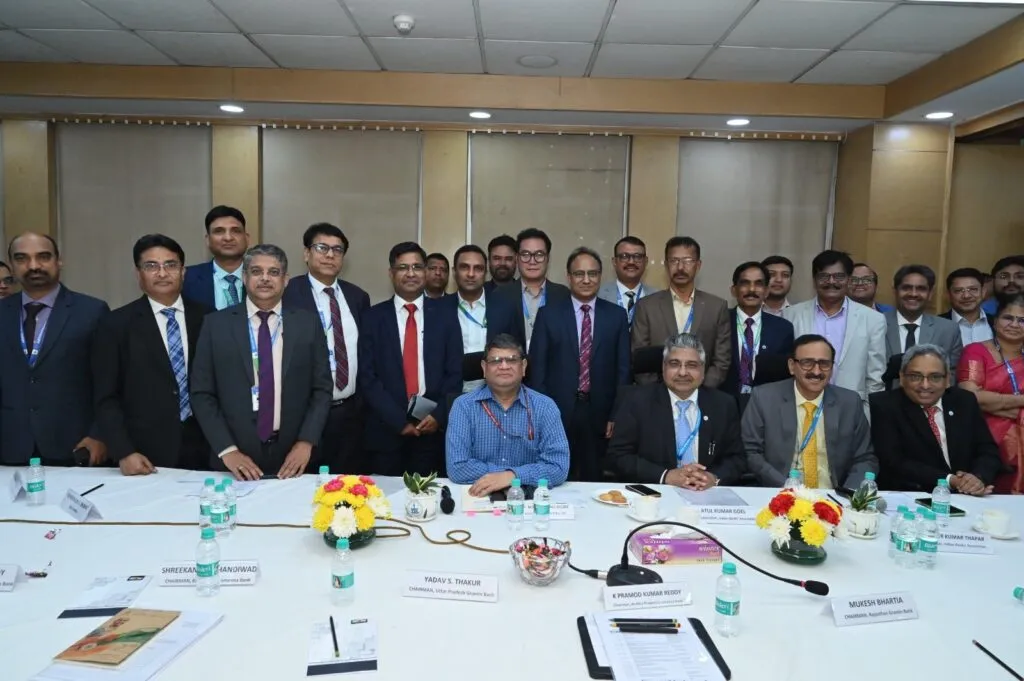
The Indian Banks’ Association (IBA), under the guidance of the Department of Financial Services (DFS), organised a one-day RRB Conclave 2026 in New Delhi on 11 March 2026. The event was held with the theme “Next-Gen Reforms for RRBs – Challenges & Opportunities.”
The conclave aimed to discuss the future roadmap, opportunities, and challenges for Regional Rural Banks (RRBs) in India. The discussions focused on strengthening RRBs and aligning them with the national development vision of Viksit Bharat @2047.

Regional Rural Banks (RRBs) are government-owned banks created to provide banking services in rural and semi-urban areas of India. They focus mainly on supporting farmers, agricultural workers, small businesses, and rural entrepreneurs.
RRBs were established under the Regional Rural Banks Act, 1976. These banks work under the supervision of the Ministry of Finance and are sponsored by public sector banks.
RRBs aim to expand banking services in rural areas and support agriculture, small industries, and self-employment.
RRBs are jointly owned by the Government of India, the concerned State Government, and the Sponsor Bank.
RRBs help bring banking services to villages and remote areas where large banks may not have strong presence.
RRBs are regulated by the Reserve Bank of India (RBI) and supervised by NABARD.
- The first Regional Rural Banks were established in 1975.
- RRBs play a major role in providing loans to farmers and rural businesses.
- They operate mainly in rural and semi-urban areas.
- RRBs are sponsored by large public sector banks such as SBI, PNB, and others.
- These banks support government schemes aimed at financial inclusion and rural development.
Senior Officials and RRB Chairpersons Attend Event
The event was attended by several senior officials from the banking sector and the government. Ashish Madhaorao More, Joint Secretary in the Department of Financial Services, graced the event.
The conclave was also attended by Chairpersons of Regional Rural Banks, along with Atul Kumar Goel, Chief Executive of IBA, Goverdhan S. Rawat, Deputy Managing Director of NABARD, and senior officials from the Department of Financial Services and sponsor banks of RRBs.
Six Key Themes Discussed at the Conclave
During the conclave, discussions were held on six important themes related to the future development of Regional Rural Banks. These themes included:
- Banking for Emerging India
- Innovation in Agricultural Financing
- Digital and Technology Transformation
- Financial Inclusion and Customer Ease
- Human Resource Development and Capacity Building for RRBs
- Collaborative Approach among Banks and Institutions
These topics focused on how RRBs can improve services, adopt modern technology, and better support rural and agricultural communities.

DFS Highlights Need for Technology and Better Banking Access
During the event, Joint Secretary Ashish Madhaorao More stressed the importance of strengthening consortium-based approaches among banks and modernising IT infrastructure in Regional Rural Banks.
He said that the vision of RRBs should be to become a “bank that is always available to people in rural areas.” He highlighted that RRBs play a crucial role in providing banking services to rural communities and supporting the country’s financial inclusion goals.
Focus on Customer Engagement and Digital Services
The Joint Secretary also urged Regional Rural Banks to improve customer engagement by adopting innovative outreach strategies. He suggested that banks should share best practices among themselves, introduce digital services in local languages, and collect structured customer feedback through digital platforms.
According to him, these steps will help RRBs improve service delivery and build stronger relationships with customers in rural areas.
Conclave Expected to Strengthen RRBs
The discussions held during the conclave are expected to provide important insights for the future development of Regional Rural Banks. The deliberations focused on improving governance systems, operational resilience, technology adoption, and human resource capacity.
The outcomes of the conclave are expected to help RRBs become stronger, more technology-driven, and better equipped to serve rural India in the coming years.
-

-

-

-

-

-
-

-

-

-
-

-