
Global trade is set to cross $35 trillion in 2025 for the first time, according to UNCTAD’s final Global Trade Update for the year. The latest data shows that trade continued to expand in the second half of 2025, even though geopolitical tensions, higher costs, and uneven global demand slowed the pace of growth.

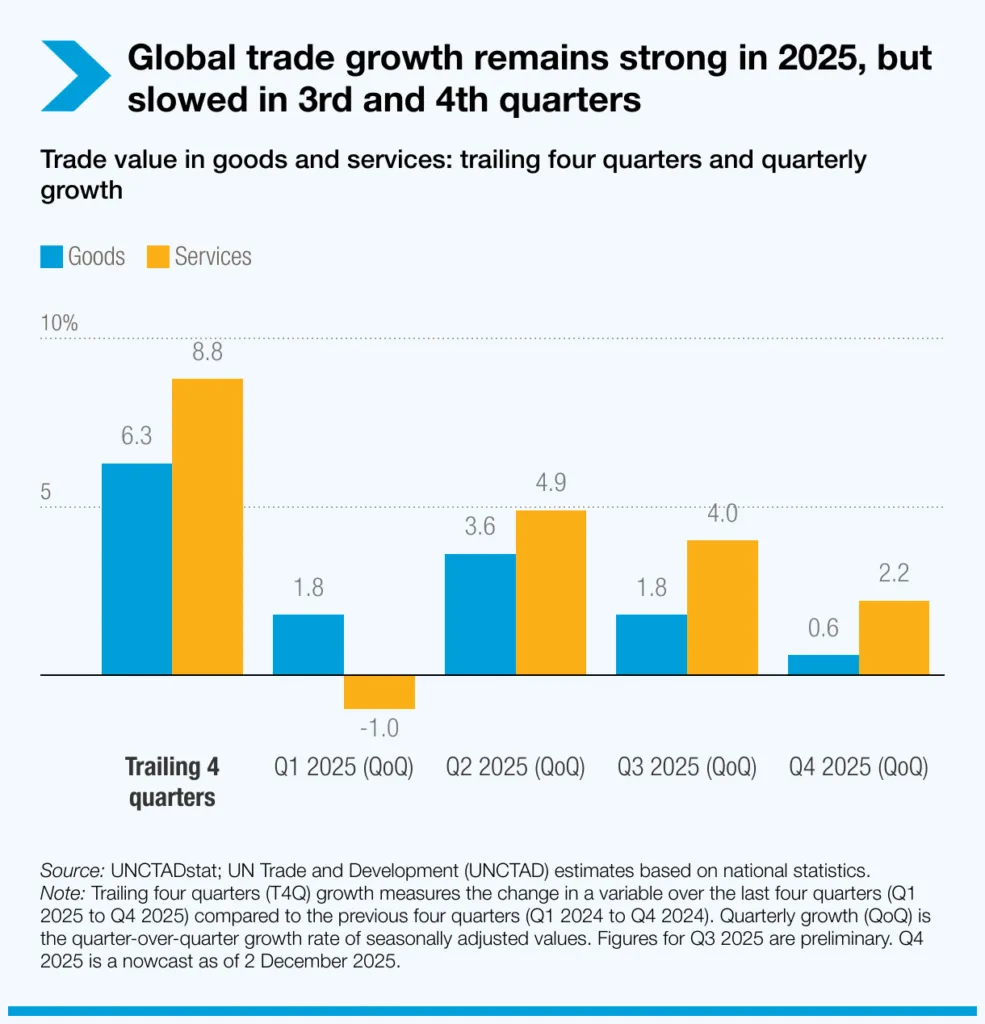
Between July and September, global trade grew by 2.5% compared to the previous quarter. Goods trade increased by nearly 2%, while services rose by 4%. Growth is expected to continue in the final quarter of the year but at a slower rate, with goods projected to rise 0.5% and services 2%. If these forecasts hold, goods will add about $1.5 trillion and services about $750 billion to this year’s total, resulting in an overall 7% rise in global trade for 2025.
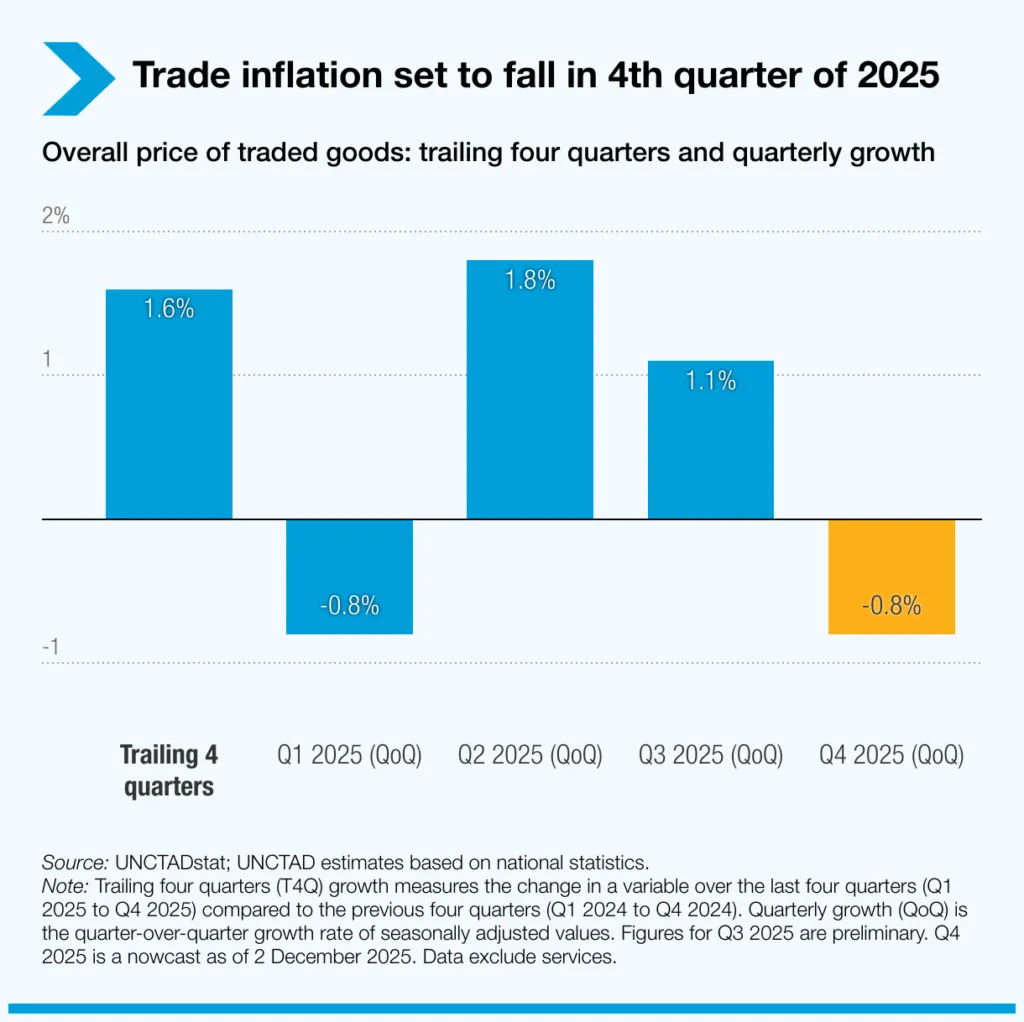
A major shift is happening in trade prices. In the past two quarters, trade values increased partly because goods became more expensive. But now, prices are expected to fall. This means the growth in global trade at the end of 2025 will come mainly from higher volumes—the actual quantity of goods shipped—rather than from price increases. This suggests that demand remains steady even as inflation cools.

East Asia, Africa, and South–South Trade Drive Growth
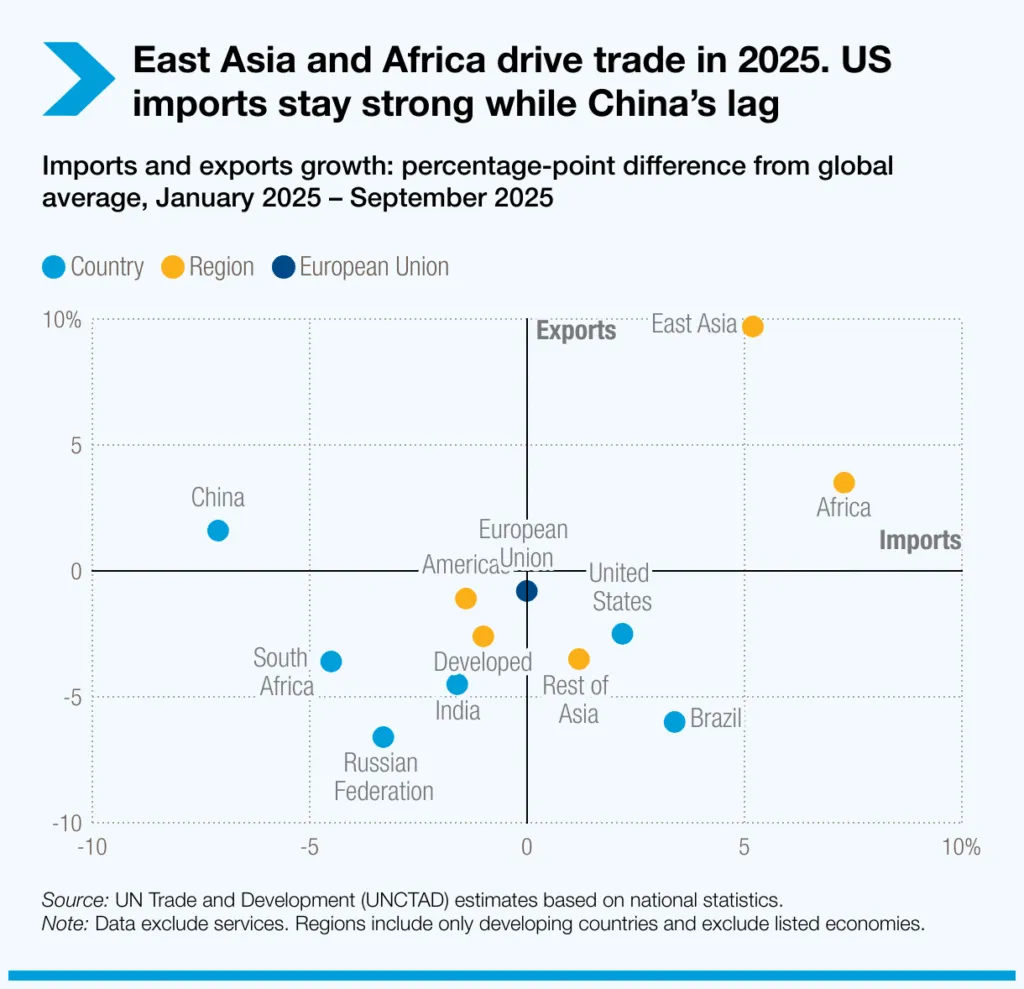
East Asia recorded the strongest export growth over the past year at 9%, supported by a 10% rise in trade within the region. Africa also performed well, with imports up 10% and exports up 6%. South–South trade increased around 8%, showing stronger economic links among developing countries.
China and the Republic of Korea led growth in East Asia, while Brazil and South Africa were major contributors in South America and Africa. India and China also saw some of the fastest growth in services exports, highlighting the increasing role of emerging economies in global trade.

Manufacturing Grows, Autos Decline
Manufacturing grew 10% over the past year, driven mainly by a 14% surge in electronics, supported by AI-related demand. Agriculture also grew strongly in the third quarter, with cereal and fruit-and-vegetable exports rising 11% each. However, automotive trade dropped 4%, and fossil-fuel trade declined due to lower prices.
A Year of Recovery, but Risks Remain
Trade in 2025 grew faster than the global economy, reversing the stagnation seen in 2023–2024. However, structural imbalances remain high, and trends like friendshoring and nearshoring—shifting trade towards politically aligned or geographically closer partners—continued to shape global trade patterns. UNCTAD cautions that 2026 is likely to bring weaker trade growth due to slower global economic activity, rising debt levels, higher trade costs, and ongoing uncertainty.
-

-

-
-

-

-

-

-

-

-

-
-