| ➡️ Click here to Join Whatsapp News Group - Get instant updates of all Banking News |
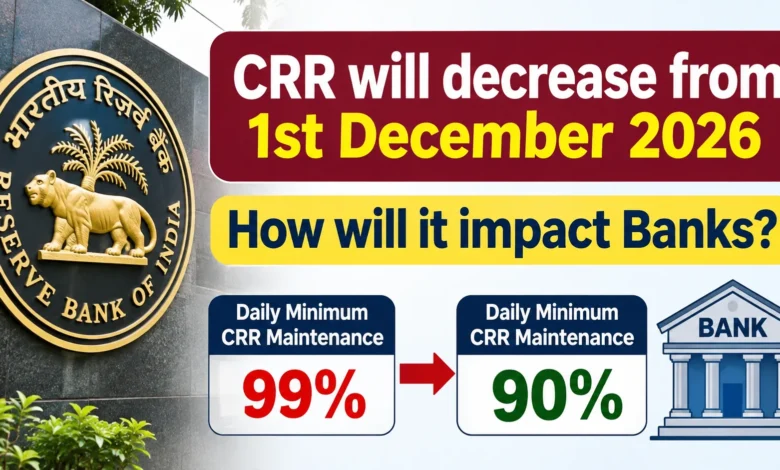
The RBI has announced change in Daily Minimum Cash Reserve Maintenance Requirement. The RBI has decided to reduce the minimum daily maintenance of the cash reserve ratio (CRR) from 99 per cent of the requirement to 90 per cent effective from the fortnight beginning December 1, 2026.
What is CRR?
CRR (Cash Reserve Ratio) is the percentage of a bank’s Net Demand and Time Liabilities (NDTL) that it must maintain as a cash balance with the Reserve Bank of India (RBI). In simple words, banks cannot use the entire money deposited by customers for giving loans or making investments. They must keep a prescribed portion of their deposits with the RBI as cash reserves.
Suppose a bank has NDTL of ₹1,000 crore and prescribed CRR is 4%. So CRR (4%) = ₹40 crore. Earlier daily minimum (99%) = ₹39.60 crore. New daily minimum (90%) = ₹36 crore. Fortnightly average requirement = ₹40 crore.
Earlier, the bank had to maintain at least ₹39.60 crore (99% of ₹40 crore) on each day. Now (from December 1), the bank needs to maintain at least ₹36 crore (90% of ₹40 crore) on each day.
A bank can maintain ₹36 crore on one day and more than ₹40 crore on other days, provided it fulfils the prescribed average CRR requirement for the fortnight. The key benefit is that Banks get greater flexibility in managing daily cash balances. They do not get a permanent exemption of ₹4 crore from their CRR obligation.
Why is RBI decreasing CRR?
The RBI is reducing the daily minimum CRR maintenance requirement from 99% to 90% from December 1, 2026, primarily to give banks greater flexibility in managing their liquidity and cash balances. Banks face daily fluctuations in deposits, withdrawals, fund transfers and payment obligations. Under the 99% requirement, they had to maintain almost the entire prescribed CRR amount every day. Reducing this threshold to 90% gives banks more flexibility to manage temporary cash shortages.
It will reduce pressure on short-term borrowing. Banks may need to borrow money in the overnight money market when their daily cash balances fall short. A lower daily maintenance threshold can reduce this pressure and help banks manage their short-term funding requirements more efficiently.
Click here to download RBI Circular
Also Check This


Please login to comment