Big Scam in MP District Cooperative Bank: Bank embezzled Customer’s Money, No Action since 2 Years


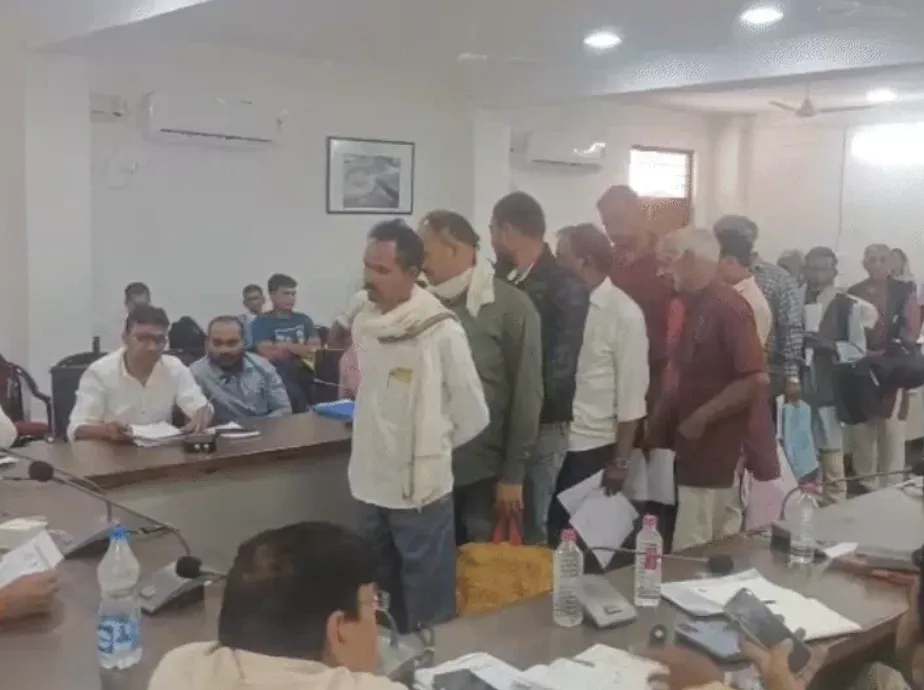
Customers of the Madhya Pradesh District Cooperative Bank in Mauganj district are facing serious trouble as they are unable to withdraw their own money. The bank is reportedly telling customers that there is no cash available. It’s been more than 2 years but still the money has not been returned to the bank customers. Bank customers are feeling helpless and visiting office by office in the hope of justice.
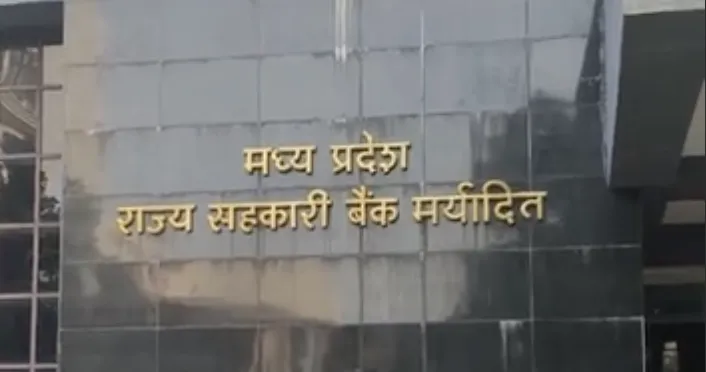
More than ₹10 crore is deposited in five branches of the cooperative bank located in Hardi, Gauri, Deora Patehra, Tatihra, and Hatwa, which fall under the Pahadi branch. Around 3,000 account holders are affected by this problem. The issue began nearly three years ago when these branches stopped giving money to customers. Bank Customers complained several times to the district administration, but no action was taken.
When hundreds of affected people raised their voices during public hearings in Rewa and Mauganj and also held protests, the administration finally took notice. On January 12, 2024, the District Cooperative Bank, Rewa, wrote a letter regarding the issue. Later, on February 16, 2024, the then Mauganj Collector, Ajay Srivastava, wrote to the State Cooperative Bank (Apex Bank), Bhopal, asking for a full investigation.
During the investigation by the Apex Bank’s committee, a major financial scam was uncovered. It was found that about ₹6.60 crore deposited in savings and fixed deposit accounts had been illegally transferred to other accounts in violation of rules. This money was no longer available to be paid to customers, which means the public’s money had vanished from the bank.
District cooperative banks mainly serve farmers and rural people. Their work is done through Primary Agricultural Credit Cooperative Societies (PACS), which manage crop loans, MSP payments, and government scheme funds. When corruption happens in these societies, poor farmers and small savers suffer the most.
The investigation found that branch managers and society managers worked together in this scam. They took money from customers’ savings accounts and deposited it into Kisan Credit Card (KCC) loan accounts. This was done to show full recovery of KCC loans on paper and make the bank appear financially strong. However, when the loan money was actually recovered, it was misused instead of being returned to customers’ savings accounts.
Several serious rule violations were also found. No approval was taken from the Board of Directors before transferring savings money. In many cases, large transactions were done using the signature of the assistant committee manager instead of the authorised officer. During the investigation, officials failed to provide important documents like cashbooks to hide the irregularities.
The biggest fraud was found in the Service Cooperative Society, Hardi, where ₹4.29 crore was misappropriated. The then in-charge manager, Rajivlochan Shukla, showed payments due to 1,251 account holders, while the society had only ₹25,000 in cash. The money was wrongly used in KCC accounts, fertilizer accounts, PDS, and warehouse construction.
In Seva Sahakari Samiti, Deora Patehra, a shortage of ₹47.21 lakh was found. In Tatihra, the shortfall was ₹37.41 lakh, and in Hatwa, the shortage was ₹14.38 lakh. In all these cases, money was falsely shown as deposited in KCC accounts.
The investigation also revealed that Gyanendra Pandey, manager of the District Cooperative Central Bank, Rewa, had no proper control over these societies, which allowed such a large scam to take place.
Even after more than a year, justice has not been delivered. The investigation report was released on July 15, 2024, and it clearly directed that the wrongfully used money should be immediately returned so that people could withdraw their funds. However, till now, the situation remains unchanged. Victims are still waiting for their money and are forced to make repeated visits to government offices.