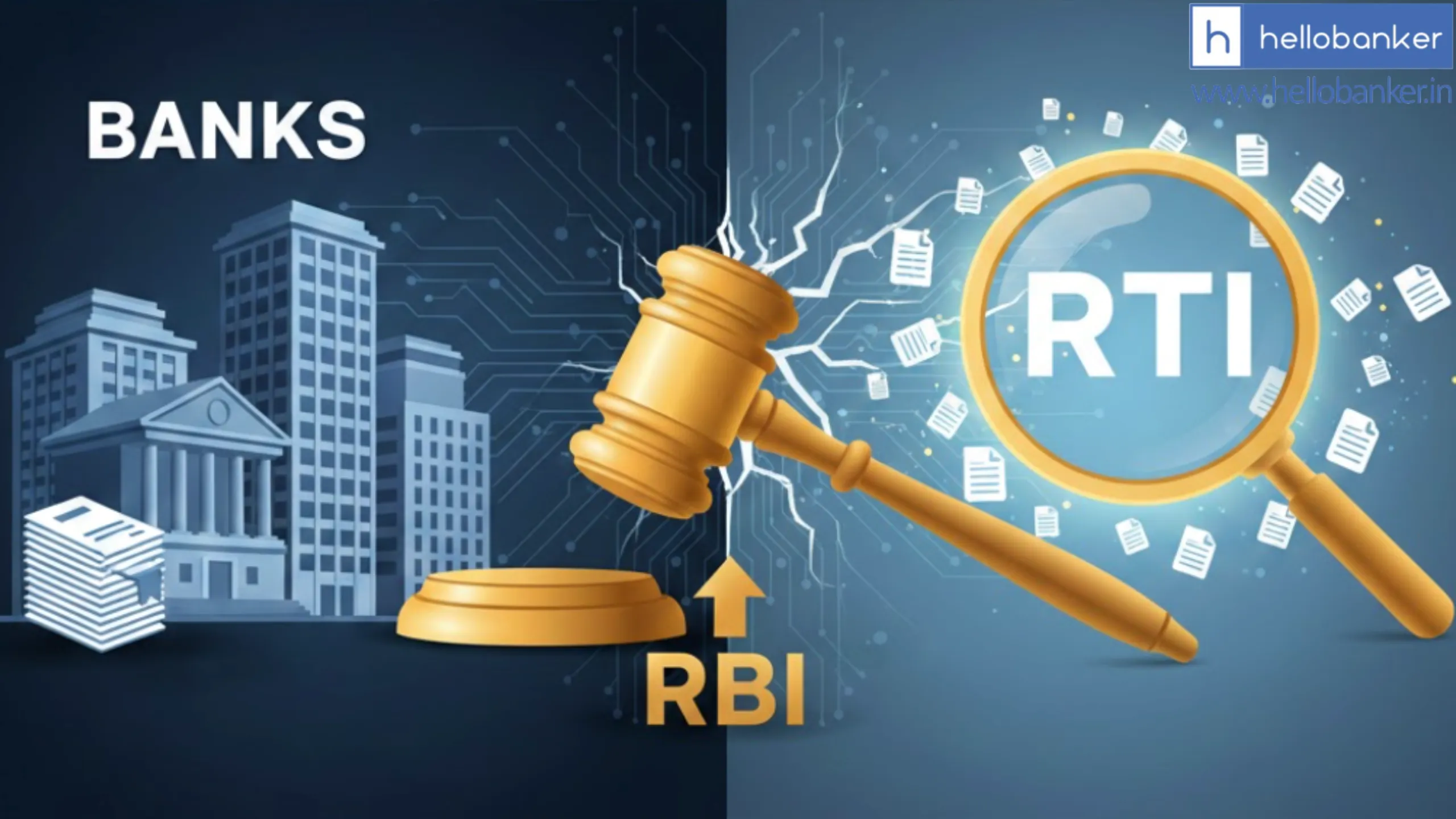
A major transparency battle is unfolding in India’s banking sector. Four big banks—State Bank of India (SBI), Bank of Baroda, RBL Bank and Yes Bank—have moved the Central Information Commission (CIC) to stop the disclosure of sensitive banking information under the Right to Information (RTI) Act.
The banks are opposing the release of details such as non-performing assets (NPAs), lists of wilful defaulters, penalties imposed by the RBI, and bank inspection reports. On the other hand, the Reserve Bank of India (RBI) has clearly stated that this information is “liable to be disclosed” under the RTI law.
How the Dispute Started
The issue began with separate RTI applications filed by citizens Dheeraj Mishra, Vathiraj, Girish Mittal and Radha Raman Tiwari. They sought information like:
- Top 100 NPAs and wilful defaulters of Yes Bank
- Inspection reports of SBI and RBL Bank
- Details related to a ₹4.34 crore penalty on Bank of Baroda after statutory inspections
After examining the requests, the RBI concluded that the information could be shared, relying on Supreme Court rulings, especially the landmark Jayantilal N. Mistry judgment, which supports transparency in banking regulation.
Banks Approach CIC, Disclosure Put on Hold
Unhappy with the RBI’s decision, the banks appealed to the Central Information Commission, the highest authority for RTI disputes. Information Commissioner Khushwant Singh Sethi has now referred all the cases to a larger bench, citing the importance of the issues involved. Until a final decision is taken, the disclosure of information has been stayed. The Chief Information Commissioner has been asked to constitute this larger bench to settle the matter.
RBI Stands Firm on Transparency
Banks said that disclosure would harm their commercial interests. The RBI rejected these claims. In the Bank of Baroda case, the RBI stated that arguments about damage to business and competitive position were not valid. It also clarified that sensitive portions had already been removed and that public interest outweighs such concerns.
Similarly, in the RBL Bank and Yes Bank cases, the RBI stressed that there is no fiduciary relationship between banks and the RBI that would block disclosure. It also pointed out that the RTI Act overrides earlier laws and leaves no room for ambiguity on sharing inspection reports and related data.
In the SBI case, the RBI again underlined that enforcement actions and show-cause notices are liable to be disclosed, keeping public interest in mind.
Now the final decision lies with CIC. The final decision of the CIC’s larger bench could have a huge impact on banking transparency, depositor rights, and regulatory accountability in India. If the RBI’s view is upheld, the public may get greater access to information about how banks are regulated and how defaulters are handled.
What do you think – should banks disclose the information or not? Let us know in the comment section below.
-

-

-

-

-
-