| ➡️ Click here to Join Whatsapp News Group - Get instant updates of all Banking News |
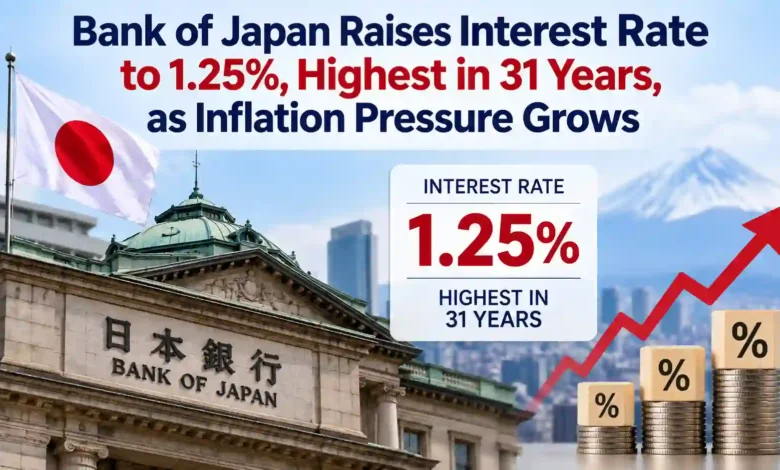
The Bank of Japan (BoJ) raised its key interest rate by 25 basis points to 1.25% on Friday, September 18, 2026. This is the highest interest rate in Japan in more than 30 years. The central bank said it may raise rates further as it tries to control inflation caused by higher energy prices and a weaker yen.
Rate Hike Approved by 7-2 Vote
The rate increase was largely expected by financial markets. However, the decision was not unanimous. Seven members of the BoJ’s policy board voted in favour of the rate hike, while two members opposed it.
The central bank said that underlying inflation is moving closer to its 2% target and financial conditions remain supportive. It indicated that it would continue raising the policy rate if economic and price conditions develop as expected.
Higher Oil Prices Increase Inflation Pressure
The BoJ is facing increased pressure to tighten monetary policy because oil prices have risen sharply due to the ongoing West Asia crisis. Higher energy prices could increase the cost of goods and services in Japan.
Japan depends heavily on imports for energy, so a rise in oil and gas prices can have a direct impact on households and businesses.
Weak Yen Adds to Price Pressure
The Japanese yen has also remained weak against the US dollar. The currency fell to a 40-year low against the dollar in July, which led to a major joint intervention by the United States and Japan in the foreign exchange market.
One reason for the weak yen is the large difference between interest rates in Japan and the United States. Japan’s relatively low rates have encouraged investors to move money into assets offering higher returns in dollars.
Even after the latest rate increase, the yen weakened to more than 157 per dollar from around 156.30 before the BoJ announcement.
Two Members Wanted a Different Approach
The two dissenting votes attracted attention from financial markets. According to market analysts, investors were looking for signs that the BoJ might increase interest rates more quickly in the future. However, two members of the policy board believed that even the latest rate increase may have come too early.
Japan’s Inflation Remains Close to 2% Target
Official data released on Friday showed that Japan’s core inflation slowed slightly in August. Core inflation, which excludes volatile fresh food prices, fell to 1.7% from 1.8% in July.
The figure was below market expectations that inflation would remain at 1.8%. Government support for gasoline and electricity costs helped slow the increase in prices. Despite the slowdown, inflation remains relatively close to the BoJ’s 2% target.
Energy Prices Could Push Inflation Higher
The recent fall in inflation may not continue for long. Energy and gas prices have increased sharply in recent weeks because of the West Asia crisis.
Economists expect higher energy costs to gradually increase prices for consumers and businesses. Marcel Thieliant of Capital Economics said inflation could rise above the BoJ’s 2% target in the near future because of higher energy costs.
Government Taking Steps to Support Households
The Japanese government is also taking measures to reduce the impact of higher prices on households. These include a large stimulus package introduced at the end of 2025, tax relief on energy costs and measures announced in the spring to support consumer spending.
The government has also decided to reduce the consumption tax on food products for two years. The tax on food is currently 8% and is planned to be reduced to 1% from April 2027.
BoJ May Continue Raising Rates
The latest rate hike shows that the Bank of Japan is continuing to move away from its long period of very low interest rates. With inflation pressures, higher energy costs and a weak yen remaining concerns, the central bank has indicated that further rate increases could follow if economic conditions support them.


