| ➡️ Click here to Join Whatsapp News Group - Get instant updates of all Banking News |
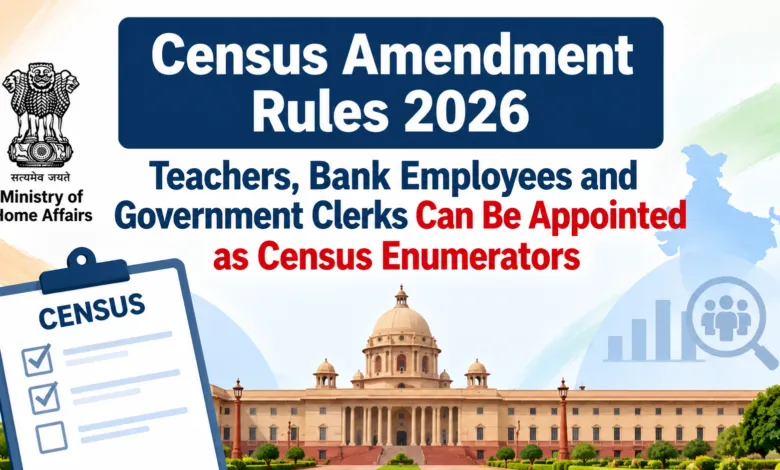
Bank Employees Can Be Appointed for Census Duty. The Government has released a new notification amending the rules.
The Ministry of Home Affairs has issued the Census (Amendment) Rules, 2026, allowing teachers, clerks and other officials working in government and private institutions to be considered for census enumeration duties. The notification was issued by the Office of the Registrar General, India, on October 16, 2026, under the provisions of the Census Act, 1948. The amended rules will come into force from the date of their publication in the Official Gazette.
Clerks and other officials working in the Central Government, State Governments, local authorities and various establishments including public sector undertakings, statutory bodies, banks, companies, institutions, societies and trusts can be allotted census duty. This means that employees working in banks and other listed organisations can also be considered for appointment as enumerators.
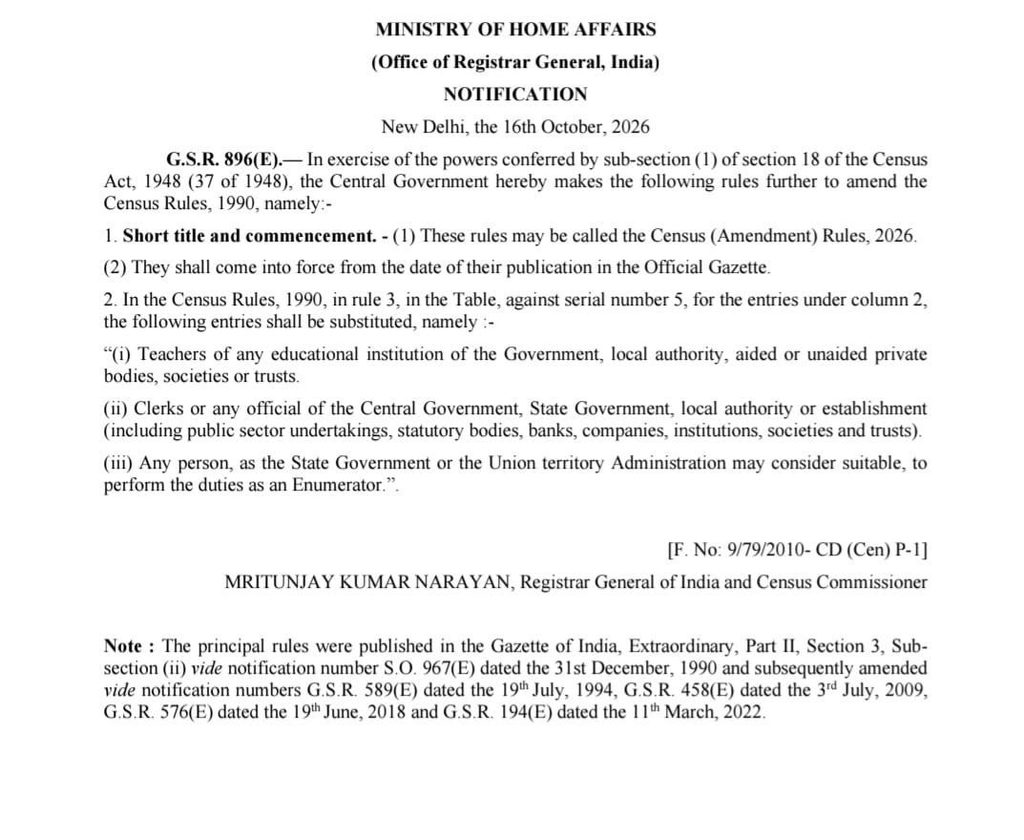
In addition, the State Government or Union Territory Administration may appoint any other person it considers suitable to perform the duties of an enumerator. This provision gives the authorities flexibility to select additional personnel according to local requirements.
What is census enumerator?
A census enumerator is a trained government field worker responsible for collecting data directly from the public during an official national census. They act as the vital link between individual households and the government’s central statistics authority.
The responsibilities of census enumerator are as follows:
- Door-to-Door Visits: Enumerators physically travel across an assigned geographical region (an “enumeration block”) to locate every residential structure.
- Conducting Interviews: They ask citizens structured, predetermined questions regarding household demographics. This includes details on age, marital status, education, employment, and living conditions.
- Data Recording: They carefully enter the answers using paper forms or electronic devices like tablets and smartphones.
- Verifying Coverage: They ensure no household is skipped, and conversely, that no person is counted twice.


