Connect with Us
The US has released Shared National Credit (SNC) Report 2025. This report released by US federal bank regulators tells about the health of large corporate loans given by banks. It looks at big loans that are shared by many banks together, usually given to large companies.
What are Shared National Credits (SNCs)?
Shared National Credits are very large loans (₹800+ crore equivalent or $100 million or more) that are:
- Given to big companies
- Shared by multiple banks, not just one bank
- Closely monitored by regulators because they can affect the banking system if they fail
Report Highlights
- Overall risk is moderate: The report says that credit risk in these large loans is still under control, even though interest rates are high.
- Companies are managing higher interest costs: Many borrowers are facing higher interest payments, but most are still able to manage their debt.
- 6,857 borrowers were reviewed. Total loan commitments were $6.9 trillion, which is 6% higher than last year. These loans were reviewed as of June 30, 2025.
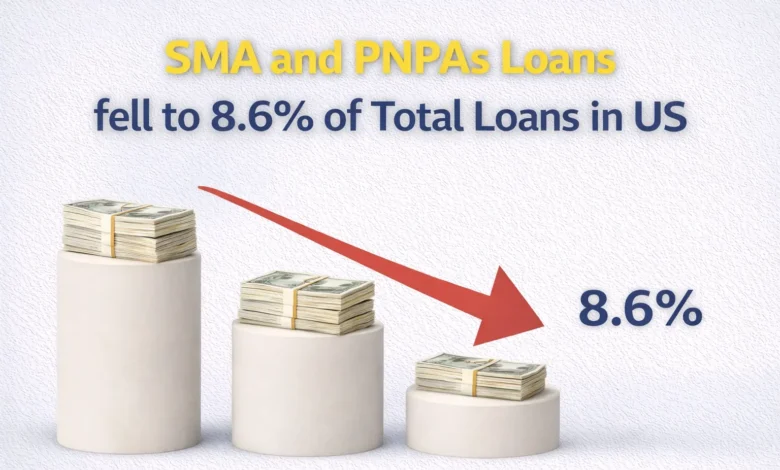
- Non-pass loans fell to 8.6% of total loans. In 2024, this figure was 9.1%. However, regulators clarified that this drop is mainly because new loans were added, not because old risky loans became healthier.
- Nearly 50% of all SNC loans are leveraged loans (loans to already highly indebted companies). 81% of all risky (non-pass) loans are leveraged loans
What are “non-pass” loans?
“Non-pass” loans are loans that need close monitoring. They include Special Mention loans (early signs of stress) and Classified loans (higher risk of default).
Role of US banks
- US banks hold 45% of all SNC loans
- But they hold only 22% of risky (non-pass) loans
- This is slightly better than last year and suggests US banks are more cautious than some other lenders
Simple Summary
- Big corporate loans in the US are not in crisis
- Risks exist but are manageable
- High interest rates are putting pressure on companies
- Leveraged loans are the biggest risk area
- Regulators are closely watching these loans to prevent future problems
Download Report PDF (This PDF is available for Premium Users Only. Click here to join premium)
Advertisement

Advertisement