SBI Fraud: Anil Ambani Moves Supreme Court After Bombay High Court Upholds SBI’s Fraud Tag

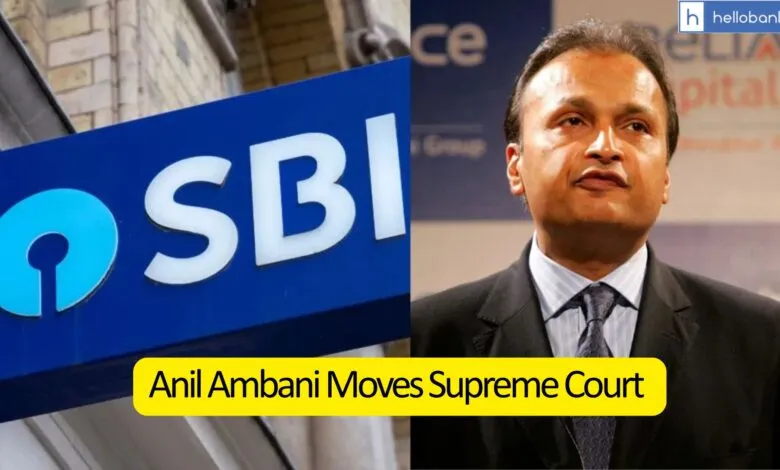
Industrialist Anil Ambani has approached the Supreme Court after the Bombay High Court upheld the State Bank of India’s (SBI) move to declare the loan accounts of Reliance Communications Limited (RCOM) and its promoter as “fraud.” As per reports, the appeal was filed last week and is awaiting listing for a hearing. A few weeks ago, the Enforcement Directorate (ED) seized properties worth about ₹1,400 crore linked to Anil Ambani and his Reliance Group companies.
Case Background
Between 2012 and 2016, SBI gave loans worth over Rs 3,600 crore to RCOM and its group companies — Reliance Telecom and Reliance Infratel. When the companies failed to repay these loans, RCOM’s account was marked as a non-performing asset (NPA) in August 2016. A forensic audit by BDO India, covering the period between 2013 and 2017, reported several irregularities in the use of funds. After this, SBI’s Fraud Identification Committee, in November 2020, decided to classify the loan account as fraudulent.
However, SBI later withdrew this classification after the Supreme Court’s 2023 ruling in State Bank of India vs Rajesh Agarwal, which held that banks must give borrowers a notice and a chance to respond before branding them as fraud. Following this judgment, on December 20, 2023, SBI issued a fresh show-cause notice to RCOM and its directors, including Anil Ambani.
In June 2025, after reviewing replies, SBI again decided to classify the loan accounts as fraud, citing alleged diversion of funds, violation of loan terms and suspicious related-party transactions. It also informed the Reserve Bank of India (RBI) and started the process of approaching the Central Bureau of Investigation (CBI).
What did Ambani say?
Anil Ambani challenged this decision in the Bombay High Court. He argued that he was only a non-executive director, had no role in day-to-day work, and therefore should not be personally targeted. He also said he was not given a full and fair opportunity to defend himself.
However, on October 3, a Division Bench of Justices Revati Mohite Dere and Neela Gokhale rejected his claims. The Court said that as the “promoter” and a “person in control” of RCOM, Ambani could be held responsible. The Bench also noted that SBI had followed RBI’s July 2024 guidelines for declaring accounts as fraudulent.
Interestingly, the same Bench had earlier stayed a similar fraud declaration by Canara Bank, because Canara Bank had not followed RBI’s rule requiring a hearing. That case was later closed after Canara Bank withdrew the fraud tag. Ambani also challenged a fraud classification by Union Bank of India, but the Court declined to interfere and asked him to approach RBI.
In its latest judgment, the Bombay High Court made a strong statement about the role of promoters and directors. The Court said that when a company’s loan is marked as fraud, those who were in control of the company could face penal action, be barred from raising funds, and may be reported as fraud themselves.
Case finally reaches Supreme Court
With the High Court ruling against him, Anil Ambani has now taken the battle to the Supreme Court. His appeal challenges SBI’s findings that he was the person in control and questions whether the fraud classification was justified. The Supreme Court is expected to take up the matter once the case is officially listed.