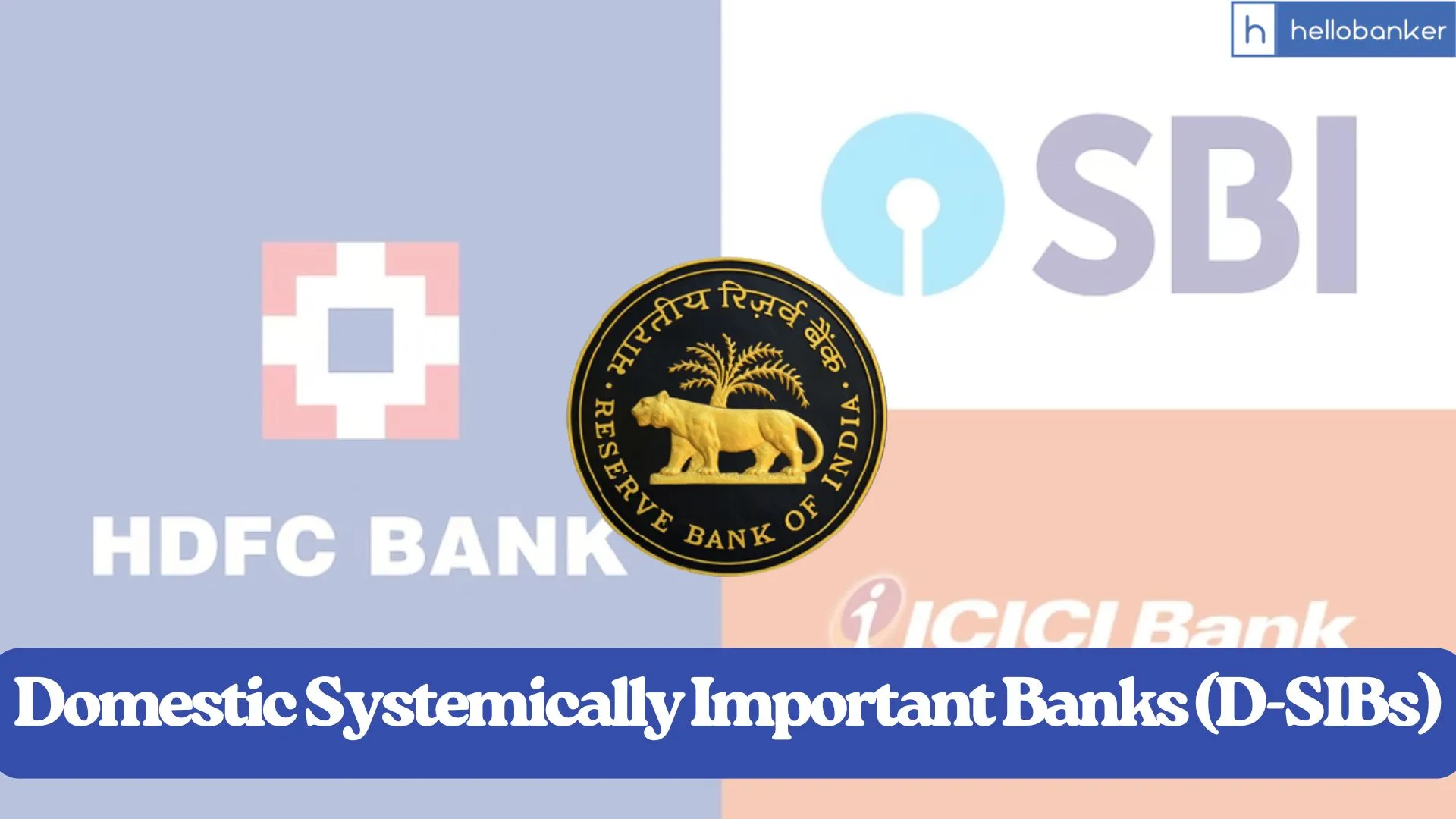
The Reserve Bank of India (RBI) has released the list of D-SIBs in India. State Bank of India, HDFC Bank, and ICICI Bank continue to be identified as Domestic Systemically Important Banks (D-SIBs) under the same bucketing structure as in the 2024 list of D-SIBs. The additional Common Equity Tier 1 (CET1) requirement for these D-SIBs will be in addition to the Capital Conservation Buffer.
A D-SIB is a bank that is so large, important, and deeply connected to the financial system that if it ever fails, it could seriously damage the country’s economy. In other words, these are the “too big to fail” banks within India.
| Bucket | Bank(s) | Additional CET1 Requirement (as % of RWAs) |
|---|---|---|
| 5 | – | 1% |
| 4 | State Bank of India | 0.80% |
| 3 | – | 0.60% |
| 2 | HDFC Bank | 0.40% |
| 1 | ICICI Bank | 0.20% |
The Reserve Bank introduced a framework called the “Domestic Systemically Important Banks (D-SIBs)” on July 22, 2014, and later updated it on December 28, 2023. Under this framework, the RBI must reveal the names of banks identified as D-SIBs from 2015 onward. These banks are placed into different buckets based on their Systemic Importance Scores. Depending on the bucket, an extra Common Equity Tier-1 (CET1) capital requirement is applied.
If a foreign bank operating in India is recognised as a Global Systemically Important Bank (G-SIB), it must also maintain additional CET1 capital in India. This surcharge is calculated proportionately based on its Risk-Weighted Assets in India, using the additional CET1 buffer set by its home regulator.
The RBI had earlier classified State Bank of India and ICICI Bank as D-SIBs in 2015 and 2016. In 2017, HDFC Bank was also added to the list, along with SBI and ICICI Bank. The latest update of the framework is based on data reported by banks as on March 31, 2025.
-

-

-
-

-
-

-

-

-
-

-

-