
| ➡️ Click here to Join Whatsapp News Group - Get instant updates of all Banking News |
Did You Know? Which Bank Did Mahatma Gandhi Have an Account With? In this article, we will tell you which bank Mahatma Gandhi trusted and where the Father of the Nation had an account.
Mahatma Gandhi held a bank account in the Punjab National Bank. PNB was founded in 1894 under the Swadeshi movement. Mahatma Gandhi, along with other prominent freedom fighters like Jawaharlal Nehru and Lal Bahadur Shastri, maintained accounts with the bank.
Mahatma Gandhi also famously inaugurated the new head office building of the Union Bank of India in Mumbai in 1921, though his personal account was with Punjab National Bank.
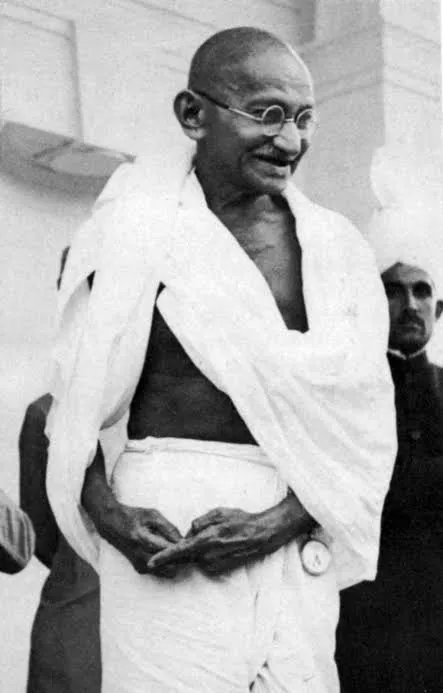
Founded in 1894 in Lahore by national leaders including Lala Lajpat Rai and Dyal Singh Majithia, PNB was established as India’s first purely swadeshi (indigenous) bank managed solely by Indians with Indian capital. Because of its role in the Indian freedom struggle, leaders like Mahatma Gandhi, Jawaharlal Nehru, Lal Bahadur Shastri, and Indira Gandhi maintained bank accounts with PNB. In addition to personal accounts, the accounts for key national initiatives and trusts—such as the Jallianwala Bagh Memorial Committee—were also maintained with Punjab National Bank.
Mahatma Gandhi’s relationship with banking was deeply tied to his principles of economic self-reliance (Swadeshi) and the funding of the Indian freedom struggle.
1. The PNB Connection & The Jallianwala Bagh Committee Account
While Mahatma Gandhi maintained a personal account with Punjab National Bank (PNB), his most significant financial operation through the bank was managing the Jallianwala Bagh Committee account.
The Purpose: Following the tragic Jallianwala Bagh massacre in 1919, a committee was formed to gather public donations to buy the land and build a memorial for the martyrs.
The Operation: Gandhi Ji, along with Pandit Jawaharlal Nehru, personally operated this trust account through PNB. They utilized the indigenous network of the bank to systematically collect and distribute funds for the memorial’s construction.
2. Supporting the “True Swadeshi” Banks
Gandhi Ji strongly advocated for banking with institutions that used Indian capital and were managed purely by Indians. At the time, foreign and British-controlled presidency banks dominated the sector.
Inaugurating Union Bank of India (1919): Gandhi Ji famously traveled to Mumbai to inaugurate the corporate office of the Union Bank of India in November 1919. During his speech, he highlighted that Indians should take pride in supporting their own banking structures to achieve financial independence.
The Central Bank of India: He also highly respected the Central Bank of India, which emerged in 1911 as the first commercial bank wholly owned and operated by Indians.
3. Banking Ethics: “Commerce Without Morality”
Gandhi Ji’s views on banking extended beyond just opening accounts; he wrote extensively about financial ethics. He famously coined “Commerce without Morality” as one of the Seven Deadly Sins. He believed that banks should not act merely as profit-driven vehicles, but as trustees of public money with a deep social responsibility to uplift the poor and rural communities.