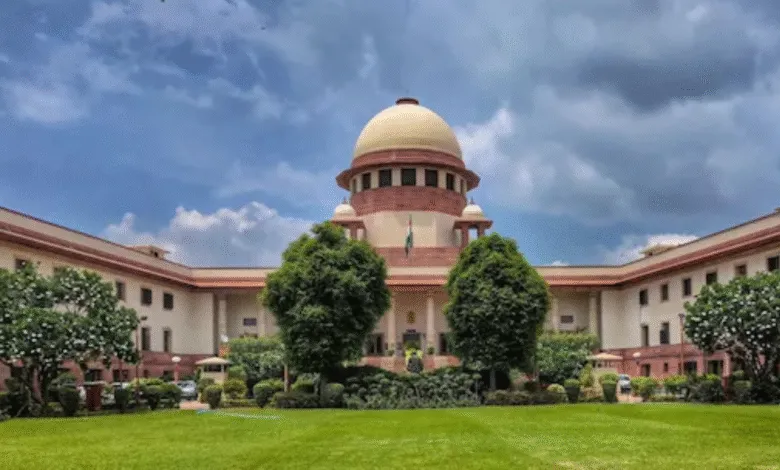
The Supreme Court of India has made it clear that settling a loan through a one-time settlement (OTS) does not end a criminal fraud case. The Court has restored criminal proceedings against M/s Sarvodaya Highways Ltd. and its directors in a loan fraud case involving about ₹52.5 crore.
The top court said that economic crimes do not harm only banks but affect society as a whole. It ruled that even if a company repays part of the loan under an OTS, criminal cases related to fraud, cheating, or forgery cannot be cancelled.
A bench of Justice Vikram Nath and Justice Sandeep Mehta set aside a 2022 order of the Punjab and Haryana High Court. The High Court had earlier quashed the Central Bureau of Investigation (CBI) case after the company paid ₹41 crore to the State Bank of Bikaner and Jaipur, which has now merged into State Bank of India.
Allowing CBI’s appeal, the Supreme Court noted that the settlement amount of ₹41 crore was much less than the total loan liability of about ₹52 crore. The Court said banks often accept lower amounts under pressure in NPA recovery cases, but this does not mean the crime is wiped out.
The case includes serious charges such as criminal conspiracy, cheating, criminal breach of trust, forgery, and corruption under the IPC and the Prevention of Corruption Act. The Court strongly said that such offences are not private disputes that can be settled quietly.
The Court referred to earlier judgments and said that when public money is involved, the entire society suffers, not just the bank. It also said that OTS is usually done to recover the maximum possible money in difficult situations and does not mean full recovery.
The CBI had registered the FIR in 2015 after a complaint that the company took bank loans using fake work orders, false revenue records, and manipulated stock statements. A bank inquiry later found the account to be an NPA and estimated the fraud at ₹52.5 crore.
After investigation, the CBI filed a chargesheet against the company, its directors, and even the then branch manager for cheating, forgery, conspiracy, and corruption. Permission for prosecution of the bank officer was also granted.
The High Court had earlier cancelled the FIR and chargesheet only because of the settlement. But the Supreme Court has now termed this decision legally wrong. It said the High Court ignored key facts like document forgery, the role of a bank official, application of the corruption law, and the remaining unpaid amount of over ₹5 crore.
By restoring the chargesheet, the Supreme Court has directed the trial court to continue the case on merit. However, the Court also clarified that its observations should not affect the final outcome of the trial.
- Download Court Order PDF (This PDF is available for Premium Users Only. Click here to join premium)