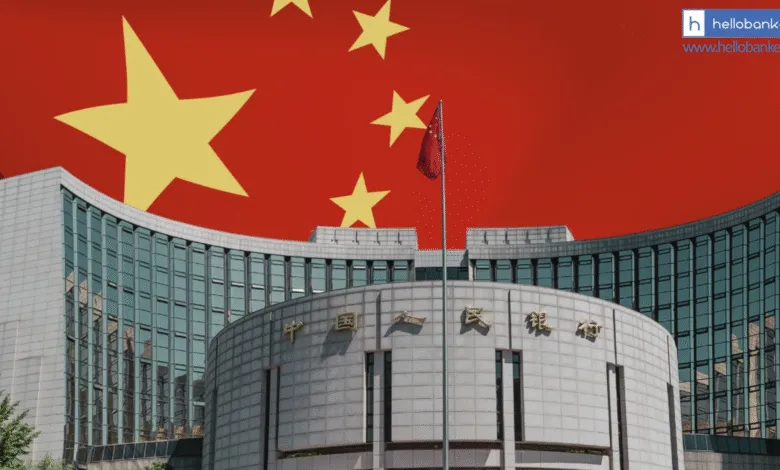
On December 18, the Monetary Policy Committee of the People’s Bank of China (PBOC) held its fourth quarterly meeting of 2025, which was also its 111th meeting. The meeting noted that since the beginning of the year, the PBOC has strengthened macroeconomic adjustments and followed an appropriately accommodative monetary policy. It continued its policy efforts while making adjustments when needed, enhanced counter-cyclical measures, and used a range of monetary policy tools. These actions supported high-quality development of the real economy and helped maintain a stable monetary and financial environment.
The benefits of loan prime rate reforms continued to show results, the market-based deposit rate adjustment mechanism worked effectively, and monetary policy transmission improved. Financing costs for the real economy remained at historically low levels. The foreign exchange market stayed largely balanced, foreign exchange reserves were sufficient, the RMB exchange rate moved in both directions while remaining generally stable, and financial markets operated in a stable manner.
The meeting reviewed economic and financial conditions both domestically and internationally. It pointed out that changes in the external environment have had a growing impact, including slower global economic growth, rising trade barriers, differences in economic performance among major economies, and uncertainties around inflation and monetary policy adjustments. China’s economy has remained generally stable with steady progress and has made new gains in high-quality development.
However, challenges remain, including an imbalance between strong supply and weak demand. The meeting stressed the need to continue implementing an appropriately accommodative monetary policy, strengthen counter-cyclical and intertemporal adjustments, use monetary policy tools to manage both overall demand and structural issues, and improve coordination between monetary and fiscal policies to support stable economic growth and a moderate recovery in prices.
The committee discussed the monetary policy approach for the next phase, emphasizing better coordination between existing and new policies, comprehensive use of policy tools, and stronger policy regulation. Based on domestic and global economic and financial conditions, the PBOC will adjust the strength and timing of policy measures as needed. It will maintain adequate liquidity to ensure that growth in financing to the real economy and money supply aligns with economic growth and price targets, keeping overall financing costs low.
The PBOC will strengthen the guiding role of policy interest rates, improve market-based interest rate formation and transmission, and enhance oversight of interest rate policies. It will monitor bond market conditions from a macro-prudential perspective, pay attention to long-term yield movements, improve monetary policy transmission, enhance foreign exchange market resilience, stabilize market expectations, and prevent excessive exchange rate volatility to keep the RMB broadly stable.
The meeting highlighted the need for large banks to play a leading role in serving the real economy, encouraged small and medium-sized banks to focus on their core businesses, and stressed the importance of strengthening bank capital to support financial stability. The PBOC will continue using structural monetary policy tools and focus on areas such as technology finance, green finance, inclusive finance, elderly finance, and digital finance. It will increase financial support for key areas including domestic demand expansion, technological innovation, and stable operations of micro, small and medium-sized enterprises.
The central bank will also make use of facilities supporting the securities, funds and insurance sectors, as well as lending for stock buybacks and holding increases, and explore long-term mechanisms to maintain capital market stability. Financial support for private enterprises will continue, and efforts will be made to promote high-level financial sector opening and strengthen risk management in an open economy.
The meeting emphasized that under the guidance of Xi Jinping Thought on Socialism with Chinese Characteristics for a New Era, the PBOC will fully implement decisions made by the Communist Party of China Central Committee and the State Council. The central bank will prioritize high-quality development, advance Chinese modernization, fully apply the new development philosophy, accelerate the formation of a new development pattern, strengthen the role of the domestic economy, balance supply and demand, improve the precision and coordination of macro policies, expand domestic demand, optimize supply, enhance incremental growth, activate existing resources, and sustain the momentum of economic improvement.
The meeting was chaired by Pan Gongsheng, Governor of the PBOC and Chairman of the Monetary Policy Committee. Committee members including Xuan Changneng, Zou Lan, Li Yunze, Wu Qing, Kang Yi, Zhu Hexin, Gu Shu, Wang Yiming and Huang Haizhou attended. Xu Shouben, Li Chunlin, Liao Min and Huang Yiping were absent due to official duties. Officials from PBOC branches in Tianjin, Jiangsu, Jiangxi, Xinjiang and Shenzhen also attended.