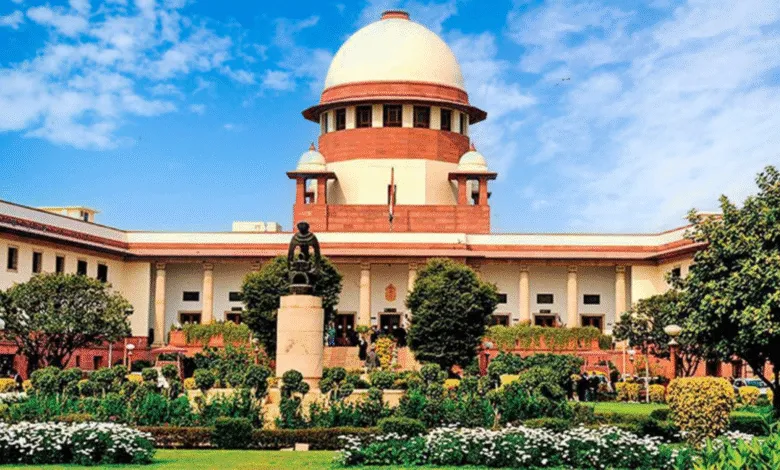
The Supreme Court has overturned a Kerala High Court decision that had dismissed a cheque bounce case only because the original cash loan was more than ₹20,000. The High Court had earlier ruled that if someone gives more than ₹20,000 in cash without a proper explanation, the debt is not “legally enforceable” under Section 138 of the Negotiable Instruments Act (NI Act).
A bench of Justices PK Mishra and Vipul M Pancholi disagreed with this view. They relied on a recent Supreme Court ruling in Sanjabij Tari v. Kishore Borcar, which had already declared such reasoning as incorrect. Because of this, the Supreme Court has now sent the case back to the Kerala High Court to be decided again on merits.
In the Sanjabij Tari case, the Supreme Court made an important clarification: even if a cash transaction above ₹20,000 violates Section 269SS of the Income Tax Act, it does not make the transaction illegal or void. The only consequence is a penalty under Section 271D of the Income Tax Act. It does not wipe out the debt, and it does not stop a cheque bounce case under Section 138 of the NI Act.
The Court clearly said that the legal presumptions available to a cheque holder under Sections 118 and 139 of the NI Act remain fully valid, even if the loan was given in cash. Therefore, the Kerala High Court’s earlier view—that cash transactions above ₹20,000 are automatically invalid—cannot be accepted.
In this case, the complainant said he had given ₹9 lakh in cash to the accused, who later issued a cheque for the same amount. The cheque bounced due to insufficient funds, leading to a case under Section 138. Both the Magistrate Court and the Sessions Court convicted the accused. But the Kerala High Court later set aside the conviction, saying the cash loan itself was illegal under the Income Tax Act.
The complainant challenged this, arguing that Section 269SS puts restrictions only on the person receiving the money—not on the person giving the loan. A violation may attract a penalty under tax law, but it does not erase the borrower’s responsibility to repay or protect them from a cheque bounce case.
The complainant also warned that treating such loans as illegal would amount to punishing a person twice—once under the Income Tax Act and again by stopping them from filing a cheque bounce case. He added that different High Courts across India had given conflicting rulings, making a clear Supreme Court ruling necessary.
With this judgment, the Supreme Court has made it clear:
Cash loans above ₹20,000 may attract a penalty under tax law, but the debt still exists, and cheque bounce cases under Section 138 NI Act remain fully valid.
- Download Court Order PDF (This PDF is available for Premium Users Only. Click here to join premium)