| ➡️ Click here to Join Whatsapp News Group - Get instant updates of all Banking News |
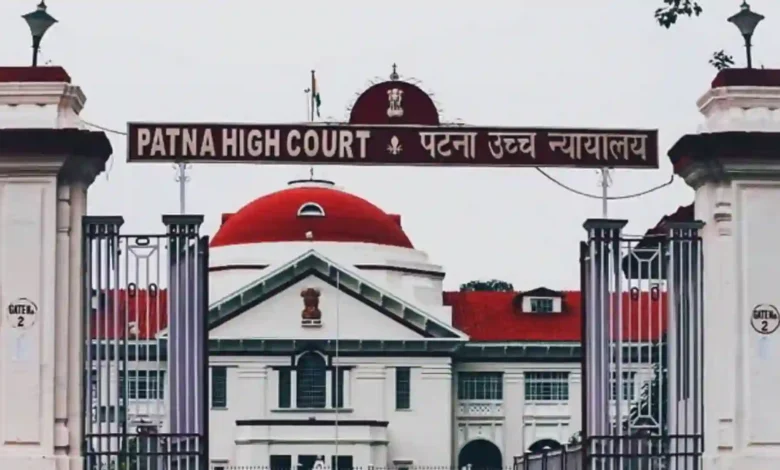
The Patna High Court has ordered the State Bank of India (SBI) to reinstate an officer who was treated as having voluntarily resigned after he remained absent from work due to illness. The court said SBI did not properly consider his medical condition and documents or give him a fair opportunity to explain why he was absent.
Justice Harish Kumar heard the case filed by Pankaj Kumar Singh, an SBI officer who had served the bank for more than 30 years. The court observed that an employee cannot be treated like a “slave” and that the bank must follow a fair process before taking such a serious decision against an employee.
Officer Joined SBI in 1989
Pankaj Kumar Singh joined SBI in November 1989 as a clerk-cum-cashier at the Gandhi Maidan branch in Patna. He was promoted to Assistant Manager in 2006 and later to Deputy Manager in 2011. In June 2019, he was transferred to the Muzaffarpur Zone.
The dispute arose out of the petitioner’s transfer while he was posted at the Digha Branch of the SBI, Patna. The petitioner had applied for an inter-zone transfer from Patna Zone to Muzaffarpur Zone on 11.03.2019 in terms of the prevailing transfer policy of the Bank.
Thereafter, the petitioner was served with a letter bearing No. HR/MK 544 dated 28.06.2019, issued by the Chief Manager (HR) Muzaffarpur, who, at the relevant point of time, was posted at the disposal of RBO, Bettiah.
Around that time, he was diagnosed with acute jaundice and was advised to take complete rest for at least 45 days. He applied for leave and claimed that his leave from July 1 to July 31, 2019, was approved through the bank’s HRMS portal.
While he was on bed rest, he developed severe pain in his legs and was admitted to a private clinic on October 17, 2019. He remained under treatment and was advised complete rest until December.
SBI Treated His Absence as Unauthorised
Singh remained on medical rest until December 13, 2019. After doctors declared him fit, he reported for duty on December 16.
He submitted his joining at the Regional Business Office, Bettiah, on 16.12.2019. Upon reporting for duty at the Regional Business Office, Bettiah, the petitioner was served with three communications, namely, the letter dated 22.10.2019, the notice dated 06.11.2019 and the second/final notice dated 13.12.2019.
By the letter dated 22.10.2019, the leave which had earlier been granted by the competent authority was declined. It was stated therein that, since the petitioner had not reported at R.B.O., Bettiah, his absence with effect from 29.06.2019 had been treated as unauthorized absence and no leave had been sanctioned by the respondent-authority.
The said communication further stated that the competent authority was not satisfied with the documentary evidence furnished by the petitioner in support of his leave application and, consequently his request for leave was declined and the period of his absence was treated as unauthorized.
He was told that the leave he had earlier taken had been rejected. SBI treated his absence from June 29, 2019, as unauthorised and said that no leave had been approved.
The bank later issued a communication treating him as having voluntarily left the service, with the decision being treated as a resignation from December 7, 2019. His appeal against the decision was rejected in June 2020.
Singh then approached the Patna High Court seeking reinstatement and continuity of service.
What SBI Told the Court
Singh’s lawyer argued that his client had completed more than 30 years of service without any major complaint about his conduct or performance. He also claimed that Singh had more than 270 days of earned leave and sick leave available.
SBI, however, argued that Singh had remained absent for more than 90 consecutive days even though his leave had been rejected. The bank said his continued absence amounted to neglect of duty and indiscipline.
What the Patna High Court Said
The High Court did not accept the bank’s approach. The court found that Singh’s medical condition and the documents submitted by him were not found to be false, forged or fabricated. Their genuineness had also not been properly challenged.
The court said this weakened the basis for treating his absence as unauthorised. It also noted that SBI had not properly explained why his earlier sanctioned leave was later rejected.
The court held that Singh was not given a fair and meaningful opportunity to explain his absence before the bank took the serious step of treating him as having voluntarily left his job.
SBI Ordered to Reinstate Officer
The Patna High Court quashed the bank’s notices and the appellate order and directed SBI to reinstate Pankaj Kumar Singh with continuity of service.
However, the court clarified that Singh would not receive salary or allowances for the period during which he did not actually work. That period would, however, be counted for continuity of service and other applicable benefits.
The court’s key point was that while prolonged unauthorised absence can have serious consequences under service rules, an employee who is absent because of genuine medical reasons must be given a fair opportunity to explain the absence before such a drastic action is taken.
Download Court Order PDF (This PDF is available for Premium Users Only. Click here to join premium)