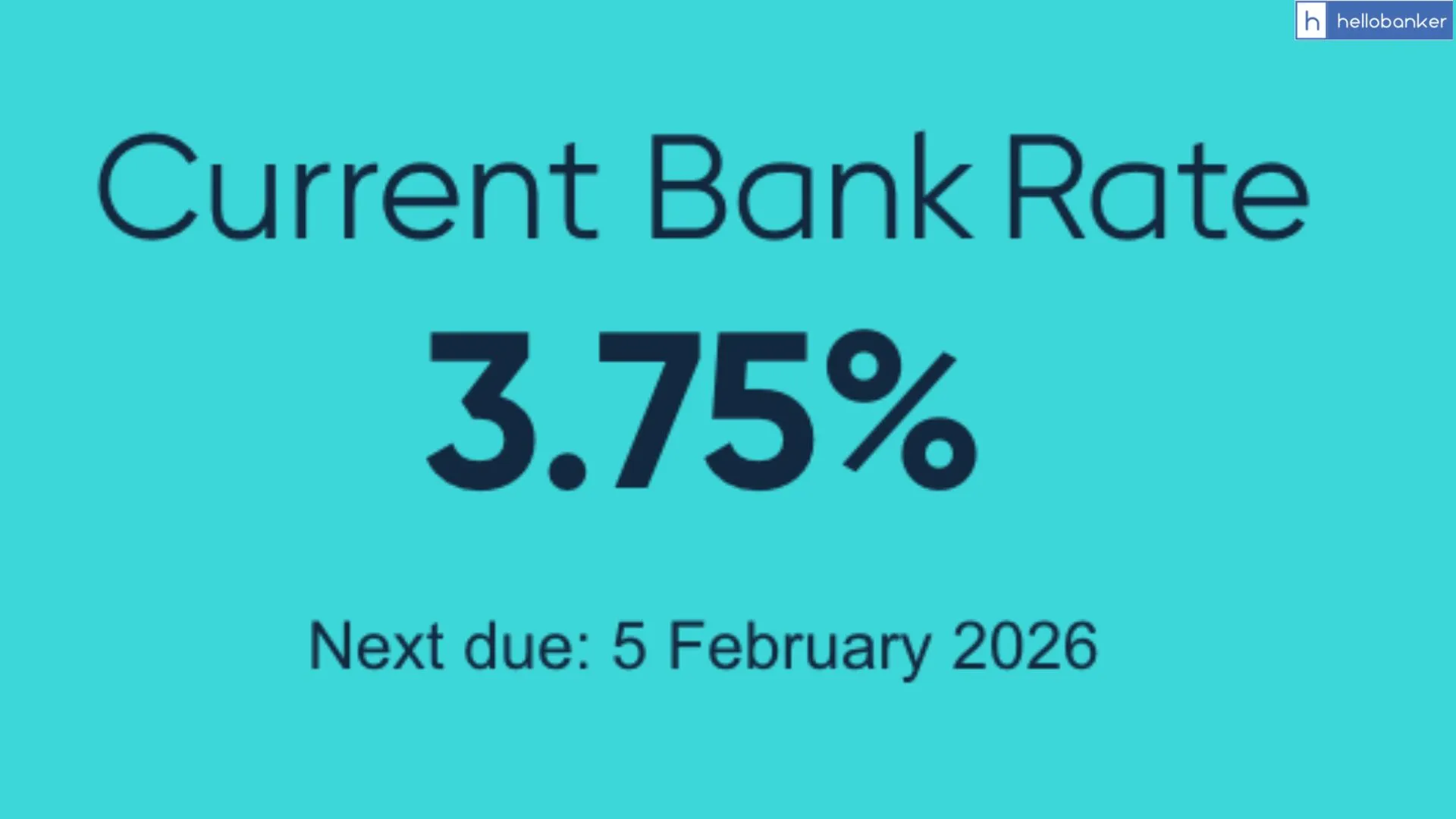
The Bank of England has lowered its benchmark rate for the fourth time this year. The Monetary Policy Committee voted 5-4 to reduce the bank rate by 25 basis points to 3.75 percent, which was the lowest since early 2023. CPI inflation has fallen since the previous meeting, to 3.2%. Although above the 2% target, it is now expected to fall back towards target more quickly in the near term.
Monetary policy is being set to ensure CPI inflation settles sustainably at 2% in the medium term, which involves balancing the risks around achieving this.
Important Points:
- Twelve-month CPI inflation had eased to 3.2% in November from 3.6% in October and 3.8% in September.
- Services consumer price inflation was 4.4% in November, compared with the most recent peak of 5.4% in April.
- CPI inflation was expected to ease further in 2026 Q1, to around 3%. Before that, CPI inflation was expected to rise temporarily in December 2025, owing to an increase in tobacco duty and a pickup in airfares price inflation.
- Some measures announced in the Budget, in particular one-off reductions to regulatory costs levied on households’ energy bills, and changes to fuel duty, were likely to lower CPI inflation in April by around ½ percentage point. This Budget news, in combination with other news in recent CPI data and with some downward moves in sterling oil and gas futures curves since November, had led Bank staff to lower their expectation for CPI inflation to closer to 2% in 2026 Q2.
- A range of indicators suggested that pay growth had continued to ease in the second half of 2025, particularly in the private sector. Annual growth in whole economy Average Weekly Earnings (AWE) had declined to 4.7% in the three months to October. AWE private sector regular pay growth had fallen to 3.9%, which was in line with the forecast in the November Report.
- The labour market had loosened further. The LFS unemployment rate had risen to 5.1% in the three months to October, 0.2 percentage points above the expectation in the November Report. The LFS redundancy rate had risen to 5.3 per 1,000 employees, its highest level since 2013, outside of the Covid pandemic period.
- GDP growth had eased to 0.1% in 2025 Q3, slightly below the rate expected in the November Report. Bank staff analysis had suggested that some of this softening was erratic, with underlying quarterly GDP growth closer to 0.2%. Monthly GDP had declined by 0.1% in October, due to a further fall in market sector output.
Download Monetary Policy PDF (This PDF is available for Premium Users Only. Click here to join premium)
Related Articles
-
-
![UK International Reserves November 2025 [Download Data]](https://hellobanker.in/wp-content/uploads/2025/12/PSB-Manthan-2025-15-390x220.webp)
-
![Bank of England Finacial Stability Report [PDF]](https://hellobanker.in/wp-content/uploads/2025/12/Bank-of-England-Finacial-Stability-Report-PDF-390x220.webp)
-

-
-

-

-

-

-
-

-