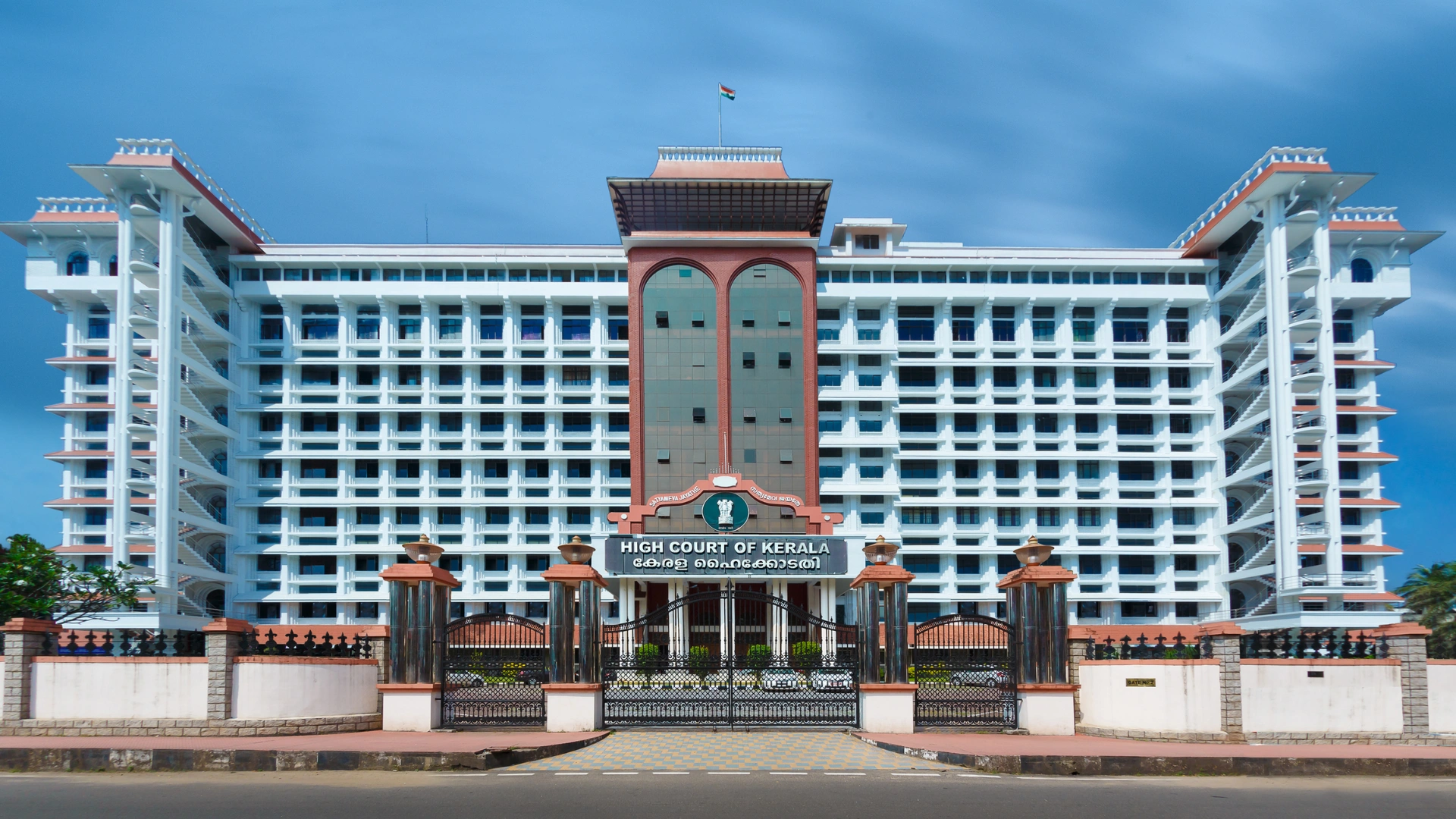
The Kerala High Court recently held that restrictions on strikes or lockouts under the Industrial Dispute Act, 1947, particularly during the pendency of conciliation proceedings to settle disputes, apply to bank employees, even if they do not fall under the category of “workmen” under the Act.
Court highlighted that Section 22 (1)(d) of the Act lays down that “no person employed in a public utility service” shall go on strike in breach of contract, particularly during the pendency of conciliation proceedings. The phrase “no person” implies that the restriction on strikes and lockouts under the Act is not just restricted to “workmen.” Since bank employees are employed in connection with a public utility service (PUS), the restrictions on carrying out strikes under Section 22(1)(d) would apply to them too.
It added that a strike by bank employees would affect the ordinary, common citizen the most. This too prompted the Court to reject the argument that restrictions on calling of strikes do not apply to banking employees as they are not “workmen.”
The Court also commented on why employees engaged in the provision of public utility services, such as banking services, are restricted when it comes to strikes.
Strikes or lockouts as modes of protest are statutorily prohibited because they have the effect of paralyzing the functioning of establishments of immense public utility, such as the banking sector, which is at the forefront of the Indian economy,” the Court noted.
“If bank officers go on strike, it is the common citizen, the lower-middle-class or poor citizens, who are most adversely affected, not the wealthy. This is because the banking sector’s interface today is far more with ordinary citizens than with the affluent. Even for basic services such as issuing a money order or demand draft, ordinary citizens must wait in long queues, running from one counter to another … In a PUS, the law safeguards the public first – no strike or lockout can trump the larger interest of the nation,” the Court said.
The Division Bench gave this decision while allowing an appeal filed by Federal Bank.
The case started because of a dispute between Federal Bank and its officers’ association. The Regional Labour Commissioner had issued notices to start conciliation proceedings under Section 22 of the Act after the officers’ association announced a strike.
The officers’ association challenged this action in the High Court. They argued that their members were not “workmen” under Section 2(s) of the Act. Because of this, they said the law related to strikes and conciliation did not apply to them.
A single-judge bench of the High Court agreed with the officers’ association. The judge cancelled the conciliation proceedings.
The single judge said that since the bank officers were not “workmen,” no industrial dispute could arise under the Act. Therefore, the Labour Commissioner did not have the authority to start conciliation proceedings. This also meant there was no legal restriction on the officers continuing their strike.
Federal Bank then challenged this decision before a Division Bench. The bank argued that Section 22 of the Act puts restrictions on strikes for “any person” working in a public utility service, not just workmen.
However, the officers’ association maintained that their members perform managerial and supervisory roles. Because of this, they said they do not fall under the legal definition of “workmen,” and therefore the strike restrictions under the Act should not apply to them.
Download Court Order PDF (This PDF is available for Premium Users Only. Click here to join premium)
-

-

-

-

-

-

-

-

-

-

-

-