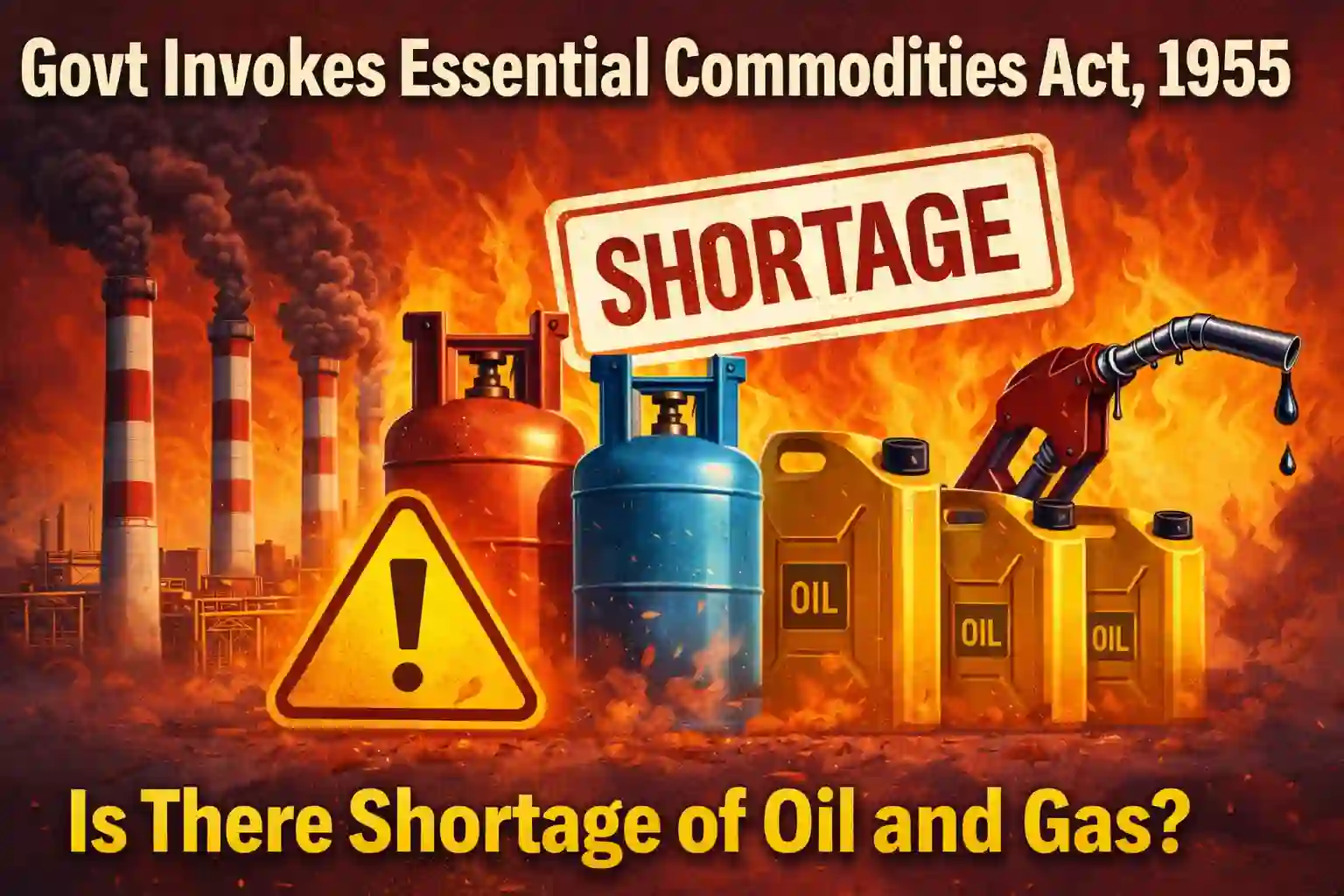
The Government of India has invoked Essential Commodities Act 1955. This action comes amidst ongoing Israel-Iran war. In this article, we will talk about this act and it’s importance.
The Essential Commodities Act, 1955 is an important law enacted by the Government of India to ensure the availability of essential goods to the public at fair prices and to prevent hoarding, black marketing, and artificial shortages of important commodities.
This Act gives powers to the central and state governments to regulate the production, supply, distribution, and storage of essential commodities.
Objectives of the Act
The main objectives of the Essential Commodities Act are:
- To ensure regular supply of essential commodities
- To control price rise of important goods
- To prevent hoarding and black marketing
- To protect consumers from exploitation
- To maintain fair distribution of essential goods
What Are Essential Commodities?
Essential commodities are goods that are necessary for daily life and public welfare. The government can declare certain items as essential commodities under this Act.
Some examples include:
- Food grains (rice, wheat, etc.)
- Pulses
- Edible oils
- Sugar
- Petroleum and petroleum products
- Fertilizers
- Drugs and medicines
The list of essential commodities can be modified by the government depending on the situation.
Powers Given to the Government
Under this Act, the government can:
- Control production of essential commodities.
- Regulate supply and distribution of goods.
- Fix stock limits to prevent hoarding.
- Fix prices of certain commodities.
- Inspect warehouses and shops.
- Confiscate hoarded goods.
State governments are also given authority to enforce these rules locally.
Punishment Under the Act
If a person is found guilty of:
- Hoarding essential goods
- Black marketing
- Violating stock limits
- Selling above fixed prices
then strict action can be taken, including:
- Imprisonment
- Fine
- Seizure of goods
Role During Crisis
The Essential Commodities Act becomes very important during situations like:
- Natural disasters
- War
- Pandemics
- Food shortages
During such times, the government can take strict measures to ensure supply and prevent exploitation of consumers.
Amendments and Changes
In 2020, the government introduced changes through the Essential Commodities (Amendment) Act, 2020 to reduce restrictions on agricultural commodities and encourage private investment in the agriculture sector.
However, the government still retains powers to impose restrictions during extraordinary situations such as war, famine, or sharp price rise.
Click here to download Essential Commodities Act 1955
-

-

-

-

-

-

-

-

-

-

-

-